
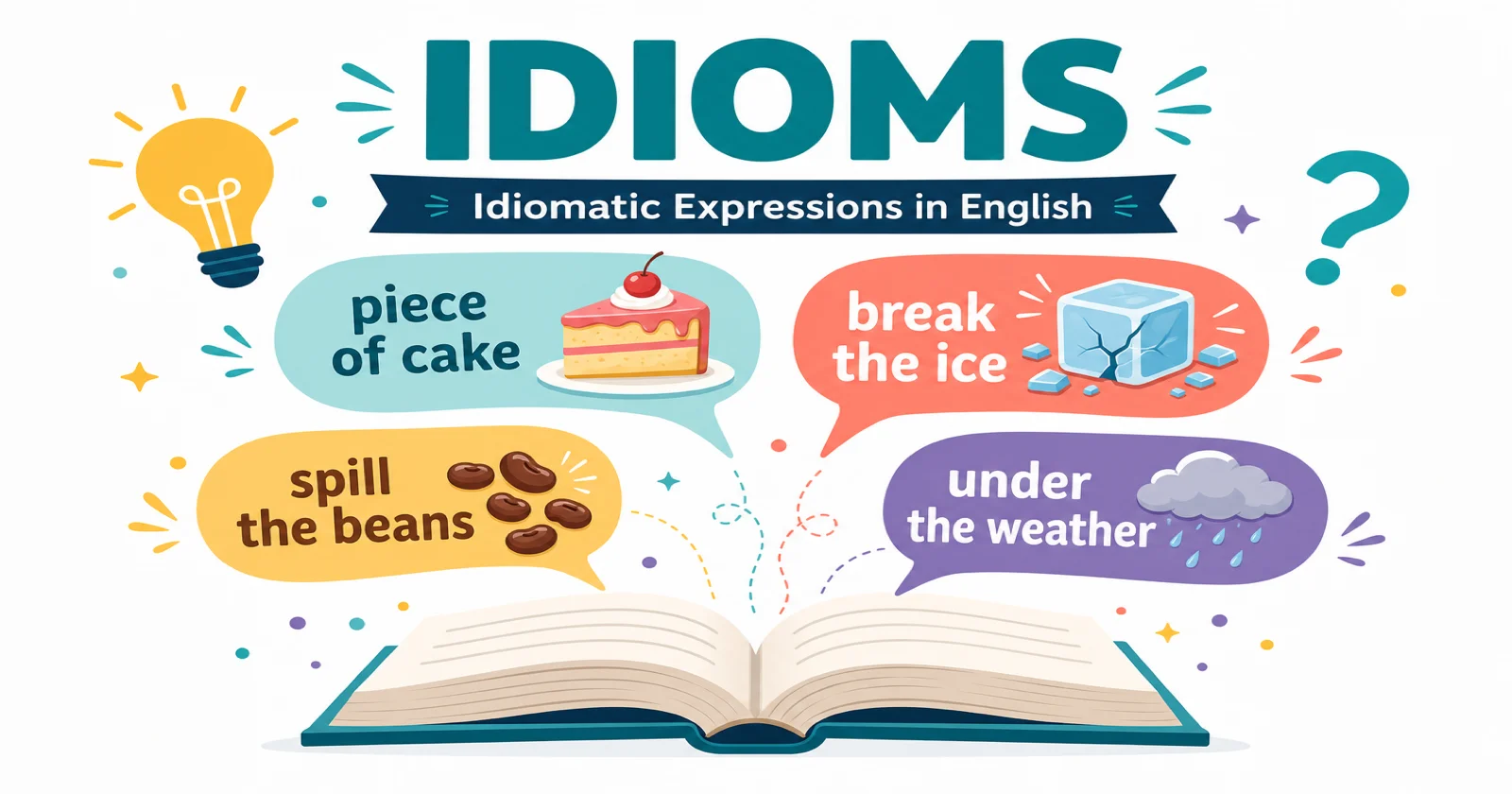
英語の慣用表現(イディオム):定義・種類・100以上の例文付き
“She let the cat out of the bag” のすべての単語を知っていても、文全体の意味がわからないことがあります。これは慣用表現(イディオム)— 個々の単語の意味からは理解できないフレーズです。この文は猫やバッグとは何の関係もありません。「彼女は秘密を漏らした」という意味です。
慣用表現は英語のあらゆる場面に存在します。ネイティブスピーカーは会話、メール、会議、テキストメッセージで — 自覚せずに使っていることも多いです。学習者にとってこれは困ったギャップを生みます:文法は正しい、語彙も十分、なのに相手の言うことの半分が意味不明に聞こえるのです。
このガイドでは、慣用表現とは何か、どう機能するか、どんな種類があるか、そして最も重要なこととして — どう学び使うかを解説します。100以上の例をタイプとトピック別に整理し、わかりやすい意味と自然な例文を添えています。
- 学べること: 慣用表現の定義・種類・構造
- 収録例: 100以上の慣用表現と意味
- 対象レベル: B1〜C1
- こんな方に: 自然な英語の理解、試験対策、会話の流暢さ向上
500以上のイディオムを網羅した完全版は、英語イディオム:500以上の一般的な表現をご覧ください。
慣用表現(イディオム)とは?
慣用表現(イディオムとも呼ばれます)は、個々の単語の文字通りの意味とは異なる意味を持つフレーズや文のことです。
| 表現 | 文字通りの意味 | 実際の(慣用的な)意味 |
|---|---|---|
| break the ice | 物理的に氷を割る | 気まずい場で会話のきっかけを作る |
| hit the nail on the head | 釘をハンマーで打つ | まさにその通りのことを言う |
| under the weather | 天気の下にいる | 体調が悪い |
| piece of cake | ケーキ一切れ | とても簡単なこと |
| cost an arm and a leg | 支払いとして体の部位を失う | とても高価である |
重要な特徴は、単語から意味を推測できないということです。”It’s a piece of cake” と言われても、デザートの話ではありません。”He kicked the bucket” と言われても、何かを蹴る話ではなく — 彼が亡くなったという意味です。
これがイディオムを他の種類のフレーズと区別するものです。”heavy rain”(激しい雨)のような表現は “heavy” を比喩的に使っていますが、意味は推測できます。イディオムの場合、単語から推測するのは不可能です。
慣用表現と文字通りの表現の比較
| 特徴 | 文字通りの表現 | 慣用表現 |
|---|---|---|
| 意味 | 単語と一致する | 単語と異なる |
| 予測可能? | はい | いいえ |
| 翻訳可能? | 逐語訳できる | 意味を翻訳する必要がある |
| 例 | “She closed the door” | “She let the cat out of the bag” |
なぜ慣用表現は存在するのか?
すべての言語にイディオムがあります。何世紀にもわたって自然に発達してきた理由がいくつかあります:
1. 効率性。 “He kicked the bucket” は “He died”(彼は亡くなった)より短くて生き生きしています。イディオムは複雑な概念をコンパクトなフレーズに圧縮します。
2. 共有された文化的経験。 多くのイディオムは特定の歴史的活動に由来します — 農業(”separate the wheat from the chaff”)、航海(”learn the ropes”)、スポーツ(”move the goalposts”)、戦争(”bury the hatchet”)。元の文脈は薄れても、表現は生き残っています。
3. 感情的な色彩。 “I’m a bit tired” は中立的です。”I’m running on empty” は絵を描きます。イディオムは言語に感情の深みと個性を加えます。
4. 社会的つながり。 イディオムを使うことは、その言語コミュニティに属していることを示します。同僚が “Let’s not reinvent the wheel” と言えば、イディオムを知っている全員がつながりを感じます。イディオムは文化的なパスワードのようなものです。
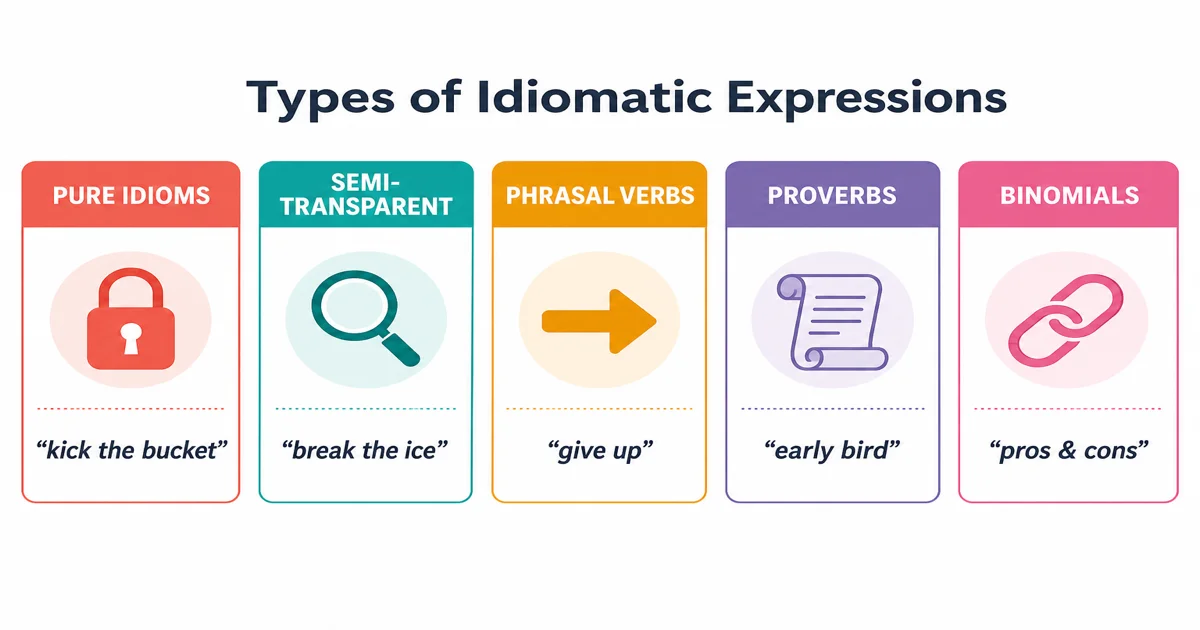
慣用表現の種類
すべてのイディオムが同じように機能するわけではありません。異なる種類を理解すれば、より効率的にイディオムを認識し学べます。
1. 純粋イディオム(不透明型)
意味が文字通りの単語とまったく関係がないタイプです。意味を推測することはできません。
| イディオム | 意味 |
|---|---|
| kick the bucket | 亡くなる |
| spill the beans | 秘密を漏らす |
| bite the bullet | 辛いことに耐える |
| break a leg | 頑張って;幸運を |
| by the skin of your teeth | ぎりぎりで;かろうじて |
| once in a blue moon | めったにない |
| the whole nine yards | すべて;全部 |
| fly off the handle | 突然怒り出す |
これらは単語と意味の間に論理的なつながりがないため、学ぶのが最も難しいタイプです。暗記するしかありません。
2. 半透明イディオム
意味が単語から部分的に推測できるタイプです。比喩的なつながりはありますが、明白ではありません。
| イディオム | 意味 | なぜ半透明か |
|---|---|---|
| break the ice | 会話のきっかけを作る | ice = 社会的な冷たさ・気まずさ |
| see eye to eye | 完全に同意する | 目が合う = 相互理解 |
| burn bridges | 人間関係を永久に壊す | bridge = つながり |
| light at the end of the tunnel | 困難の後の希望 | tunnel = 暗い時期 |
| turn over a new leaf | 心機一転する | leaf = 本のページ |
| let sleeping dogs lie | 穏やかな状況を乱さない | sleeping = 平和な状態 |
| hit the nail on the head | まさにその通りのことを言う | nail = ポイント |
| beat around the bush | 核心を避ける | bush = 本題 |
比喩が記憶の手がかりを与えてくれるため、覚えやすいタイプです。
3. 句動詞イディオム
多くの句動詞はイディオム的で — 動詞と不変化詞の組み合わせから意味を推測できません。
| 句動詞 | 意味 |
|---|---|
| give up | 諦める |
| look up to | 尊敬する |
| put up with | 我慢する |
| get away with | 罰を免れる |
| run into | 偶然出会う |
| come across | たまたま見つける |
| bring up | 話題にする;子どもを育てる |
| figure out | 考えて理解する |
句動詞の詳しい解説は、GETを使った句動詞や英語の句動詞:完全ガイドをご覧ください。
4. ことわざ・格言
ことわざは一般的な真理や助言を表す完全な文です。多くがイディオム的です。
| ことわざ | 意味 |
|---|---|
| Don’t put all your eggs in one basket. | 一つの計画にすべてを賭けるな |
| The early bird catches the worm. | 早起きは三文の得 |
| Every cloud has a silver lining. | 悪い状況にも良い面がある |
| Don’t count your chickens before they hatch. | 捕らぬ狸の皮算用 |
| Actions speak louder than words. | 行動は言葉より雄弁 |
| When in Rome, do as the Romans do. | 郷に入っては郷に従え |
| The grass is always greener on the other side. | 隣の芝生は青く見える |
| You can’t judge a book by its cover. | 人は見かけによらぬもの |
5. 二項イディオム(ペア型)
“and” や “or” で固定された語順でつながる二つの単語です。
| 二項表現 | 意味 |
|---|---|
| pros and cons | 長所と短所 |
| give and take | 互いの譲歩 |
| now and then | 時々 |
| sick and tired | うんざりしている |
| odds and ends | こまごました雑多なもの |
| by and large | 概して;全体的に |
| sooner or later | 遅かれ早かれ |
| more or less | おおよそ;だいたい |
語順は固定されています:”pros and cons” は正しいですが、”cons and pros” は不自然に聞こえます。
トピック別 100の重要慣用表現
日常生活
| # | 表現 | 意味 | 例文 |
|---|---|---|---|
| 1 | a piece of cake | とても簡単 | The test was a piece of cake. |
| 2 | break the ice | 会話のきっかけを作る | He told a joke to break the ice. |
| 3 | call it a day | 仕事を切り上げる | We’ve done enough — let’s call it a day. |
| 4 | get out of hand | 手に負えなくなる | The party got out of hand quickly. |
| 5 | in the long run | 長期的に見れば | Exercise pays off in the long run. |
| 6 | on the same page | 同じ認識を持っている | Let’s make sure we’re all on the same page. |
| 7 | the last straw | 堪忍袋の緒が切れるきっかけ | His late arrival was the last straw. |
| 8 | at the end of the day | 結局のところ | At the end of the day, family matters most. |
| 9 | give it a shot | 試してみる | I’ve never done it, but I’ll give it a shot. |
| 10 | no-brainer | 考えるまでもない決断 | Accepting the scholarship was a no-brainer. |
成功と失敗
| # | 表現 | 意味 | 例文 |
|---|---|---|---|
| 11 | hit the nail on the head | 的を射る | You hit the nail on the head with that analysis. |
| 12 | back to square one | 振り出しに戻る | The plan failed, so we’re back to square one. |
| 13 | cut corners | 手を抜く | They cut corners on safety to save money. |
| 14 | go the extra mile | 期待以上の努力をする | She always goes the extra mile for her clients. |
| 15 | miss the boat | チャンスを逃す | If you don’t apply now, you’ll miss the boat. |
| 16 | the ball is in your court | あなたの番です;あなたの決断次第 | I’ve made my offer — the ball is in your court. |
| 17 | learn the ropes | 仕事の基本を覚える | It took a month to learn the ropes. |
| 18 | throw in the towel | 諦める | After three failed attempts, he threw in the towel. |
| 19 | up in the air | 未定;不確か | Our vacation plans are still up in the air. |
| 20 | ahead of the curve | 他より一歩進んでいる | Their technology is ahead of the curve. |
お金とビジネス
| # | 表現 | 意味 | 例文 |
|---|---|---|---|
| 21 | cost an arm and a leg | とても高価である | The repair cost an arm and a leg. |
| 22 | break the bank | 高すぎる | A weekend trip doesn’t have to break the bank. |
| 23 | make ends meet | なんとかやりくりする | It’s hard to make ends meet on minimum wage. |
| 24 | penny for your thoughts | 何を考えているの? | You look worried — penny for your thoughts? |
| 25 | get the ball rolling | 始める;着手する | Let’s get the ball rolling on this project. |
| 26 | in the red | 赤字;負債がある | The company has been in the red for two quarters. |
| 27 | bring to the table | 貢献する | What skills do you bring to the table? |
| 28 | think outside the box | 創造的に考える | We need to think outside the box to solve this. |
| 29 | the bottom line | 最も重要なポイント | The bottom line is we need more revenue. |
| 30 | a ballpark figure | おおよその見積もり | Give me a ballpark figure for the project cost. |
感情と気持ち
| # | 表現 | 意味 | 例文 |
|---|---|---|---|
| 31 | on cloud nine | 最高に幸せ | She’s been on cloud nine since the proposal. |
| 32 | under the weather | 体調が悪い | I’m feeling under the weather today. |
| 33 | over the moon | 大喜び | They were over the moon about the baby. |
| 34 | down in the dumps | 落ち込んでいる | He’s been down in the dumps since the breakup. |
| 35 | butterflies in my stomach | 緊張でそわそわする | I always get butterflies before a presentation. |
| 36 | blow off steam | ストレスを発散する | I go for a run to blow off steam. |
| 37 | keep a stiff upper lip | プレッシャーの下でも冷静でいる | The British are famous for keeping a stiff upper lip. |
| 38 | lose your cool | 怒りや動揺を示す | Try not to lose your cool during the interview. |
| 39 | get cold feet | 大事な場面で怖気づく | He got cold feet before the wedding. |
| 40 | have a heart of gold | とても優しくて寛大である | Despite her tough exterior, she has a heart of gold. |
コミュニケーション
| # | 表現 | 意味 | 例文 |
|---|---|---|---|
| 41 | beat around the bush | 核心を避ける | Stop beating around the bush and tell me the truth. |
| 42 | spill the beans | 秘密を漏らす | Someone spilled the beans about the surprise party. |
| 43 | get straight to the point | 本題に入る | I’ll get straight to the point — we need to cut costs. |
| 44 | speak your mind | 本心を言う | She’s not afraid to speak her mind. |
| 45 | read between the lines | 隠された意味を読み取る | You have to read between the lines of his email. |
| 46 | keep someone in the loop | 定期的に報告する | Please keep me in the loop on any developments. |
| 47 | ring a bell | 聞き覚えがある | The name rings a bell, but I can’t place it. |
| 48 | word of mouth | 口コミ | The restaurant became famous through word of mouth. |
| 49 | take with a grain of salt | すべてを信じない | Take his claims with a grain of salt. |
| 50 | cut to the chase | 本題に入る | Let’s cut to the chase — what do you want? |
人間関係
| # | 表現 | 意味 | 例文 |
|---|---|---|---|
| 51 | see eye to eye | 完全に同意する | We don’t always see eye to eye on politics. |
| 52 | get along like a house on fire | すぐに意気投合する | They got along like a house on fire. |
| 53 | stab in the back | 裏切る | I can’t believe he stabbed me in the back. |
| 54 | give someone the cold shoulder | 意図的に無視する | She gave him the cold shoulder after the argument. |
| 55 | bend over backwards | 全力を尽くして助ける | She bent over backwards to make us comfortable. |
| 56 | bury the hatchet | 和解する;争いを終わらせる | It’s time to bury the hatchet and move on. |
| 57 | a shoulder to cry on | 悩みを聞いてくれる人 | She’s always been a shoulder to cry on. |
| 58 | give someone the benefit of the doubt | 疑わしくても信じてあげる | I’ll give him the benefit of the doubt this time. |
| 59 | hit it off | すぐに仲良くなる | We hit it off on our first date. |
| 60 | two-faced | 裏表がある;偽善的 | She’s two-faced — nice to you, then talks behind your back. |
時間
| # | 表現 | 意味 | 例文 |
|---|---|---|---|
| 61 | in the nick of time | ぎりぎり間に合って | We arrived at the airport in the nick of time. |
| 62 | once in a blue moon | めったにない | I only eat fast food once in a blue moon. |
| 63 | around the clock | 24時間休みなく | The team worked around the clock to finish. |
| 64 | at the eleventh hour | 土壇場で | The deal was saved at the eleventh hour. |
| 65 | time flies | 時が経つのは早い | Time flies when you’re having fun. |
| 66 | kill time | 時間をつぶす | I killed time by reading a magazine. |
| 67 | behind the times | 時代遅れの | His management style is behind the times. |
| 68 | stand the test of time | 時の試練に耐える | Their friendship has stood the test of time. |
| 69 | ahead of time | 予定より早く | She finished the project ahead of time. |
| 70 | rain or shine | 何があっても | We’ll be there, rain or shine. |
知識と学習
| # | 表現 | 意味 | 例文 |
|---|---|---|---|
| 71 | learn the hard way | 痛い経験から学ぶ | He learned the hard way not to trust strangers online. |
| 72 | a steep learning curve | 最初は習得が難しい | There’s a steep learning curve with this software. |
| 73 | know something inside out | 隅から隅まで知っている | She knows the industry inside out. |
| 74 | pick someone’s brain | 知識や意見を聞く | Can I pick your brain about the marketing strategy? |
| 75 | food for thought | 考えるべきこと | Your proposal is food for thought. |
| 76 | in a nutshell | 要するに | In a nutshell, we need more time and money. |
| 77 | get the hang of it | コツをつかむ | It takes a few weeks to get the hang of it. |
| 78 | scratch the surface | 表面をかじっただけ | We’ve barely scratched the surface of this topic. |
| 79 | do your homework | 事前にしっかり調べる | Make sure you do your homework before investing. |
| 80 | the tip of the iceberg | 氷山の一角 | What we found is just the tip of the iceberg. |
困難と問題
| # | 表現 | 意味 | 例文 |
|---|---|---|---|
| 81 | between a rock and a hard place | 板挟みの状態 | He’s between a rock and a hard place. |
| 82 | the elephant in the room | 誰も触れない明白な問題 | The company’s debt is the elephant in the room. |
| 83 | at the end of your rope | 忍耐の限界 | I’m at the end of my rope with this project. |
| 84 | a can of worms | 厄介な状況 | That question opened a whole can of worms. |
| 85 | add fuel to the fire | 火に油を注ぐ | His comments only added fuel to the fire. |
| 86 | a blessing in disguise | 災い転じて福となる | Losing that job was a blessing in disguise. |
| 87 | burn the midnight oil | 夜遅くまで働く | Students burn the midnight oil before finals. |
| 88 | weather the storm | 困難を乗り越える | The company managed to weather the storm. |
| 89 | nip it in the bud | 問題を早期に摘む | Address the issue now — nip it in the bud. |
| 90 | turn a blind eye | 見て見ぬふりをする | Management turned a blind eye to the violations. |
行動と決断
| # | 表現 | 意味 | 例文 |
|---|---|---|---|
| 91 | bite the bullet | 覚悟を決めて耐える | I bit the bullet and booked the dentist appointment. |
| 92 | pull someone’s leg | からかう | I’m just pulling your leg — I didn’t really quit. |
| 93 | let the cat out of the bag | 秘密をばらす | Who let the cat out of the bag about the surprise? |
| 94 | play it by ear | 臨機応変にやる | We don’t have a plan — let’s play it by ear. |
| 95 | sit on the fence | 決断しない | Stop sitting on the fence and choose a side. |
| 96 | take it with a pinch of salt | 完全には信じない | Take online reviews with a pinch of salt. |
| 97 | bite off more than you can chew | 能力以上のことを引き受ける | I think I bit off more than I could chew with this project. |
| 98 | jump on the bandwagon | 流行に乗る | Everyone’s jumping on the AI bandwagon. |
| 99 | cross that bridge when you come to it | 問題が起きてから対処する | Don’t worry about it now — cross that bridge when you come to it. |
| 100 | leave no stone unturned | あらゆる手を尽くす | The police left no stone unturned in their investigation. |
慣用表現の文法的な仕組み
イディオムには特定の文法ルールがあります。これらのルールを理解すれば、イディオムを認識するだけでなく、正しく使えるようになります。
固定型 vs. 柔軟型
完全に固定されたイディオムもあり、単語を一つも変えることはできません:
- 固定型: by and large, once in a blue moon, under the weather
- “under a weather” や “once in a red moon” とは言えません
文法的な変化(時制、代名詞)が許されるものもあります:
- 柔軟型: break the ice → She broke the ice. / The ice was broken.
- 柔軟型: spill the beans → He spilled the beans. / Don’t spill the beans.
分離可能 vs. 分離不可能
イディオム的な句動詞には、分離できるものとできないものがあります:
| タイプ | 例 | 分離形 |
|---|---|---|
| 分離可能 | figure out | She figured it out. |
| 分離可能 | bring up | He brought the topic up. |
| 分離不可能 | run into | I ran into her. (NOT: I ran her into.) |
| 分離不可能 | look up to | I look up to my teacher. |
名詞句イディオム
名詞として機能するイディオムもあります:
- It’s a piece of cake. (主語補語)
- That’s the tip of the iceberg. (主語補語)
- He’s a jack of all trades. (主語補語)
慣用表現でよくある間違い
| 間違い | 正しい形 | 問題点 |
|---|---|---|
| “under weather” | under the weather | 冠詞の欠落 |
| “break the legs” | break a leg | 冠詞の間違い+複数形の間違い |
| “it costs arm and leg” | it costs an arm and a leg | 冠詞の欠落 |
| “I’m on the cloud nine” | I’m on cloud nine | 余分な冠詞 |
| “by large” | by and large | “and” の欠落 |
| “He bit the dust”(= 亡くなった) | He bit the dust | 間違いではないが、死に関するイディオムをカジュアルに使うのは配慮に欠ける |
最も重要なルール:イディオムは完全なフレーズとして覚えましょう。一語ずつではなく、各イディオムを一つの語彙アイテムとして扱います。
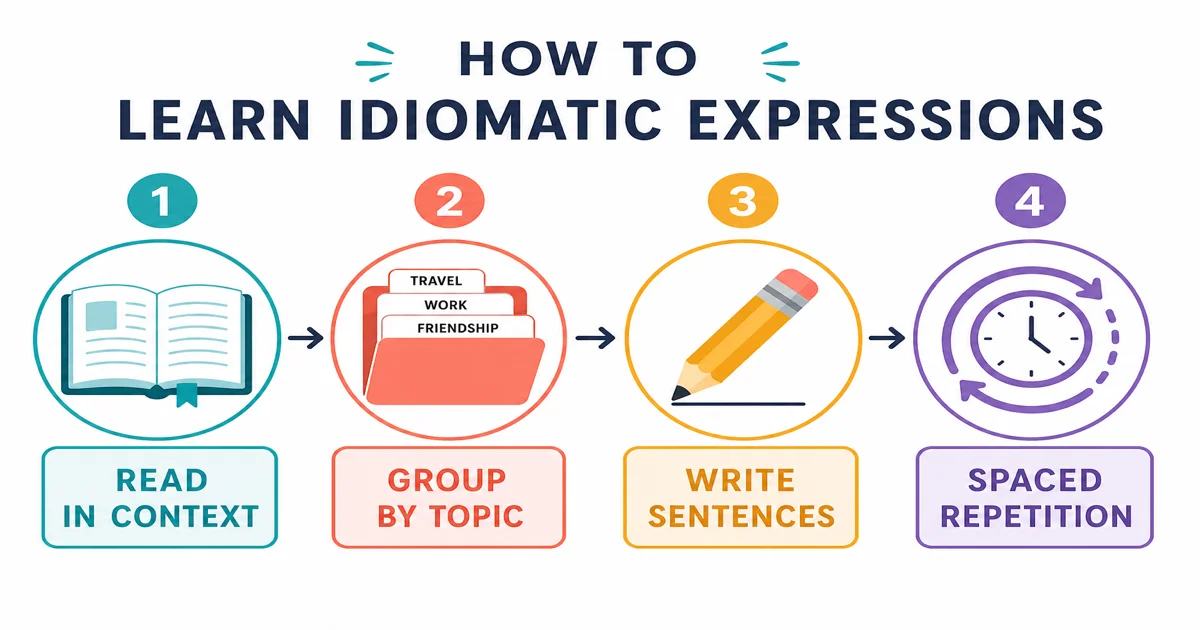
慣用表現の学び方
ステップ1:文脈の中で学ぶ
孤立したリストからイディオムを暗記してはいけません。記事で読んだり、映画で見たり、ポッドキャストで聞いたりしましょう。自然にイディオムに出会えば、文脈が意味と使い方の両方を覚える手助けをしてくれます。
ステップ2:トピック別にグループ化する
「体のイディオム」をまとめて学ぶ(break a leg, cold shoulder, heart of gold)方が、ランダムなリストより効果的です。脳がメンタルカテゴリーを作り、新しいイディオムが他のものを強化してくれます。
ステップ3:例文を作る
学んだイディオムごとに、自分の生活についての文を2〜3個書きましょう。「I got butterflies in my stomach before my job interview」のような個人的な文は記憶に残りやすいです。一般的な例文はすぐに忘れてしまいます。
ステップ4:能動的に使う練習をする
会話やライティングで意識的にイディオムを使いましょう。安全なもの(piece of cake, in the long run, at the end of the day)から始めて、より表現豊かなものへ進みましょう。能動的に使わないイディオムは、自分のものにはなりません。
ステップ5:間隔反復を活用する
イディオムをLinglifyの語彙に追加しましょう。システムが間隔を空けてテストし、イディオムを短期記憶から長期記憶へ自動的に移してくれます。
練習用の単語
boom
名詞
急増, ブーム, 爆発
例
- The boom of thunder echoed across the valley.
- The technology boom created many new millionaires.
cooperate
動詞
協力する, 協働する
evaluate
動詞
評価する, 査定する
例
- Companies evaluate job candidates based on experience, skills, and personality.
- Teachers evaluate student progress through tests, projects, and classroom participation.
graduate
動詞
卒業する
例
- She will graduate from university next year with a degree in engineering.
- Students must complete all requirements before they can graduate from high school.
horizon
名詞
地平線
例
- The sun disappeared behind the horizon as evening approached.
- Traveling broadens your horizon and exposes you to new cultures.
indispensable
形容詞
不可欠な
例
- Clean water is indispensable for human survival and good health.
- Her experience and skills make her indispensable to the research team.
jury
名詞
陪審団, 陪審
例
- The jury deliberated for several hours before reaching a verdict.
- The talent show jury consisted of professional musicians and entertainers.
lifelong
形容詞
一生の, 生涯の
例
- Learning is a lifelong process that never truly ends.
- Their lifelong friendship began during elementary school years.
motivated
形容詞
やる気のある
例
- Motivated employee seeks additional responsibilities and challenges at work.
- Success requires being motivated even when facing difficult obstacles.
normally
副詞
通常は, 普通は, ふつうは
例
- Heart normally beats between sixty and hundred times per minute.
- Students normally arrive at school before morning bell rings.
off
副詞
離れて, 切れて, 休みの
例
- Please turn off the lights before leaving the room.
- The dog ran off into the forest chasing wild rabbits.
prejudice
名詞
偏見, 先入観, 差別
例
- Education helps overcome prejudice and promotes understanding.
- Racial prejudice damages communities and individuals alike.
resolve
動詞
解決する, 決意する
例
- Mediator helps parties resolve dispute through negotiation.
- Technical team will resolve software problems quickly.
stress
動詞
強調する, 緊張させる
例
- Heavy workload may stress employees beyond limits.
- Teacher will stress importance of homework completion.
total
形容詞
全体の, 総合的な, 完全な
例
- Total cost includes all fees and expenses.
- Total silence fills room during meditation session.
tragedy
名詞
悲劇
例
- Natural tragedy affects thousands of innocent people.
- Personal tragedy changes person's life perspective completely.
union
名詞
連合, 結合, 協会
例
- Labor union protects worker rights and interests.
- Marriage union joins two people in partnership.
voyage
名詞
航海, 旅行
例
- Space exploration represents humanity's greatest voyage into the unknown.
- The ocean voyage from Europe to America took several weeks in the past.
candidate
名詞
候補者, 志願者
例
- Each presidential candidate presented their policy plans to voters.
- The job candidate impressed the interview panel with her experience.
discourage
動詞
落胆させる, 思いとどまらせる, 意欲をなくさせる
例
- Don't let one failure discourage you from pursuing your dreams.
- High prices discourage many people from buying organic food products.
donate
動詞
寄付する
例
- Many people donate money to charities that help homeless individuals.
- She decided to donate blood to help patients in emergency situations.
firmly
副詞
しっかりと, 堅く
例
- Hold the rope firmly while climbing down the steep mountain slope.
- The manager firmly believed in treating all employees with respect.
guide
動詞
案内する
例
- Parents should guide their children to make responsible decisions.
- The experienced hiker will guide the group through the mountain trail safely.
humorous
形容詞
ユーモラスな, 面白い, 滑稽な
例
- She writes humorous articles about everyday life and family experiences.
- The humorous speech made everyone laugh and lightened the serious mood.
admission
名詞
入場, 入学, 認めること
例
- Her admission to the prestigious medical school was the result of hard work.
- The museum offers free admission on the first Sunday of every month.
次のステップ
-
まず10個のイディオムを選びましょう。 上のリストから、聞いたことはあるけど使ったことのないものを10個選び、それぞれで文を書いてみましょう。
-
実際の英語でイディオムを探しましょう。 次に映画を見たり記事を読んだりするとき、慣用表現に注目してください。意味を調べてコレクションに加えましょう。
-
Linglifyにイディオムを追加して間隔反復で練習しましょう。
-
完全版イディオムリスト — 英語イディオム:500以上の一般的な表現では、20のトピックカテゴリーに分けたイディオムを紹介しています。
-
イディオム例文集 — イディオム例文:200以上の意味付きでは、文脈付きの追加例文を紹介しています。
よくある質問
イディオムとフレーズの違いは何ですか?
フレーズは一緒に機能する単語のグループです(”in the morning,” “very quickly,” “on the table”)。イディオムは、文字通りの単語からは意味を理解できない特定のタイプのフレーズです(”kick the bucket” = 亡くなる、”spill the beans” = 秘密を漏らす)。すべてのイディオムはフレーズですが、すべてのフレーズがイディオムとは限りません。重要な違いは、意味が比喩的か(イディオム)、文字通りか(通常のフレーズ)です。
英語にはいくつの慣用表現がありますか?
「イディオム」の定義の広さによって、5,000から25,000と推定されています。句動詞、ことわざ、スラング表現を含めると、数は増えます。実用的な目的では、一般的なイディオムを200〜300個知っていれば、日常英語、映画、標準的なビジネスコミュニケーションで遭遇する大部分をカバーできます。
フォーマルな文章でイディオムを使えますか?
イディオムと文脈によります。フォーマルな文章でも許容されるイディオムもあります(”in the long run,” “at the end of the day,” “the bottom line”)。一方、カジュアルすぎるものもあります(”piece of cake,” “no-brainer,” “kick the bucket”)。学術論文や法律文書ではイディオムを完全に避けましょう。ビジネスメールやプレゼンでは、一般的で中立的なイディオムを控えめに使えます。IELTSのライティングでは、適切に配置された1〜2個のイディオムが語彙力の幅を示すことができます。
なぜイディオムの翻訳はこんなに難しいのですか?
イディオムは言語的な意味だけでなく、文化的な意味を持っているからです。”It’s raining cats and dogs” は英語では「大雨」を意味しますが、他の言語に逐語訳すると意味不明になります。すべての言語には同じ概念に対する独自のイディオムがあります — フランス語は “il pleut des cordes”(ロープが降る)、日本語は「土砂降り」と言います。単語ではなく、意味を翻訳しなければなりません。
慣用表現を最も速く覚える方法は?
3つの戦略が最も効果的です:(1)トピック別にグループで学ぶ(お金のイディオムは一緒に、時間のイディオムは一緒に)と互いに強化し合います。(2)映画、ポッドキャスト、本など実際の文脈から学ぶ — 孤立したリストからではありません。(3)間隔反復を使ってイディオムを認識から能動的使用に移しましょう。最大の間違いは、何百個も一度に暗記しようとすることです。まず一般的なものを30〜50個から始め、能動的に使えるようになってから追加しましょう。