句動詞の例文200選:レベル別に学ぶ実践フレーズ集
定義を読めば句動詞の意味はわかります。しかし、実際の使い方を教えてくれるのは例文です。どの文法書にも例文が載っているのには理由があります。句動詞を文脈の中で見ることで、文法(分離可能か不可能か)、語調(フォーマルかカジュアルか)、自然なコロケーション(どの名詞や場面と組み合わせるか)がわかるからです。
このガイドでは、200の句動詞の例文を自然で完全な文で紹介します。CEFRレベル別に整理されており、A2の基本表現「wake up」「turn off」から、C1の高度な表現「play down」「phase out」まで網羅しています。各項目には意味、わかりやすい例文、必要に応じて使い方のポイントが含まれています。
ライティングの参考に、自信をつけるための学習リストとして、あるいは自然な表現パターンを吸収するための素材として活用してください。例文を読んで繰り返すほど、句動詞が自然に出てくるようになります。
- 例文数: 200文
- 対応レベル: A2、B1、B2、C1
- 形式: 句動詞 → 意味 → 例文
- こんな人に最適: 定義は知っているが、句動詞を自然に使うのが難しい学習者
各句動詞の定義と詳しい解説は英語の句動詞完全ガイドを参照してください。基本動詞別の句動詞はGETの句動詞やMAKEの句動詞をご覧ください。
例文の効果的な使い方
例文をただ読むだけでも役立ちますが、能動的に練習することで本当の流暢さが身につきます。このリストを最大限に活用する方法を紹介します。
- 声に出して読む。 発音とリズムが大切です。句動詞は個々の単語とは異なる響きがあります。たとえば「pick UP」は、「pick」+「up」を別々に言うのとは違うストレスパターンを持っています。
- 意味を隠して、文脈から推測する。 自分をテストしましょう。定義を見なくても文が理解できるなら、上達している証拠です。
- 自分なりの文を書く。 名詞や詳細を自分の生活に置き換えましょう。「She turned down the job offer」→「I turned down the invitation to the party.」のように。自分に関連した文は記憶に残りやすいです。
- 文法に注目する。 目的語が動詞と不変化詞の間に入る(分離可能)のか、後に来る(分離不可能)のか確認しましょう。これがわかれば、自分で文を正しく作れるようになります。
A2レベル:基本の句動詞(50例)
すべての学習者が最初に出会う句動詞です。日常的なルーティン、基本動作、簡単なやりとりを表現します。
日常のルーティン
| # | Phrasal Verb | 意味 | Example Sentence |
|---|---|---|---|
| 1 | wake up | 目を覚ます | I wake up at 7 every morning, even on weekends. |
| 2 | get up | ベッドから起き上がる | She got up immediately when the alarm rang. |
| 3 | put on | 衣服を身につける | He put on his coat and went outside. |
| 4 | take off | 衣服を脱ぐ | Please take off your shoes at the door. |
| 5 | turn on | 機器のスイッチを入れる | Can you turn on the light? It’s getting dark. |
| 6 | turn off | 機器のスイッチを切る | Turn off the TV — dinner is ready. |
| 7 | go out | 外出する | We usually go out on Friday evenings. |
| 8 | come back | 戻る | She went to the store and came back in ten minutes. |
| 9 | sit down | 座る | Please sit down. The meeting will start soon. |
| 10 | stand up | 立ち上がる | Everyone stood up when the teacher entered. |
基本動作
| # | Phrasal Verb | 意味 | Example Sentence |
|---|---|---|---|
| 11 | pick up | 持ち上げる | He picked up the phone and called his mother. |
| 12 | put down | 置く | She put down her bag and sat on the sofa. |
| 13 | throw away | 捨てる | Don’t throw away that box — I need it. |
| 14 | give back | 返す | Can you give back my pen when you’re finished? |
| 15 | look for | 探す | I’m looking for my keys. Have you seen them? |
| 16 | find out | 情報を見つける | I found out that the store closes at 9 PM. |
| 17 | write down | 書き留める | Write down the address so you don’t forget it. |
| 18 | fill in | 記入する | Please fill in your name and email address. |
| 19 | hand in | 提出する | Students must hand in their homework by Friday. |
| 20 | try on | 試着する | She tried on three dresses before choosing one. |
コミュニケーションと人間関係
| # | Phrasal Verb | 意味 | Example Sentence |
|---|---|---|---|
| 21 | call back | 折り返し電話する | He’s busy right now. Can he call you back in an hour? |
| 22 | hang up | 電話を切る | She said goodbye and hung up. |
| 23 | look after | 世話をする | My neighbor looks after our cat when we travel. |
| 24 | get along | 仲良くやる | The new employee gets along with everyone in the office. |
| 25 | grow up | 大人になる | She grew up in a small town near the coast. |
| 26 | ask for | 頼む、求める | He asked for a glass of water. |
| 27 | talk about | ~について話す | We talked about the problem for over an hour. |
| 28 | wait for | ~を待つ | I waited for the bus for twenty minutes in the rain. |
| 29 | listen to | ~を聞く | She listens to podcasts every morning on her commute. |
| 30 | belong to | ~の所有物である | This laptop belongs to the company, not to me. |
移動と方向
| # | Phrasal Verb | 意味 | Example Sentence |
|---|---|---|---|
| 31 | come in | 入る | Come in! The door is open. |
| 32 | go away | 立ち去る、消える | The headache went away after I took medicine. |
| 33 | get on | 乗り物に乗る | We got on the bus at the Central Station stop. |
| 34 | get off | 乗り物を降りる | Get off at the next stop — that’s the city center. |
| 35 | get in | 車やタクシーに乗る | She got in the taxi and told the driver the address. |
| 36 | get out | 車や狭い場所から出る | He got out of the car and walked to the building. |
| 37 | run away | 逃げる | The cat ran away when it heard the thunder. |
| 38 | fall down | 倒れる、転ぶ | The child fell down but got up without crying. |
| 39 | move in | 新しい場所に引っ越す | They moved in last weekend and are still unpacking. |
| 40 | move out | 住居から引っ越す | He moved out of his parents’ house at 18. |
時間とルーティン
| # | Phrasal Verb | 意味 | Example Sentence |
|---|---|---|---|
| 41 | hurry up | 急ぐ | Hurry up! The movie starts in five minutes. |
| 42 | slow down | 速度を落とす | The driver slowed down when he saw the school. |
| 43 | carry on | 続ける | Carry on reading — I didn’t mean to interrupt. |
| 44 | go on | 続ける、起こる | What’s going on? I heard a loud noise. |
| 45 | end up | 最終的に~になる | We got lost and ended up in the wrong part of town. |
| 46 | set up | 準備する、設置する | They set up the chairs for the presentation. |
| 47 | clean up | 片付ける | We need to clean up before the guests arrive. |
| 48 | use up | 使い切る | We used up all the milk — someone needs to buy more. |
| 49 | run out | なくなる | We ran out of coffee, so I’m drinking tea today. |
| 50 | show up | 現れる、到着する | He showed up 20 minutes late to the meeting. |
B1レベル:中級の句動詞(50例)
B1では、句動詞がより抽象的になります。個々の単語から意味を推測するのが難しくなり、複数の意味を持つものも多くなります。
仕事と生産性
| # | Phrasal Verb | 意味 | Example Sentence |
|---|---|---|---|
| 51 | take over | 引き継ぐ、支配する | She took over as team leader when Mark resigned. |
| 52 | set up | 設立する、立ち上げる | He set up his own company after years of working for others. |
| 53 | carry out | 実行する、遂行する | The researchers carried out experiments for six months. |
| 54 | deal with | 対処する、処理する | She deals with customer complaints every day. |
| 55 | put off | 延期する | They put off the decision until next week. |
| 56 | come up with | 思いつく、考え出す | He came up with a brilliant idea during the meeting. |
| 57 | figure out | 理解する、解決する | I can’t figure out how to use this software. |
| 58 | keep up with | ~に遅れずについていく | It’s hard to keep up with all the changes in technology. |
| 59 | work out | 計算する;運動する;うまくいく | We need to work out the total cost before signing the contract. |
| 60 | take on | 引き受ける | She took on extra work to save money for the trip. |
人間関係と社交
| # | Phrasal Verb | 意味 | Example Sentence |
|---|---|---|---|
| 61 | break up | 別れる | They broke up after three years together. |
| 62 | make up | 仲直りする | They argued all morning but made up before dinner. |
| 63 | get together | 集まる | Let’s get together for coffee this weekend. |
| 64 | look up to | 尊敬する | She looks up to her grandmother as a role model. |
| 65 | let down | 失望させる | I trusted him, and he let me down. |
| 66 | put up with | 我慢する | I can’t put up with this noise anymore. |
| 67 | fall out | 口論して仲たがいする | They fell out over money and haven’t spoken since. |
| 68 | bring up | 話題を持ち出す;育てる | Don’t bring up politics at the dinner table. |
| 69 | turn out | 結果的に~になる | The party turned out to be much better than I expected. |
| 70 | cheer up | 元気づける、元気になる | She bought him flowers to cheer him up after the bad news. |
学習と理解
| # | Phrasal Verb | 意味 | Example Sentence |
|---|---|---|---|
| 71 | look up | 調べる | I looked up the word in the dictionary. |
| 72 | find out | 発見する | She found out that her flight was canceled only at the airport. |
| 73 | go over | 見直す、確認する | Let’s go over the plan one more time before we start. |
| 74 | point out | 指摘する | My teacher pointed out several errors in my essay. |
| 75 | make sense | 理にかなう、理解できる | This explanation doesn’t make sense to me at all. |
| 76 | pick up | 自然に覚える | He picked up some Spanish while living in Barcelona. |
| 77 | catch on | 理解し始める | The new system is complex, but most people catch on quickly. |
| 78 | mix up | 混同する | I always mix up “affect” and “effect.” |
| 79 | come across | 偶然見つける | I came across an interesting article while browsing online. |
| 80 | think over | よく考える | I need to think it over before making a decision. |
人生の変化と決断
| # | Phrasal Verb | 意味 | Example Sentence |
|---|---|---|---|
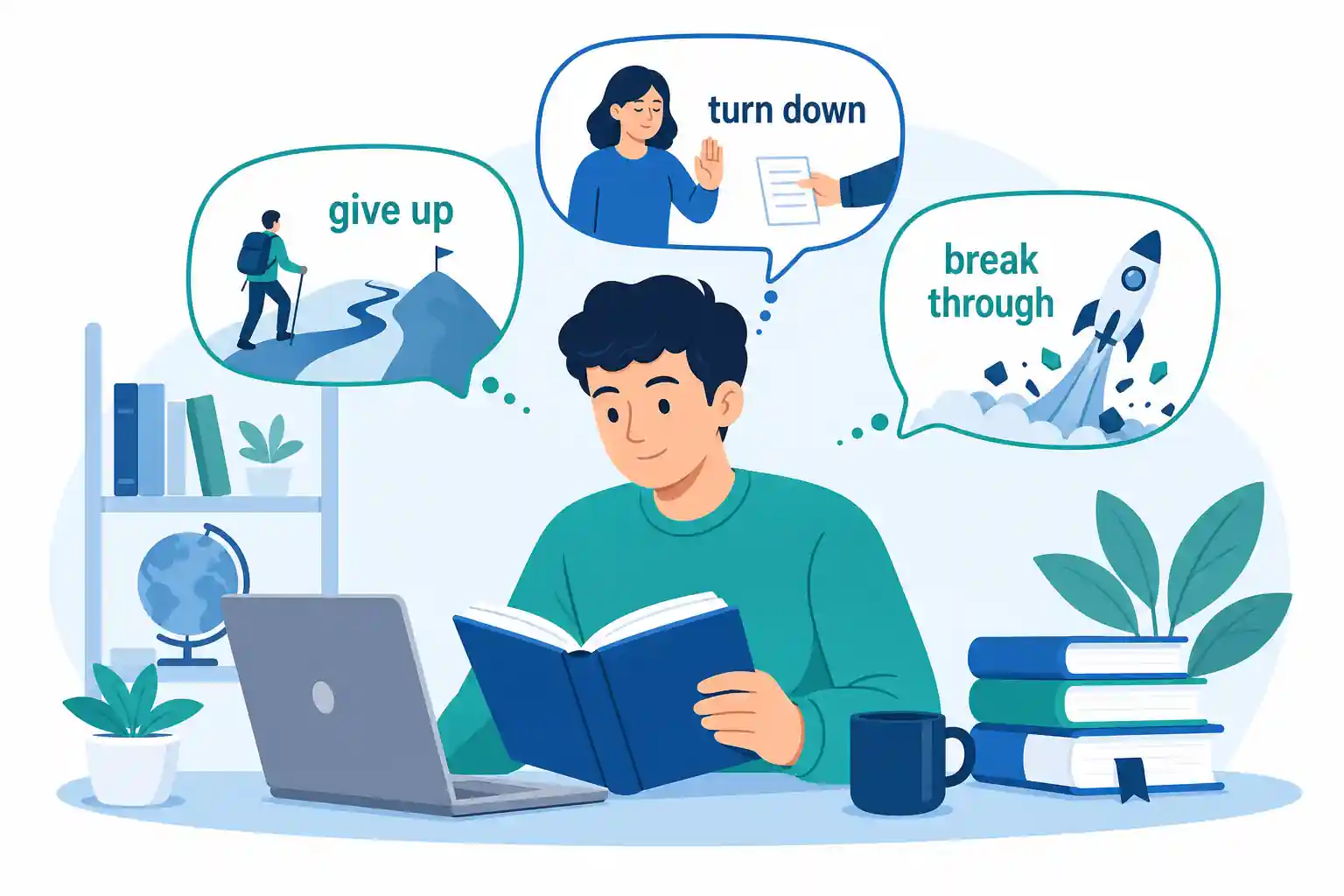
| 81 | give up | あきらめる;やめる | He gave up smoking three years ago. |
| 82 | turn down | 断る、拒否する | She turned down the job offer because the salary was too low. |
| 83 | take up | 新しい趣味を始める | I took up running during the pandemic and still do it. |
| 84 | drop out | 中退する | He dropped out of university to start a business. |
| 85 | sign up | 登録する、申し込む | Over 500 people signed up for the online course. |
| 86 | go ahead | 進める、実行する | The project was approved — we can go ahead with construction. |
| 87 | hold on | ちょっと待つ | Hold on — I’ll check the schedule and call you back. |
| 88 | come up | 発生する、持ち上がる | Something came up at work, so I’ll be late tonight. |
| 89 | sort out | 整理する、解決する | We need to sort out the accommodation before the trip. |
| 90 | get over | 回復する | It took her weeks to get over the flu this winter. |
日常のシチュエーション
| # | Phrasal Verb | 意味 | Example Sentence |
|---|---|---|---|
| 91 | run into | 偶然出会う | I ran into my old teacher at the supermarket yesterday. |
| 92 | look forward to | 楽しみにする | I’m looking forward to the holiday — I need a break. |
| 93 | cut down on | 量を減らす | The doctor told him to cut down on sugar and salt. |
| 94 | get rid of | 処分する、取り除く | We got rid of the old sofa and bought a new one. |
| 95 | put away | 片付ける、しまう | Please put away your toys before dinner. |
| 96 | check in | チェックインする | We checked in at the hotel at around 3 PM. |
| 97 | check out | チェックアウトする;調べる | We need to check out by 11 AM tomorrow. |
| 98 | come along | 進捗する;同行する | How is your English coming along? |
| 99 | calm down | 落ち着く | Calm down — getting angry won’t solve anything. |
| 100 | break down | 故障する | Our car broke down on the highway during the trip. |
B2レベル:中上級の句動詞(50例)
B2では、句動詞がよりイディオム的になります。文字通りの意味とは大きく異なる比喩的な意味を持つものが多くなります。
ビジネスと学術
| # | Phrasal Verb | 意味 | Example Sentence |
|---|---|---|---|
| 101 | draw up | 正式な文書を作成する | The lawyers drew up a new contract with revised terms. |
| 102 | lay off | 解雇する | The company laid off 200 workers due to falling revenue. |
| 103 | take into account | 考慮に入れる | You need to take into account the cost of shipping when pricing products. |
| 104 | rule out | 可能性を排除する | The police have not ruled out foul play in the investigation. |
| 105 | account for | 説明する;割合を占める | Online sales account for 40% of the company’s revenue. |
| 106 | bring about | 引き起こす | The new policy brought about significant changes in working conditions. |
| 107 | follow up | フォローアップする | I’ll follow up with the supplier next week about the delivery date. |
| 108 | come up against | 困難にぶつかる | We came up against several technical problems during testing. |
| 109 | call off | 中止する | They called off the outdoor event because of the storm warning. |
| 110 | hand over | 引き渡す | She handed over her responsibilities to her replacement before leaving. |
思考と意思決定
| # | Phrasal Verb | 意味 | Example Sentence |
|---|---|---|---|
| 111 | narrow down | 選択肢を絞り込む | We’ve narrowed down the candidates to three finalists. |
| 112 | weigh up | 長所と短所を検討する | He spent days weighing up whether to accept the transfer. |
| 113 | talk into | 説得して~させる | She talked me into running the marathon with her. |
| 114 | talk out of | 説得して~をやめさせる | His friends talked him out of quitting his job impulsively. |
| 115 | go through with | 困難にもかかわらずやり遂げる | She was nervous but went through with the presentation anyway. |
| 116 | back out of | 約束を撤回する | They backed out of the deal at the last minute. |
| 117 | look into | 調査する | The manager promised to look into the customer’s complaint. |
| 118 | open up | 心を開く | He finally opened up about the stress he’d been feeling at work. |
| 119 | come around | 考えを変える;意識を取り戻す | She was against the idea at first but eventually came around. |
| 120 | work through | 体系的に対処する | They worked through their disagreements with the help of a mediator. |
コミュニケーションと表現
| # | Phrasal Verb | 意味 | Example Sentence |
|---|---|---|---|
| 121 | speak up | 大きな声で話す;意見を言う | If you disagree, you should speak up during the meeting. |
| 122 | bring up | 話題を提起する | She brought up an interesting point about the budget. |
| 123 | get across | うまく伝える | He tried to get his point across, but nobody was listening. |
| 124 | brush off | 重要でないとして退ける | She brushed off the criticism and continued with her plan. |
| 125 | turn to | 助けを求める | When things got difficult, she turned to her family for support. |
| 126 | pass on | 情報を伝える | Could you pass on the message to everyone in the team? |
| 127 | take back | 発言を撤回する | I take back what I said — you were completely right. |
| 128 | cut in | 会話に割り込む | He cut in before she could finish explaining her idea. |
| 129 | go into | 詳しく説明する | I won’t go into all the reasons now — we can talk later. |
| 130 | sum up | 要約する | To sum up, we need to reduce costs and increase sales. |
変化と発展
| # | Phrasal Verb | 意味 | Example Sentence |
|---|---|---|---|
| 131 | build up | 徐々に増やす | She built up her savings over five years before buying the apartment. |
| 132 | break through | 障害を乗り越えて成果を出す | After months of research, the team finally broke through with a solution. |
| 133 | set back | 進捗を遅らせる | The funding problem set the project back by three months. |
| 134 | cut back | 支出や消費を削減する | The government cut back on education funding this year. |
| 135 | branch out | 新しい分野に進出する | The restaurant branched out into catering for corporate events. |
| 136 | phase in | 段階的に導入する | The company is phasing in a new remote work policy over six months. |
| 137 | wind down | 徐々に活動を縮小する;リラックスする | The conference was winding down, and people started leaving. |
| 138 | step down | 辞任する | The CEO stepped down after 15 years leading the company. |
| 139 | scale up | 規模を拡大する | They scaled up production to meet the sudden demand. |
| 140 | hold back | 進歩を妨げる;抑制する | Fear of failure held her back from applying for the promotion. |
感情と行動
| # | Phrasal Verb | 意味 | Example Sentence |
|---|---|---|---|
| 141 | bottle up | 感情を抑え込む | He bottles up his feelings and never talks about what’s bothering him. |
| 142 | lash out | 激しく攻撃する | She lashed out at her colleague after a stressful morning. |
| 143 | pull through | 困難な状況を乗り越える | The patient was critical but pulled through after surgery. |
| 144 | burn out | 燃え尽きる | She burned out after working 70-hour weeks for six months straight. |
| 145 | snap out of | ネガティブな状態から抜け出す | He told himself to snap out of it and focus on the solution. |
| 146 | live up to | 期待に応える | The film didn’t live up to the hype — it was disappointing. |
| 147 | own up to | 責任を認める | Nobody owned up to breaking the window in the office. |
| 148 | play along | 合わせるふりをする | She didn’t believe his excuse but played along to avoid conflict. |
| 149 | wear off | 徐々に消える(効果が) | The excitement of the new job wore off after a few months. |
| 150 | get away with | 罰を免れる | He was late every day and somehow got away with it for months. |
C1レベル:上級の句動詞(50例)
これらの句動詞は、アカデミックな文章、ビジネスの場面、洗練されたスピーチに登場します。使いこなせれば、自信に満ちた高度な英語話者としての印象を与えます。
ビジネスと戦略
| # | Phrasal Verb | 意味 | Example Sentence |
|---|---|---|---|
| 151 | buy out | 事業の持ち分を買い取る | The partners disagreed, so one bought the other out for $2 million. |
| 152 | bail out | 財政的に救済する | The government bailed out the failing bank to prevent economic collapse. |
| 153 | cash in on | 状況を利用して利益を得る | Competitors were quick to cash in on the company’s PR disaster. |
| 154 | ramp up | 急速に増やす | They ramped up marketing spending ahead of the product launch. |
| 155 | phase out | 段階的に廃止する | The manufacturer is phasing out the old model by the end of the year. |
| 156 | pencil in | 仮に予定を入れる | Let’s pencil in Thursday for the review — we can confirm later. |
| 157 | hammer out | 交渉して合意にこぎつける | The two sides hammered out an agreement after twelve hours of talks. |
| 158 | sign off on | 正式に承認する | The director still hasn’t signed off on the revised budget. |
| 159 | factor in | 考慮に含める | You need to factor in inflation when planning your retirement savings. |
| 160 | iron out | 細かい問題を解決する | We need to iron out the details before presenting to the board. |
高度なコミュニケーション
| # | Phrasal Verb | 意味 | Example Sentence |
|---|---|---|---|
| 161 | play down | 重要性を低く見せる | The spokesperson played down the severity of the data breach. |
| 162 | talk down to | 見下した態度で話す | She hated how her manager talked down to her in front of clients. |
| 163 | come out with | 驚くようなことを言う | He came out with the most bizarre excuse anyone had ever heard. |
| 164 | own up | 過ちを認める | After a week of denials, the politician finally owned up to the mistake. |
| 165 | water down | 弱める、骨抜きにする | Critics accused the government of watering down the environmental regulations. |
| 166 | gloss over | 詳しく触れずに済ませる | The report glossed over the safety concerns raised by engineers. |
| 167 | spell out | はっきりと説明する | Let me spell out exactly what will happen if we miss the deadline. |
| 168 | fend off | 防御する、退ける | The company fended off a hostile takeover attempt from a larger rival. |
| 169 | put forward | 正式に提案する | She put forward a radical plan to restructure the entire department. |
| 170 | touch on | 簡単に触れる | The speaker touched on climate change but didn’t go into detail. |
分析と推論
| # | Phrasal Verb | 意味 | Example Sentence |
|---|---|---|---|
| 171 | boil down to | 要するに~ということになる | The whole argument boils down to one question: who pays? |
| 172 | stem from | ~に起因する | Most of the delays stem from poor planning in the early stages. |
| 173 | hinge on | ~にかかっている | The success of the project hinges on securing funding by March. |
| 174 | pan out | 展開する、結果が出る | We’ll have to wait and see how the new strategy pans out. |
| 175 | stack up | 比較する | How does our proposal stack up against the competition? |
| 176 | flesh out | アイデアに肉付けする | The concept is good — now we need to flesh out the implementation plan. |
| 177 | zero in on | 一つのことに焦点を絞る | The investigators zeroed in on a discrepancy in the financial records. |
| 178 | piece together | 断片を組み合わせて理解する | Detectives pieced together what happened from CCTV footage and witness statements. |
| 179 | rule out | 可能性を排除する | Doctors ruled out serious illness but ordered further tests. |
| 180 | map out | 詳細に計画する | She mapped out her career goals for the next five years. |
社会と変化
| # | Phrasal Verb | 意味 | Example Sentence |
|---|---|---|---|
| 181 | crack down on | 厳しく取り締まる | The authorities cracked down on illegal parking near schools. |
| 182 | clamp down on | 強力な措置を取って抑制する | The platform clamped down on fake accounts spreading misinformation. |
| 183 | stand for | ~を表す;~を容認する | What does this abbreviation stand for? |
| 184 | stamp out | 完全に根絶する | The campaign aims to stamp out bullying in schools. |
| 185 | cave in | 圧力に屈する | After weeks of protests, the council caved in and reversed the decision. |
| 186 | opt out of | 参加しないことを選ぶ | More families are opting out of traditional schooling. |
| 187 | usher in | ~の到来を告げる | The invention of the internet ushered in a new era of communication. |
| 188 | die down | 徐々に弱まる | The controversy eventually died down after the company issued an apology. |
| 189 | crop up | 突然現れる | Problems keep cropping up whenever we try to launch the feature. |
| 190 | fall through | 計画が頓挫する | The acquisition fell through because the two companies couldn’t agree on price. |
個人と感情(上級)
| # | Phrasal Verb | 意味 | Example Sentence |
|---|---|---|---|
| 191 | draw on | 資源として活用する | She drew on her years of experience to handle the crisis calmly. |
| 192 | measure up | 基準に達する | He constantly felt he didn’t measure up to his parents’ expectations. |
| 193 | see through | 欺瞞を見抜く | She saw through his apology immediately — it wasn’t sincere. |
| 194 | come to terms with | 受け入れる | It took him months to come to terms with the loss. |
| 195 | dwell on | くよくよ考える | Don’t dwell on past mistakes — focus on what you can do now. |
| 196 | wear down | 徐々に抵抗力を弱める | Constant criticism from her boss gradually wore her down. |
| 197 | fall back on | 最後の手段として頼る | If the business fails, at least he has his engineering degree to fall back on. |
| 198 | write off | 見込みがないと切り捨てる | Critics wrote off the startup, but it’s now worth $500 million. |
| 199 | turn around | 好転させる | The new CEO managed to turn the company around in just two years. |
| 200 | pay off | 努力が報われる | All those late nights studying finally paid off — she got the highest score. |
気づくべきパターン
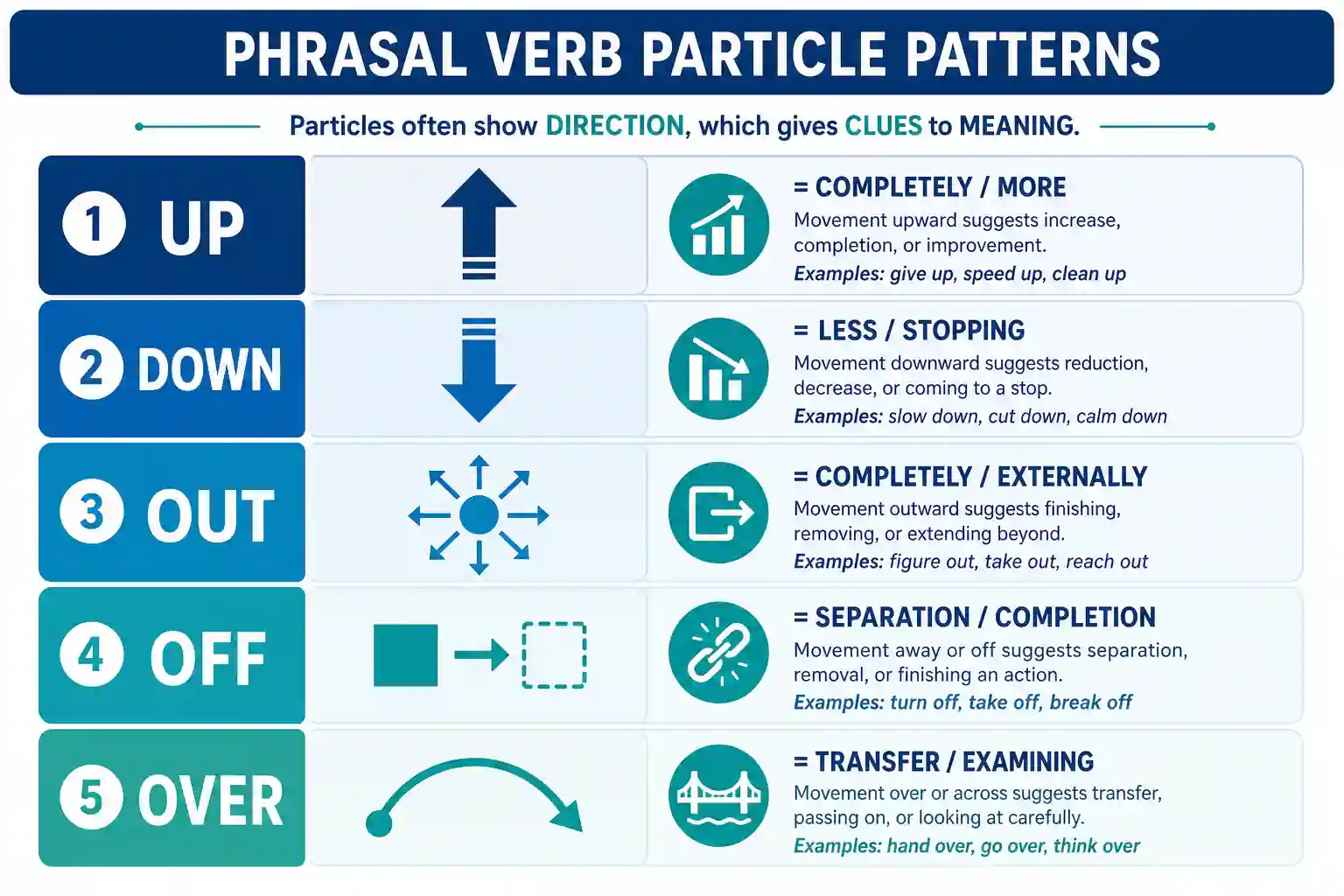
200の例文を読むと、いくつかのパターンが見えてきます。これらのパターンを理解すれば、辞書を引かなくても新しい句動詞の意味を推測できるようになります。
UPは「完全に」や「もっと」を意味することが多い
| Phrasal Verb | UPが加える意味 |
|---|---|
| clean up | 完全にきれいにする |
| use up | 完全に使い切る(何も残らない) |
| build up | 徐々に増やす |
| hurry up | スピードを上げる |
| speak up | もっと大きく/もっと大胆に話す |
DOWNは「減少」や「完全停止」を意味することが多い
| Phrasal Verb | DOWNが加える意味 |
|---|---|
| slow down | 速度を下げる |
| cut down | 量を減らす |
| break down | 完全に機能停止する |
| calm down | 興奮が収まる |
| wind down | 徐々に終わる |
OUTは「完全に」や「外部へ」を意味することが多い
| Phrasal Verb | OUTが加える意味 |
|---|---|
| find out | 発見する(情報が外に出る) |
| work out | 完全に解決する |
| phase out | 完全に排除する(時間をかけて) |
| spell out | 完全に、明確に説明する |
| burn out | 完全に消耗する |
OFFは「分離」や「完了」を意味することが多い
| Phrasal Verb | OFFが加える意味 |
|---|---|
| call off | 中止する(計画から切り離す) |
| pay off | 成果を出す(借金が清算される) |
| brush off | 退ける(押しのける) |
| wear off | 徐々に消える |
| lay off | 解雇する |
OVERは「移転」や「検討」を意味することが多い
| Phrasal Verb | OVERが加える意味 |
|---|---|
| take over | 支配権を移す |
| hand over | 所有を移す |
| go over | 注意深く調べる |
| think over | じっくり検討する |
| get over | 乗り越える(向こう側へ移る) |
分離可能 vs. 分離不可能:クイックリファレンス
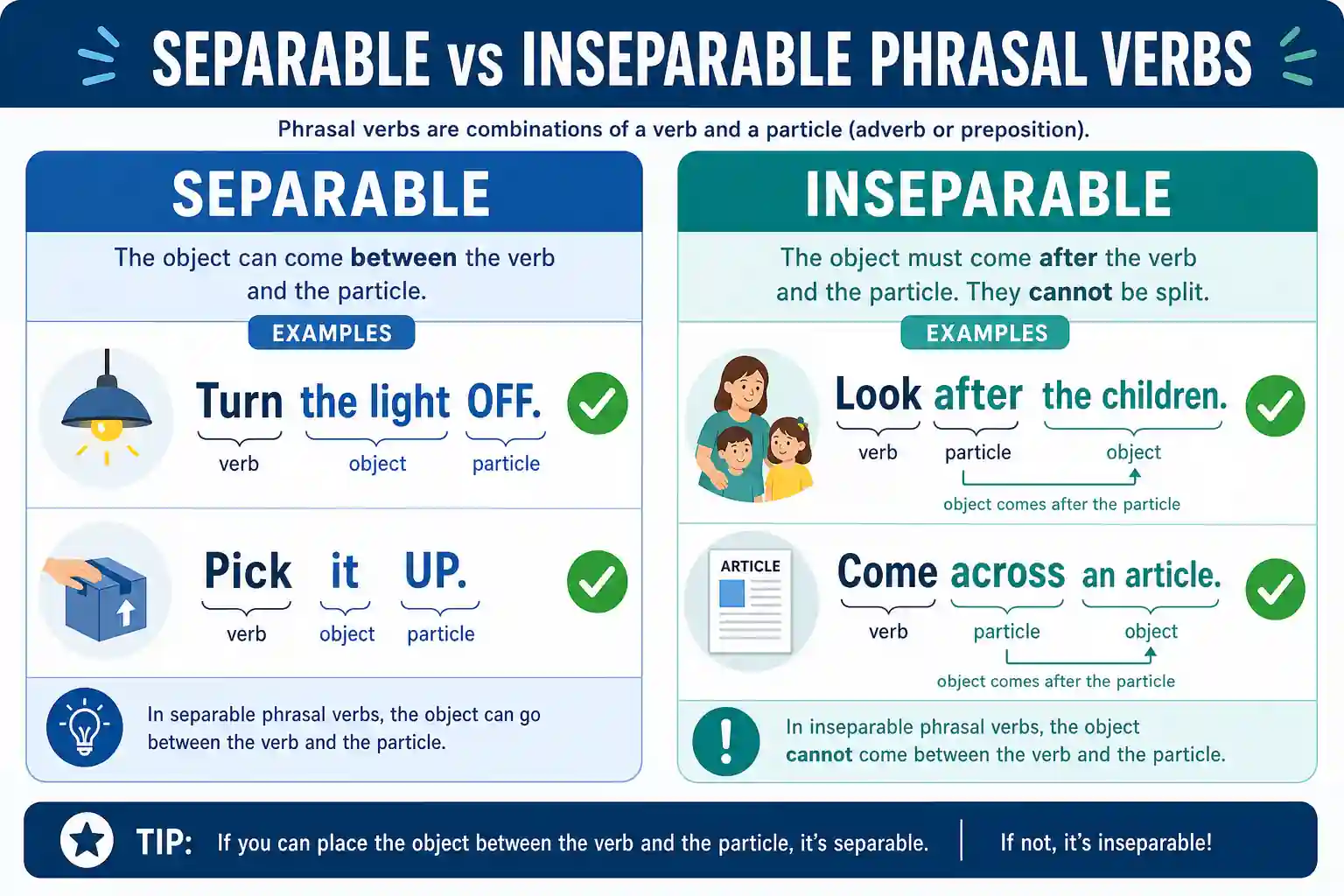
多くの学習者が語順に悩みます。句動詞が分離可能かどうかを確認する方法を紹介します。
分離可能 — 目的語を動詞と不変化詞の間に入れることができます(代名詞の場合は必須):
- Turn off the light → Turn the light off → Turn it off(代名詞では分離が必須)
- Pick up the book → Pick the book up → Pick it up
分離不可能 — 動詞と不変化詞は常に一緒でなければなりません:
-
Look after the children →
Look the children after(誤り) -
Come across an article →
Come an article across(誤り)
3語の句動詞は常に分離不可能です:
- Look forward to → I look forward to the trip
- Put up with → She put up with the noise
- Come up with → He came up with a plan
練習用の単語リスト
この記事に登場する句動詞の基本となる高頻度動詞25語を紹介します。辞書に追加して、さまざまな不変化詞との組み合わせを練習しましょう。
artery
名詞
動脈
例
- The blocked artery required immediate surgical intervention to save his life.
- This highway is a major artery connecting the city to surrounding areas.
coastal
形容詞
沿岸の, 海岸の, 海辺の
例
- Coastal towns often depend on fishing and tourism for their economy.
- The coastal erosion threatens many beachfront properties and buildings.
cooperate
動詞
協力する, 協働する
donate
動詞
寄付する
例
- Many people donate money to charities that help homeless individuals.
- She decided to donate blood to help patients in emergency situations.
evaluate
動詞
評価する, 査定する
例
- Companies evaluate job candidates based on experience, skills, and personality.
- Teachers evaluate student progress through tests, projects, and classroom participation.
graduate
動詞
卒業する
例
- She will graduate from university next year with a degree in engineering.
- Students must complete all requirements before they can graduate from high school.
guide
動詞
案内する
例
- Parents should guide their children to make responsible decisions.
- The experienced hiker will guide the group through the mountain trail safely.
implication
名詞
暗示, 含意
例
- Scientists are studying the implications of climate change for future generations.
- The implication of his statement was that he disagreed with the policy.
candidate
名詞
候補者, 志願者
例
- Each presidential candidate presented their policy plans to voters.
- The job candidate impressed the interview panel with her experience.
prejudice
名詞
偏見, 先入観, 差別
例
- Education helps overcome prejudice and promotes understanding.
- Racial prejudice damages communities and individuals alike.
discourage
動詞
落胆させる, 思いとどまらせる, 意欲をなくさせる
例
- Don't let one failure discourage you from pursuing your dreams.
- High prices discourage many people from buying organic food products.
resolve
動詞
解決する, 決意する
例
- Mediator helps parties resolve dispute through negotiation.
- Technical team will resolve software problems quickly.
off
副詞
離れて, 切れて, 休みの
例
- Please turn off the lights before leaving the room.
- The dog ran off into the forest chasing wild rabbits.
tragedy
名詞
悲劇
例
- Natural tragedy affects thousands of innocent people.
- Personal tragedy changes person's life perspective completely.
admission
名詞
入場, 入学, 認めること
例
- Her admission to the prestigious medical school was the result of hard work.
- The museum offers free admission on the first Sunday of every month.
boom
名詞
急増, ブーム, 爆発
例
- The boom of thunder echoed across the valley.
- The technology boom created many new millionaires.
horizon
名詞
地平線
例
- The sun disappeared behind the horizon as evening approached.
- Traveling broadens your horizon and exposes you to new cultures.
jury
名詞
陪審団, 陪審
例
- The jury deliberated for several hours before reaching a verdict.
- The talent show jury consisted of professional musicians and entertainers.
lifelong
形容詞
一生の, 生涯の
例
- Learning is a lifelong process that never truly ends.
- Their lifelong friendship began during elementary school years.
motivated
形容詞
やる気のある
例
- Motivated employee seeks additional responsibilities and challenges at work.
- Success requires being motivated even when facing difficult obstacles.
total
形容詞
全体の, 総合的な, 完全な
例
- Total cost includes all fees and expenses.
- Total silence fills room during meditation session.
humorous
形容詞
ユーモラスな, 面白い, 滑稽な
例
- She writes humorous articles about everyday life and family experiences.
- The humorous speech made everyone laugh and lightened the serious mood.
indispensable
形容詞
不可欠な
例
- Clean water is indispensable for human survival and good health.
- Her experience and skills make her indispensable to the research team.
firmly
副詞
しっかりと, 堅く
例
- Hold the rope firmly while climbing down the steep mountain slope.
- The manager firmly believed in treating all employees with respect.
normally
副詞
通常は, 普通は, ふつうは
例
- Heart normally beats between sixty and hundred times per minute.
- Students normally arrive at school before morning bell rings.
次のステップ
-
自分のレベルを選ぶ。 自分の現在の力に合ったセクションを見つけ、まずはその50の例文に集中しましょう。
-
自分で5つの文を書く。 自分のレベルから句動詞を5つ選び、自分の生活に関する文を書いてみましょう。自分に関連した文は教科書の例文よりもずっと記憶に残ります。
-
基本動詞別に学ぶ。 各意味の詳しい解説は、動詞別ガイドをご覧ください:GETの句動詞、MAKEの句動詞、最も使われる句動詞50選。
-
間隔反復で練習する。 句動詞をLinglifyの辞書に追加し、最適な間隔で復習しましょう。カテゴリ別のリストは句動詞ライブラリをご覧ください。
-
ルールを学ぶ。 分離可能と分離不可能の区別がわからない場合は、文法を詳しく解説した句動詞完全ガイドをお読みください。
よくある質問
句動詞とは何ですか?例を教えてください。
句動詞は、動詞+前置詞または副詞を組み合わせて、元の動詞とは異なる新しい意味を生み出す表現です。たとえば「give up」は「あきらめる」(文字通りの「give」+「up」ではない)、「run into」は「偶然出会う」、「break down」は「故障する」という意味です。英語には何千もの句動詞があり、ネイティブスピーカーは日常会話で常に使っています。
文の中で句動詞はどう使いますか?
句動詞は通常の動詞と同じ位置で使います。「She gave up smoking」は「She quit smoking」と同じように機能します。重要なルール:分離可能な句動詞では、代名詞は動詞と不変化詞の間に入れなければなりません(「Turn it off」であり「Turn off it」ではない)。分離不可能な句動詞では、目的語は常にフレーズ全体の後に来ます(「Look after the children」であり「Look the children after」ではない)。
句動詞を使った例文を10個教えてください。
よく使われるもの10個を紹介します:(1) I wake up at 7 AM. (2) Please turn off the light. (3) She gave up her job. (4) We ran out of time. (5) He came up with a great idea. (6) They broke up last month. (7) I’m looking forward to the weekend. (8) She turned down the offer. (9) The car broke down on the highway. (10) He picked up Spanish while living abroad.
英語には句動詞がいくつありますか?
数え方にもよりますが、5,000から10,000と推定されています。ただし、ほとんどのネイティブスピーカーが日常会話で使うのは約200〜300個です。学習者にとっては、最も一般的な100個の句動詞(句動詞100選ガイドで取り上げています)を知っていれば、遭遇するほとんどの場面に対応できます。
句動詞はどのレベルですか?
句動詞はすべてのレベルにまたがっています。「wake up」「turn on」「sit down」などの基本的なものはA2レベルです。「give up」「look forward to」「find out」などよく使うものはB1です。「bring about」「rule out」「phase in」などより抽象的なものはB2です。「cash in on」「boil down to」「play down」など非常にイディオム的なものはC1です。この記事はレベル別に整理されているので、体系的に学ぶことができます。