50個最常用英文片語動詞:日常英語必學
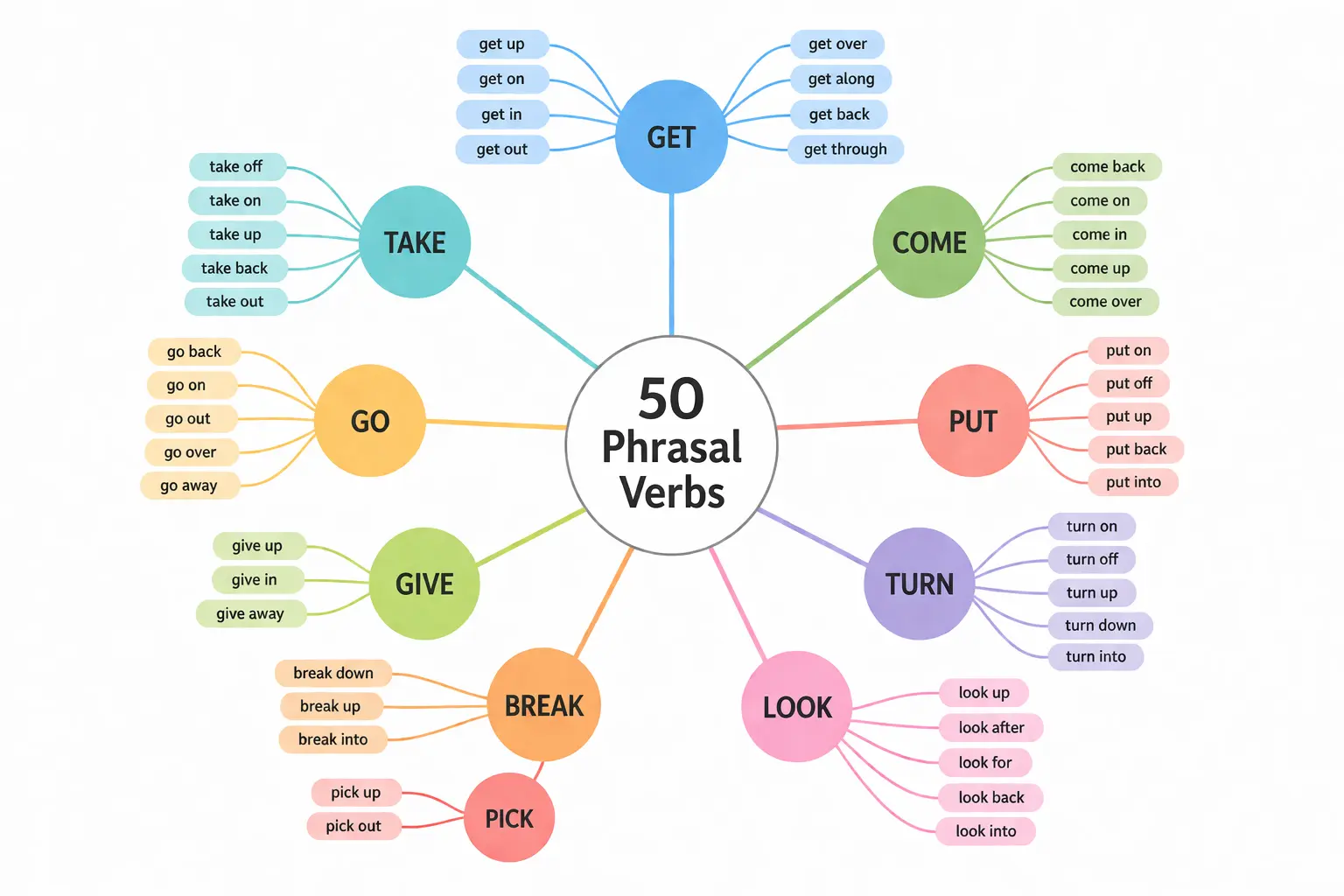
英語有超過10,000種片語動詞組合,但你遠不需要那麼多。只要50個片語動詞就能涵蓋母語者日常對話中的絕大多數用法。如果你學會這份清單上的50個,你將能理解在電影、播客、職場對話和隨意訊息中聽到的大多數片語動詞。
本指南依基本動詞分類——GET、TAKE、GO、PUT、TURN、LOOK 等——因為當你依動詞家族學習時,片語動詞更容易記住。每個條目都提供含義和兩個例句,展示真實的日常用法。
- 片語動詞總計:50個
- 程度:A2–B2(初級至中高級)
- 最適合:日常對話、IELTS 口語、一般流利度提升
- 分類:依基本動詞(10個動詞家族)
為什麼依基本動詞學習?
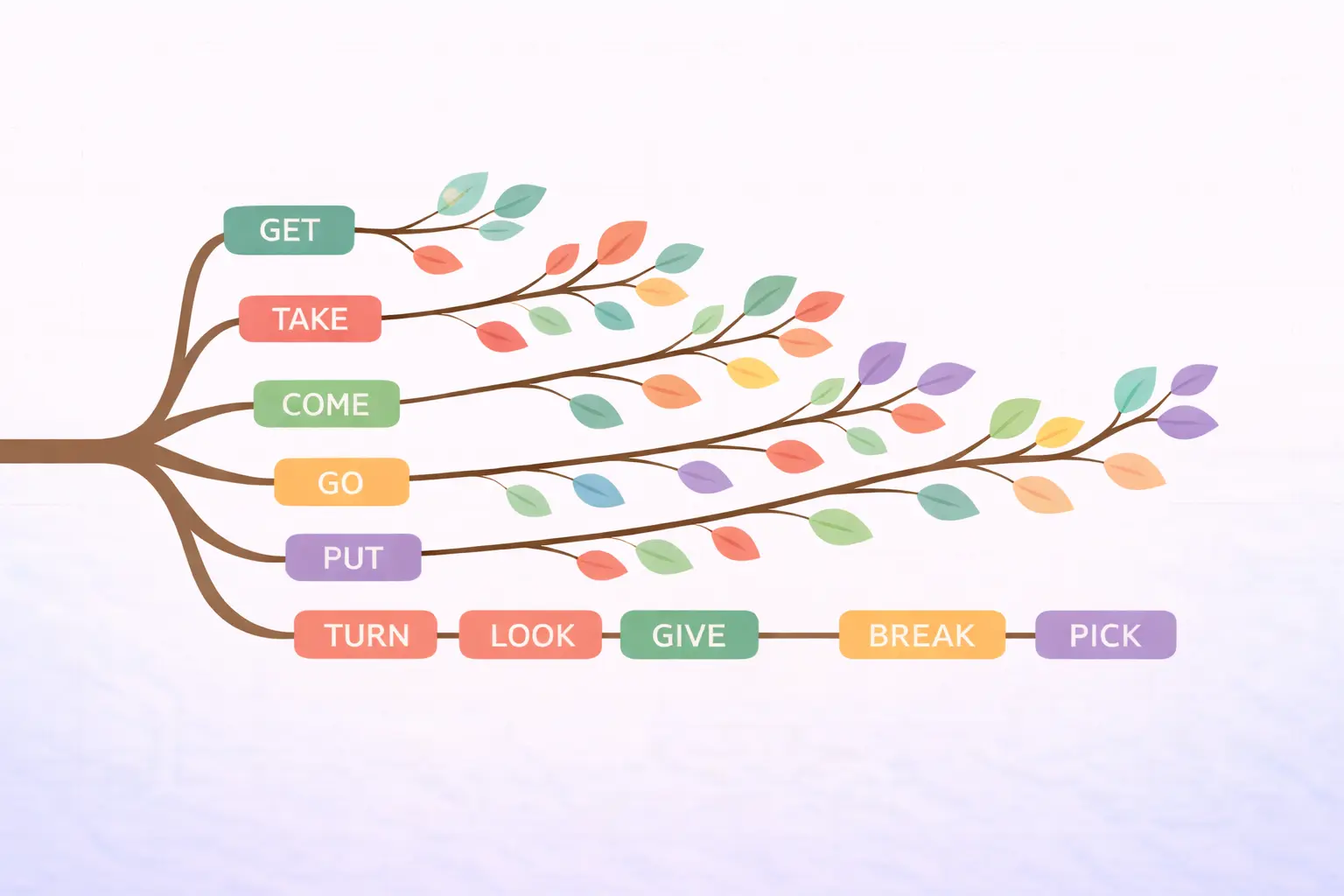
大多數片語動詞清單把100個隨機動詞堆在表格裡。這讓記憶變得很困難。當你依基本動詞分組時,規律就顯現出來:
- GET = 移動、狀態改變、獲得
- TAKE = 移除、接受、開始
- GO = 移動、繼續、改變
- PUT = 放置、容忍、延遲
- TURN = 改變方向或狀態
把「get up」、「get on」、「get off」和「get over」放在一起學習,比分散在字母表清單中學習要快得多。你的大腦把它們連結到同一個根,每個新的片語動詞都變得更容易記住。
GET——最萬能的動詞
GET 比任何其他英文動詞都能形成更多常見的片語動詞。這八個幾乎出現在每次對話中。
| # | 片語動詞 | 含義 | 例句 |
|---|---|---|---|
| 1 | get up | 從床上起身;站起來 | I get up at 6:30 every morning for work. / She got up from her chair and walked to the window. |
| 2 | get on | 登上交通工具;有某種關係 | We got on the bus just as it was about to leave. / How do you get on with your new neighbours? |
| 3 | get off | 離開交通工具;下班 | Get off at the third stop — the library is right there. / What time do you get off work today? |
| 4 | get along with | 與某人有友好關係 | She gets along with everyone in the office. / My cat does not get along with the new dog. |
| 5 | get over | 從某事中恢復 | It took him weeks to get over the flu. / She finally got over the shock of losing her job. |
| 6 | get back | 返回;再次收到某物 | What time did you get back from the trip? / I lent him my book a month ago and still have not got it back. |
| 7 | get into | 進入;對…產生興趣或參與 | He got into the car without saying a word. / She got into photography during the lockdown. |
| 8 | get rid of | 移除或丟棄不想要的東西 | We need to get rid of this old sofa — it is falling apart. / I finally got rid of those annoying pop-up ads on my phone. |
注意規律: GET 幾乎總是意味著某種改變——位置的改變(get up、get on、get off)、狀態的改變(get over、get into)或所有權的改變(get back、get rid of)。
TAKE——移除、接受、開始
TAKE 片語動詞涉及移除某物、接受責任或開始一個活動。
| # | 片語動詞 | 含義 | 例句 |
|---|---|---|---|
| 9 | take off | 脫下衣物;(飛機)起飛;突然成功 | Take off your jacket — it is warm inside. / The plane took off 20 minutes late because of the weather. |
| 10 | take on | 接受任務或責任;雇用 | She took on the project even though she was already busy. / The company is taking on 50 new employees this quarter. |
| 11 | take up | 開始新的嗜好或活動;佔用空間或時間 | He took up running last year and has already done a marathon. / This table takes up too much space in the kitchen. |
| 12 | take care of | 照顧;處理 | Can you take care of the kids while I go to the dentist? / Do not worry about the invoice — I will take care of it. |
| 13 | take out | 從裡面移出;帶某人去餐廳或活動 | He took out his wallet and paid for the meal. / I am taking my parents out for dinner on their anniversary. |
注意規律: TAKE 通常意味著「從一個地方或狀態移出」。你脫下衣服(take off)、取出錢包(take out)、承擔工作(take on,從別人的工作堆中移出)。
COME——到達、發生、發現
COME 片語動詞描述到達、事情發生和意外的發現。
| # | 片語動詞 | 含義 | 例句 |
|---|---|---|---|
| 14 | come back | 返回某地 | She went to Australia for a year but came back because she missed her family. / When are you coming back from lunch? |
| 15 | come in | 進入房間或建築 | Come in and sit down — the meeting is about to start. / The door was open, so I just came in. |
| 16 | come up | 出現;被提及;接近 | Something urgent came up at work, so I will be late. / Your name came up in the conversation. |
| 17 | come up with | 想出一個想法、計劃或解決方案 | She came up with a creative solution to the problem. / We need to come up with a name for the new product. |
| 18 | come across | 偶然發現某物;顯得或看起來像 | I came across your article while researching online. / He comes across as confident, but he is actually quite shy. |
注意規律: COME 意味著向說話者或結果移動。東西 come back(回到你這裡)、come up(進入你的注意範圍)、come across 你的路(出現在你的經歷中)。
GO——移動、繼續、改變
GO 片語動詞表達向外移動、延續和改變。
| # | 片語動詞 | 含義 | 例句 |
|---|---|---|---|
| 19 | go on | 繼續;發生 | Please go on — I did not mean to interrupt you. / What is going on here? Why is everyone shouting? |
| 20 | go out | 離開家進行社交活動;熄滅 | We go out for dinner every Friday night. / The candle went out because of the wind. |
| 21 | go ahead | 繼續進行;開始 | Go ahead and start without me — I will catch up. / The concert will go ahead despite the rain. |
| 22 | go back | 返回某地或之前的狀態 | I left my phone at the office and had to go back for it. / Once you send the email, you cannot go back and change it. |
| 23 | go through | 經歷困難的事情;仔細審查 | She went through a very tough period after the divorce. / The lawyer went through every clause in the contract. |
注意規律: GO 意味著從當前位置向外移動。你 go out(離開)、go back(回到你之前所在的地方)、go through 困難的經歷(從一側穿到另一側)。
PUT——放置、延遲、容忍
PUT 片語動詞涉及放置東西、推遲和處理情況。
| # | 片語動詞 | 含義 | 例句 |
|---|---|---|---|
| 24 | put on | 穿上;增重;播放音樂/節目 | Put on a warm coat — it is freezing outside. / She put on some music to help her concentrate. |
| 25 | put off | 推遲;使某人不想做某事 | Do not put off the dentist appointment again — you need to go. / The long commute put me off taking the job. |
| 26 | put up with | 容忍令人煩惱或不愉快的事情 | I cannot put up with his constant complaining anymore. / How do you put up with the noise from the construction site? |
| 27 | put away | 把東西放回適當的位置 | Please put away the dishes after you dry them. / The kids need to put away their toys before bedtime. |
| 28 | put down | 放在表面上;批評某人 | He put down his phone and looked at me. / Stop putting yourself down — your work is excellent. |
注意規律: PUT 涉及把某物放在某個地方——字面上(put on 衣服、put away 碗盤、put down 電話)或比喻上(put off = 放在未來、put up with = 把自己放在不愉快的事物之下)。
TURN——改變方向或狀態
TURN 片語動詞描述轉換、改變和轉變。
| # | 片語動詞 | 含義 | 例句 |
|---|---|---|---|
| 29 | turn on | 啟動設備;使某物運作 | Turn on the air conditioning — it is too hot in here. / She turned on the laptop and checked her emails. |
| 30 | turn off | 關閉設備;離開道路 | Please turn off the lights when you leave the room. / Turn off at the next exit to reach the hotel. |
| 31 | turn out | 有特定結果;證明是 | The party turned out to be much more fun than I expected. / It turned out that he had been lying the whole time. |
| 32 | turn up | 到達(常為意外);調大音量 | She turned up at the party without telling anyone. / Can you turn up the volume? I cannot hear the news. |
| 33 | turn down | 拒絕;降低音量 | She turned down the job offer because the salary was too low. / Turn down the music — the baby is sleeping. |
注意規律: TURN 總是意味著狀態的改變。ON/OFF = 運作狀態。UP/DOWN = 某物的程度。OUT = 某物最終達到的狀態。DOWN(拒絕)= 轉離提供給你的東西。
LOOK——搜索、觀察、期待
LOOK 片語動詞與看、搜索和引導注意力有關。
| # | 片語動詞 | 含義 | 例句 |
|---|---|---|---|
| 34 | look for | 試圖找到某物 | I am looking for my car keys — have you seen them? / She has been looking for a new apartment for three months. |
| 35 | look after | 照顧 | My mother looks after the children when I am at work. / You need to look after your health — you have been working too hard. |
| 36 | look up | 查找資訊;改善 | Look up the word in a dictionary if you do not know it. / Business has been looking up since the new manager arrived. |
| 37 | look forward to | 對未來的事感到興奮 | I am looking forward to the weekend. / We look forward to meeting you at the interview. |
| 38 | look out | 小心;注意危險 | Look out! There is a step right in front of you. / Look out for pickpockets in crowded tourist areas. |
注意規律: LOOK 始終是關於引導你的注意力。FOR = 朝向你想要的東西。AFTER = 朝向需要你的人。UP = 朝向資訊來源。FORWARD TO = 朝向未來。OUT = 朝向潛在的危險。
GIVE——停止、歸還、分發
| # | 片語動詞 | 含義 | 例句 |
|---|---|---|---|
| 39 | give up | 停止嘗試;戒掉習慣 | She gave up smoking three years ago. / The puzzle is impossible — I give up. |
| 40 | give back | 將某物歸還給主人 | Can you give back the tools you borrowed last week? / The charity works to give back to the community. |
| 41 | give away | 捐贈;洩露秘密 | We gave away our old furniture when we moved. / Do not give away the ending of the movie! |
BREAK——結束、停止、進入
| # | 片語動詞 | 含義 | 例句 |
|---|---|---|---|
| 42 | break up | 結束關係;失去訊號 | They broke up after dating for two years. / You are breaking up — I will call you back on a better connection. |
| 43 | break down | 停止運作;情緒崩潰 | The car broke down in the middle of the highway. / She broke down in tears when she heard the news. |
| 44 | break into | 強行進入;突然開始 | Someone broke into the house while they were on holiday. / He broke into a run when he saw the bus leaving. |
PICK——選擇、收集、學習
| # | 片語動詞 | 含義 | 例句 |
|---|---|---|---|
| 45 | pick up | 接某人;隨意學習;改善 | I will pick you up at the station at 5 PM. / She picked up some Spanish while living in Barcelona. |
| 46 | pick out | 選擇;從群體中挑選 | She picked out a dress for the wedding. / Can you pick out the best candidate from these CVs? |
SET 和 BRING——開始和介紹
| # | 片語動詞 | 含義 | 例句 |
|---|---|---|---|
| 47 | set up | 安排;建立;準備 | He set up his own business after leaving the bank. / Can you help me set up the projector for the presentation? |
| 48 | set off | 開始旅程;觸發 | We set off early to avoid the morning traffic. / The alarm was set off by a cat walking past the sensor. |
| 49 | bring up | 提及話題;撫養孩子 | He brought up the salary issue during the meeting. / She was brought up in a small village in the south of France. |
| 50 | bring back | 歸還某物;使回憶起 | Please bring back the library books before Friday. / This song brings back memories of my school days. |
快速參考:全部50個一覽
| 基本動詞 | 片語動詞 | 數量 |
|---|---|---|
| GET | get up, get on, get off, get along with, get over, get back, get into, get rid of | 8 |
| TAKE | take off, take on, take up, take care of, take out | 5 |
| COME | come back, come in, come up, come up with, come across | 5 |
| GO | go on, go out, go ahead, go back, go through | 5 |
| PUT | put on, put off, put up with, put away, put down | 5 |
| TURN | turn on, turn off, turn out, turn up, turn down | 5 |
| LOOK | look for, look after, look up, look forward to, look out | 5 |
| GIVE | give up, give back, give away | 3 |
| BREAK | break up, break down, break into | 3 |
| PICK | pick up, pick out | 2 |
| SET | set up, set off | 2 |
| BRING | bring up, bring back | 2 |
| 總計 | 50 |
練習詞彙
這25個單字經常與常見片語動詞一起出現。將它們加入你的 Linglify 字典,用間隔重複法練習。
finance
動詞
財務
範例
- Many students need loans to finance their college education expenses.
- The bank agreed to finance the construction of the new shopping center.
executive
形容詞
行政的
範例
- Executive decisions require careful consideration of multiple factors and consequences.
- The executive branch of government is responsible for implementing laws.
valid
形容詞
有效
範例
- Valid argument supports logical reasoning and conclusion.
- Valid passport allows international travel without problems.
culmination
名詞
頂點, 高潮
範例
- The graduation ceremony was the culmination of four years of hard study.
- Winning the championship represented the culmination of the team's efforts.
transmit
動詞
傳送
範例
- Disease may transmit through contact with surfaces.
- Satellites transmit signals across vast distances effectively.
gulp
動詞
吞下
範例
- She had to gulp nervously before giving her presentation to the board.
- The thirsty runner gulped down an entire bottle of cold water.
cherished
形容詞
珍愛的
範例
- His cherished dream of becoming a pilot finally came true.
- The old photograph was her most cherished possession from childhood.
fate
名詞
命運
範例
- She believes that fate brought them together at the right moment.
- The explorer's fate remained unknown after he disappeared in the jungle.
spellbound
形容詞
著迷
範例
- Audience sits spellbound during magical performance tonight.
- Children remain spellbound by storyteller's fascinating tales.
pet
形容詞
寵物
範例
- Pet project receives extra attention and resources.
- Pet theory explains professor's research focus area.
master
名詞
大師
範例
- Apprentices learn traditional crafts from experienced master craftsmen.
- The chess master defeated opponents using brilliant strategic moves.
payable
形容詞
應付的, 到期支付的
範例
- All dues are payable at the end of the month.
- The invoice is payable within 30 days.
serenity
名詞
寧靜
範例
- She maintained her serenity despite the chaos.
- The serenity of the lake was calming.
classy
形容詞
高雅
範例
- Classy restaurant serves gourmet food in elegant dining atmosphere.
- Her classy appearance impressed everyone at formal business meeting.
revolt
動詞
反抗, 反叛
範例
- A revolt broke out in the city center last night.
- The workers decided to revolt against the unfair conditions.
rethink
動詞
重新思考, 再考慮
範例
- He decided to rethink his position on the issue.
- We need to rethink our strategy for the project.
gypsy
名詞
吉普賽人
範例
- Traditional gypsy music features violin and passionate vocals.
- Wandering gypsy caravan traveled through European countryside.
buffoon
名詞
小丑
範例
- Court buffoon entertained royal family with silly performances.
- Don't act like buffoon during important business presentation.
execution
名詞
執行
範例
- Perfect execution of the dance routine impressed judges and audience members.
- The execution of the business plan requires careful coordination and timing.
territory
名詞
領土
範例
- Animal territory provides food and shelter resources.
- National territory requires protection from foreign invasion.
tribe
名詞
部落
範例
- Ancient tribe lived in harmony with nature.
- Indigenous tribe preserves traditional customs and languages.
resolve
動詞
解決
範例
- Mediator helps parties resolve dispute through negotiation.
- Technical team will resolve software problems quickly.
flexible
形容詞
有彈性的
範例
- Flexible working arrangements help employees balance work and family life.
- The flexible plastic tube can bend without breaking or cracking.
如何學習這50個片語動詞
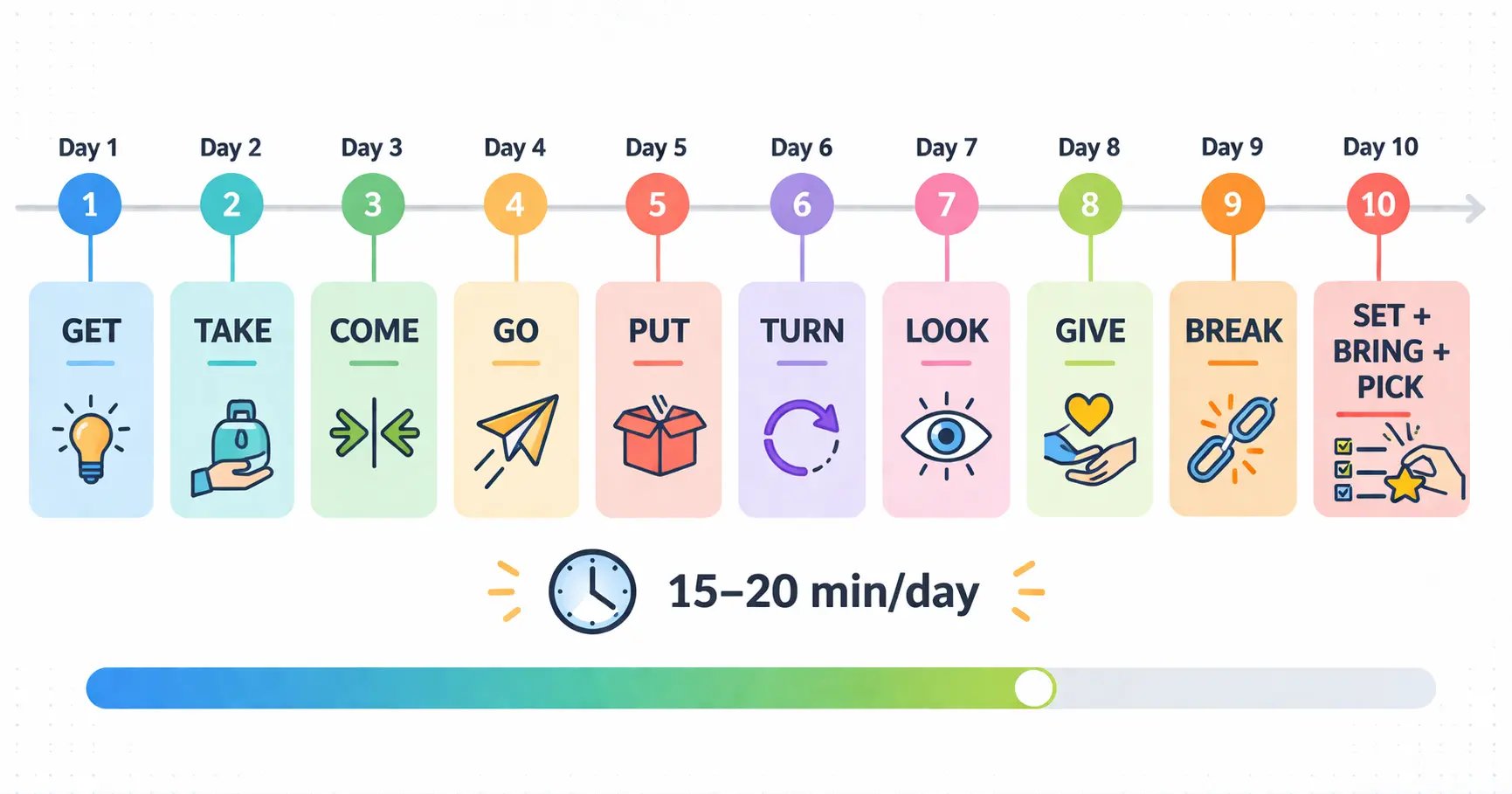
1. 每天學一個動詞家族。 星期一 = GET 片語動詞。星期二 = TAKE。星期三 = COME。10天後,你將涵蓋全部50個。每個家族花15–20分鐘。
2. 寫關於你自己生活的句子。 不要只是閱讀例句——寫你自己的。「I got up at 7 today.」「I need to get rid of my old phone.」個人句子比一般教科書例子創造更強的記憶。
3. 使用「替換和升級」法。 花一天時間,試著在說話時替換基本動詞:不說「I started running」,說「I took up running」。不說「I returned」,說「I came back」。有意識的替換建立習慣。
4. 帶字幕觀看英語內容。 選擇一個電視節目或 YouTube 頻道,數數在一集中你聽到多少這50個片語動詞。你會驚訝——大多數一集包含15–20個。
5. 用基本動詞測試自己。 遮住含義欄,試著回憶每個片語動詞的意思。然後遮住片語動詞欄,試著從含義產出它。兩個方向都能建立更強的回憶。
如需完整的詞彙學習系統,請閱讀我們關於如何提升詞彙量的指南。
接下來做什麼
-
擴展到100個。 熟悉這50個後,轉向我們的100個片語動詞附含義與例句,了解依主題分類的完整必學清單。
-
深入了解特定動詞。 如需完整分解含MAKE的每個片語動詞(「make up」單獨就有5+種含義),請見我們的含MAKE的片語動詞指南。
-
進階到高難度。 對於用於學術和職業英語的C1–C2片語動詞,請閱讀我們的高難度片語動詞指南。
-
在工作中應用。 對於特定於會議、電子郵件和商務溝通的片語動詞,請查看我們的商務片語動詞指南。
-
建立每日學習習慣。 按照我們的詞彙逐步系統,在兩週內將這50個轉化為主動詞彙。
常見問題
英語中最常用的10個片語動詞是哪些?
根據頻率數據,前10個是:get up、go on、come back、find out、give up、turn out、pick up、look for、take off 和 go out。這些在英語口語中每百萬個單字中出現數千次。如果你只學10個,就選這些。
這份清單和100個片語動詞清單有什麼區別?
本文按基本動詞(GET、TAKE、COME 等)教授50個片語動詞,每個家族有兩個例句和規律說明。我們的100個片語動詞清單按主題(日常生活、工作、旅行、情緒)分類,涵蓋兩倍的動詞,每個一個例句。使用本文學習規律;用100個清單作為參考。
學習50個片語動詞需要多長時間?
通過有針對性的每日學習,大多數學習者可以在2–3週內學習50個片語動詞。每天學一個動詞家族(15–20分鐘),然後在開始新的之前複習前一天的家族。學習10天後,再花一週主動練習——用它們寫作和說話。
這些片語動詞在英式和美式英語中相同嗎?
是的,這份清單上的所有50個片語動詞在英式和美式英語中都使用。有些有輕微的偏好差異——美國人比英國人更常說「get rid of」,英國人也可能使用「dispose of」——但所有50個在兩種變體中都普遍理解和使用。
這些片語動詞可以用在 IELTS 寫作中嗎?
有些適合 IELTS 寫作:「go through」、「come up with」和「set up」在文章中效果很好。其他如「hang out」和「get rid of」更適合口語。有關 IELTS 特定片語動詞建議,請見我們的 IELTS 詞彙指南。
為什麼片語動詞這麼難學?
三個原因:(1)含義通常無法從單字預測——「put up with」邏輯上不意味著「忍受」;(2)許多片語動詞有多種含義——「take off」意思是脫衣服、起飛或突然成功;(3)語法很棘手——有些可以分離(「turn the light off」),有些不行(「look after the kids」,不是「look the kids after」)。本文中的基本動詞分類通過展示動詞家族內的規律來幫助解決原因#1。