
New English Words with Meanings: A Modern Vocabulary Guide
Modern English changes quickly, but “new” does not have to mean obscure slang that disappears next month. The most useful modern words are the ones you can recognise in news, at work, online, and in everyday conversation — words such as deepfake, hybrid work, sustainable, and binge-watch.
This guide focuses on contemporary vocabulary that is already widely understood. Each entry has a plain-English meaning and a natural example, so you can decide whether the word belongs in your active vocabulary.
- Focus: current, useful English rather than short-lived trends
- Level: B1–C1
- Best for: reading news, work, social media, university, and conversation
- How to use it: learn one theme at a time, then write or say your own example
For an annual update of the newest dictionary additions, read New English Words in 2026. For a shorter starter list, see 50 New English Words with Meanings and Sentences.
How to Decide Whether a New Word Is Worth Learning
Do not learn a word only because it is fashionable. A high-value word passes three tests:
- You meet it in more than one place. You see it in articles, hear it in podcasts, or notice it at work.
- It names a useful idea. “Remote-first” describes a real working model; it is more useful than a one-week meme.
- You can use it naturally. If you can make one sentence about your own life, it is a good candidate for active study.
Technology and Digital Life
| Word | Meaning | Example sentence |
|---|---|---|
| deepfake | media made with AI to look or sound real | The company warned staff about deepfake voice messages. |
| algorithm | a set of rules a system uses to make decisions or show content | The app’s algorithm suggested videos similar to the one I watched. |
| prompt | an instruction given to an AI system | A clear prompt usually produces a more useful answer. |
| phishing | an attempt to steal information through a fake message or website | Never enter your password after clicking a suspicious phishing link. |
| cybersecurity | protection of devices, networks, and data from digital attacks | Cybersecurity is now a basic concern for small businesses too. |
| stream | to watch or listen to media over the internet | We streamed the documentary at home. |
| binge-watch | to watch many episodes of a series in one period | They binge-watched the whole season over the weekend. |
| cloud-based | stored or run online rather than only on one computer | The team moved its files to a cloud-based system. |
| digital footprint | the information about you that exists online | Employers may look at your public digital footprint. |
| fact-check | to verify whether information is true | Please fact-check that claim before sharing it. |

Work, Learning, and the Economy
| Word | Meaning | Example sentence |
|---|---|---|
| hybrid work | a job split between home and an office | Hybrid work gives the team two office days each week. |
| remote-first | designed mainly for people who work remotely | It is a remote-first company, so meetings are always online-friendly. |
| upskill | to learn new skills for your job or career | She took a course to upskill before applying for a new role. |
| reskill | to train for a different type of work | Workers may need to reskill as technology changes. |
| side hustle | paid work done in addition to a main job | His side hustle is editing short videos for local businesses. |
| freelance | to work independently for different clients | She freelances as a translator. |
| gig economy | a labour market based on short-term jobs | Delivery platforms are a visible part of the gig economy. |
| burnout | exhaustion caused by prolonged stress, often at work | Taking breaks can help prevent burnout. |
| microlearning | learning in short, focused sessions | Ten minutes of microlearning can fit into a busy day. |
| work-life balance | a healthy division between work and personal life | He changed jobs to improve his work-life balance. |
Online Culture and Social Life
| Word | Meaning | Example sentence |
|---|---|---|
| doomscroll | to keep reading upsetting news online for too long | I stopped doomscrolling before bed and slept better. |
| ghost | to suddenly stop replying to someone without explanation | It is kinder to explain than to ghost a colleague. |
| viral | spreading very quickly online | Her practical study tip went viral overnight. |
| influencer | a person whose online audience can affect opinions or buying choices | The brand worked with a travel influencer. |
| hashtag | a word or phrase preceded by # that groups online posts | Use a relevant hashtag so people can find the post. |
| DM | a private direct message on a social platform | Send me a DM with the details. |
| parasocial | describing a one-sided emotional connection with a public figure | A parasocial relationship can feel personal even when it is not mutual. |
| cancel culture | public withdrawal of support after a person or brand is criticised | The phrase is often used in debates about accountability online. |
Climate, Health, and Everyday Life
| Word | Meaning | Example sentence |
|---|---|---|
| sustainable | able to continue without causing serious environmental harm | We chose sustainable packaging for the product. |
| carbon footprint | the amount of greenhouse gases caused by a person, product, or activity | Taking the train can reduce your carbon footprint. |
| upcycle | to make an old item into something more valuable or useful | She upcycled an old shirt into a shopping bag. |
| plant-based | made from plants or mainly using plant ingredients | The café added several plant-based options. |
| wellness | the state and practice of being healthy in body and mind | Sleep is an important part of wellness. |
| mindful | giving calm, careful attention to the present moment | Try to be mindful of how much time you spend online. |
| self-care | actions taken to protect your health and well-being | For her, self-care includes a walk and an early night. |
| contactless | completed without physical contact, especially a payment | You can make a contactless payment with your phone. |
Use Modern Words with Care
Modern vocabulary is not automatically informal. Cybersecurity, sustainable, and hybrid work work well in formal writing. Ghost, binge-watch, and doomscroll are more conversational; use them when the tone allows it.
Also avoid using a fashionable word when a simpler one is clearer. “We need to upskill the team” is useful because it is precise. Replacing every ordinary verb with trendy vocabulary is not.
A Four-Week Study Plan
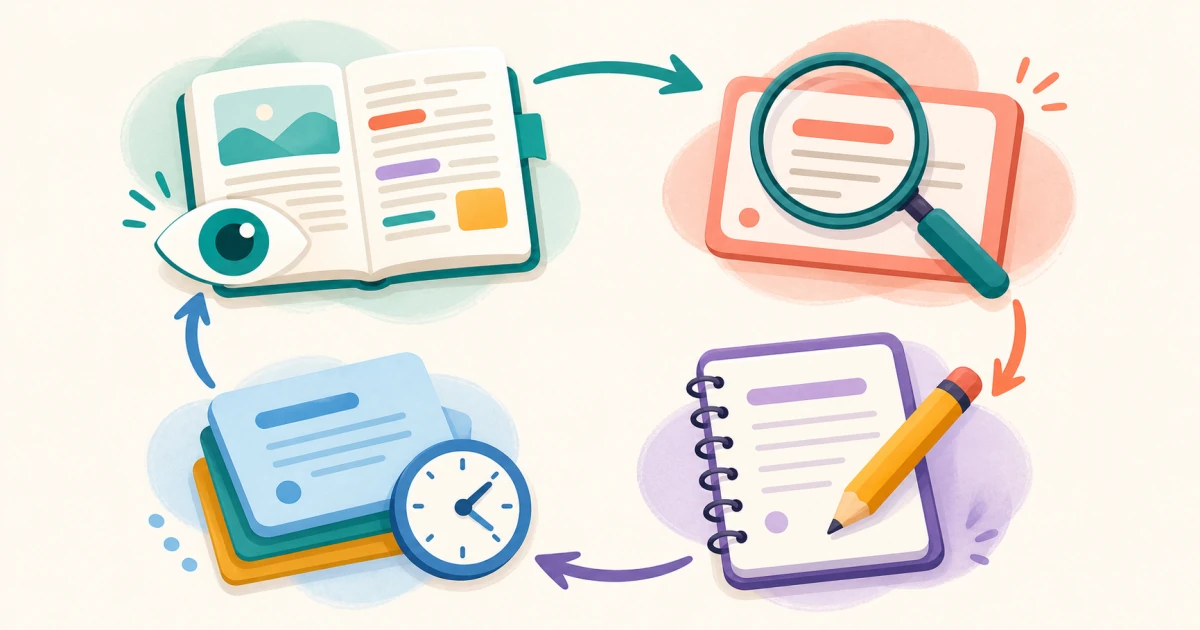
Week 1: Learn ten technology words. Read one technology article and underline the words you meet again.
Week 2: Learn work and learning vocabulary. Use three words in a description of your job or studies.
Week 3: Learn online-culture words, but mark which ones are informal.
Week 4: Learn climate and wellness vocabulary. Review all words with spaced repetition and make one short paragraph using at least five.
Words to Practice
inflation
noun
An increase in prices or the general rise in the cost of goods and services.
Examples
- High inflation makes it difficult for families to afford basic necessities.
- The government is taking measures to control inflation and stabilize prices.
effectively
adverb
In a way that produces the desired result or with skill.
Examples
- Technology helps teachers communicate more effectively with their students daily.
- The medicine works effectively to reduce pain and inflammation quickly.
content
noun
The information or feelings that are inside or expressed by someone or something.
setback
noun
An obstacle or problem that delays progress or success.
Examples
- Financial setback delays family vacation plans unfortunately.
- Medical setback requires additional treatment and recovery.
ban
verb
To officially prohibit or forbid something by law or authority.
Examples
- Many countries ban certain chemicals in food production for safety.
- The city decided to ban smoking in all public places.
unfamiliar
adjective
Not familiar or well known; strange.
Examples
- Unfamiliar language creates communication barriers between people.
- Unfamiliar place makes tourist feel lost confused.
export
verb
To send goods to another country for sale.
Examples
- Many companies export their products to international markets for profit.
- The country exports large quantities of oil to neighboring nations.
laser
noun
A device that produces a concentrated beam of light for cutting or measuring.
Examples
- Laser surgery provides precise treatment with minimal invasive procedures.
- The laser pointer helps teachers highlight important information on screens.
decay
verb
To break down or rot gradually over time, often referring to organic matter or structures.
Examples
- Fallen leaves decay naturally and enrich the forest soil.
- Without proper maintenance, buildings will decay over time.
prestige
noun
The respect and admiration that a person or thing earns because of their achievements or qualities.
Examples
- Professional prestige comes from expertise and experience.
- University degree brings prestige and career opportunities.
rally
verb
To come together in a large group to support or protest for a cause.
Examples
- Community members rally to help flood victims.
- Patient begins to rally after serious surgery.
console
verb
To comfort or soothe someone who is upset or sad.
Examples
- The new gaming console offers incredible graphics and immersive sound effects.
- The pilot checked all instruments on the control console before takeoff.
solo
noun
A musical or theatrical performance by one person alone.
Examples
- Guitar solo highlights rock song's dramatic climax.
- Singer performs beautiful solo during wedding ceremony.
sprint
noun
A quick run over a short distance.
Examples
- Final sprint determines race winner at finish.
- Olympic sprint requires explosive speed and power.
speculative
adjective
Based on conjecture rather than knowledge; not certain.
Examples
- His theory remains speculative without concrete experimental evidence supporting it.
- The speculative investment carried high risks but potential rewards.
fanatically
adverb
In a way that shows intense enthusiasm or zeal.
Examples
- Collector fanatically pursued rare stamps for decades.
- She exercises fanatically every single day without exception.
rider
noun
A person who rides a bicycle, motorcycle, or horse.
Examples
- Experienced rider controls horse with gentle commands.
- Motorcycle rider wears protective helmet for safety.
metric
adjective
Relating to measurement or a system of measurement.
Examples
- Metric measurements are based on units of ten for convenience.
- Most countries use metric system for measuring distance and weight.
bookish
adjective
Having a strong interest in books, reading, or literature.
Examples
- His bookish interests included philosophy and literature.
- The professor had a bookish appearance with thick glasses.
dispense
verb
To distribute or give out, often in a controlled manner.
Examples
- Good leaders know when to dispense with unnecessary formalities.
- The machine dispenses hot coffee and tea throughout day.
catalog
noun
A book or list that shows items, often with descriptions or prices.
Examples
- She browsed through the fashion catalog to choose new clothes.
- The library catalog helps students find books and research materials quickly.
index
noun
A list showing the order or importance of items or topics.
Examples
- The stock market index shows the overall performance of major companies.
- Use the index at the back of the book to find specific topics quickly.
superintendent
noun
A person who manages or oversees a place or organization.
Examples
- Building superintendent maintains property and handles repairs.
- School superintendent oversees district educational policies daily.
justifiable
adjective
Able to be justified or shown to be reasonable or right.
Examples
- His actions were justifiable given the circumstances.
- There is no justifiable reason to delay the project.
What to Read Next
- Build a reliable study routine with How to Learn English Vocabulary.
- Explore broad word groups in English Vocabulary by Topic.
- Move from recognition to confidence with Vocabulary Builder.
FAQ
Are modern English words the same as slang?
No. Some modern words are slang, but many are standard terms for technology, work, health, and society. Check the context and tone before using a new word.
How can I find the meaning of a new word?
First look at the surrounding sentence. Then check a reliable learner’s dictionary and note the part of speech, pronunciation, and one authentic example.
Should I use new words in IELTS or TOEFL?
Use a modern word only when it is accurate and natural for the question. Clear, precise English scores better than fashionable language used incorrectly.
How many new words should I learn each week?
Ten to fifteen is a sustainable target for most learners. Review them several times before adding a large new set.
Why do some new words disappear?
Language follows real use. A word lasts when many people need it over time; a short-lived trend may never become part of everyday English.