英語の品詞一覧:8つの品詞の完全ガイドと単語リスト
英語のすべての単語は、少なくとも1つの品詞に属しています。ニュース記事を読むとき、メールを書くとき、試験を受けるとき——あらゆる英文は同じ8つのカテゴリーから成り立っています。名詞、動詞、形容詞、副詞、代名詞、前置詞、接続詞、間投詞です。品詞を理解することは、単なる文法の勉強ではありません。語彙を体系的に増やし、正しく使いこなすための鍵なのです。
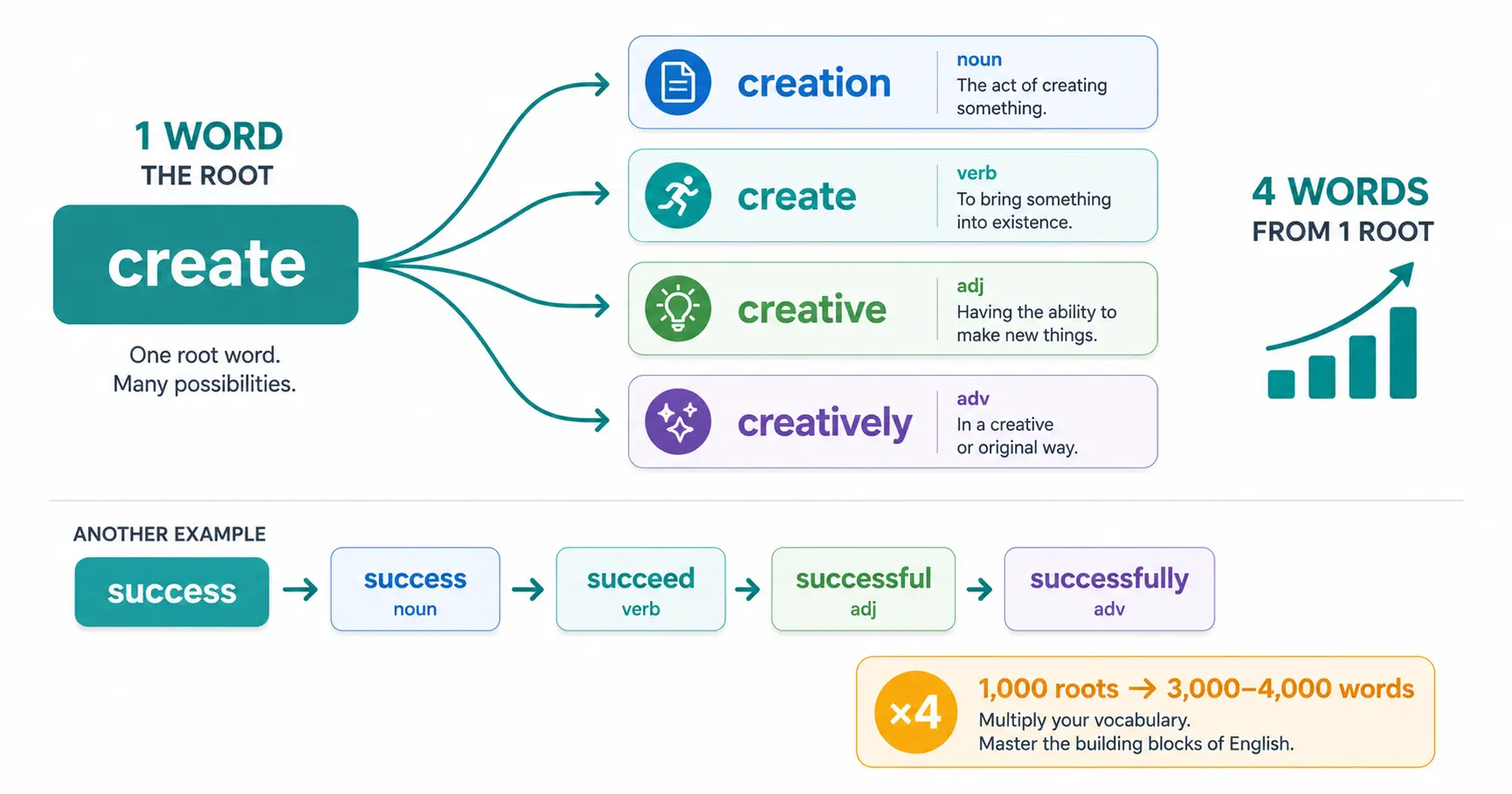
多くの学習者は語彙を個別に覚えようとします。単語、定義、せいぜい例文が1つ。しかし品詞を知ることで、その単語が文中でどう振る舞うかがわかります——どの位置に置くべきか、どの単語と組み合わせるか、形をどう変えるか。「success」は名詞、「succeed」は動詞、「successful」は形容詞、「successfully」は副詞。同じ語根で4つの異なる役割があります。これを混同すると、文が壊れてしまいます。
このガイドでは以下を解説します:
- 英語の8つの品詞の定義と例文
- 各品詞の単語リスト(レベル・頻度順)
- 文中で品詞を見分ける方法
- 品詞の知識で語彙力を効率的に伸ばす方法
- 動詞・形容詞・副詞などの詳細な単語リストへのリンク
品詞とは何か
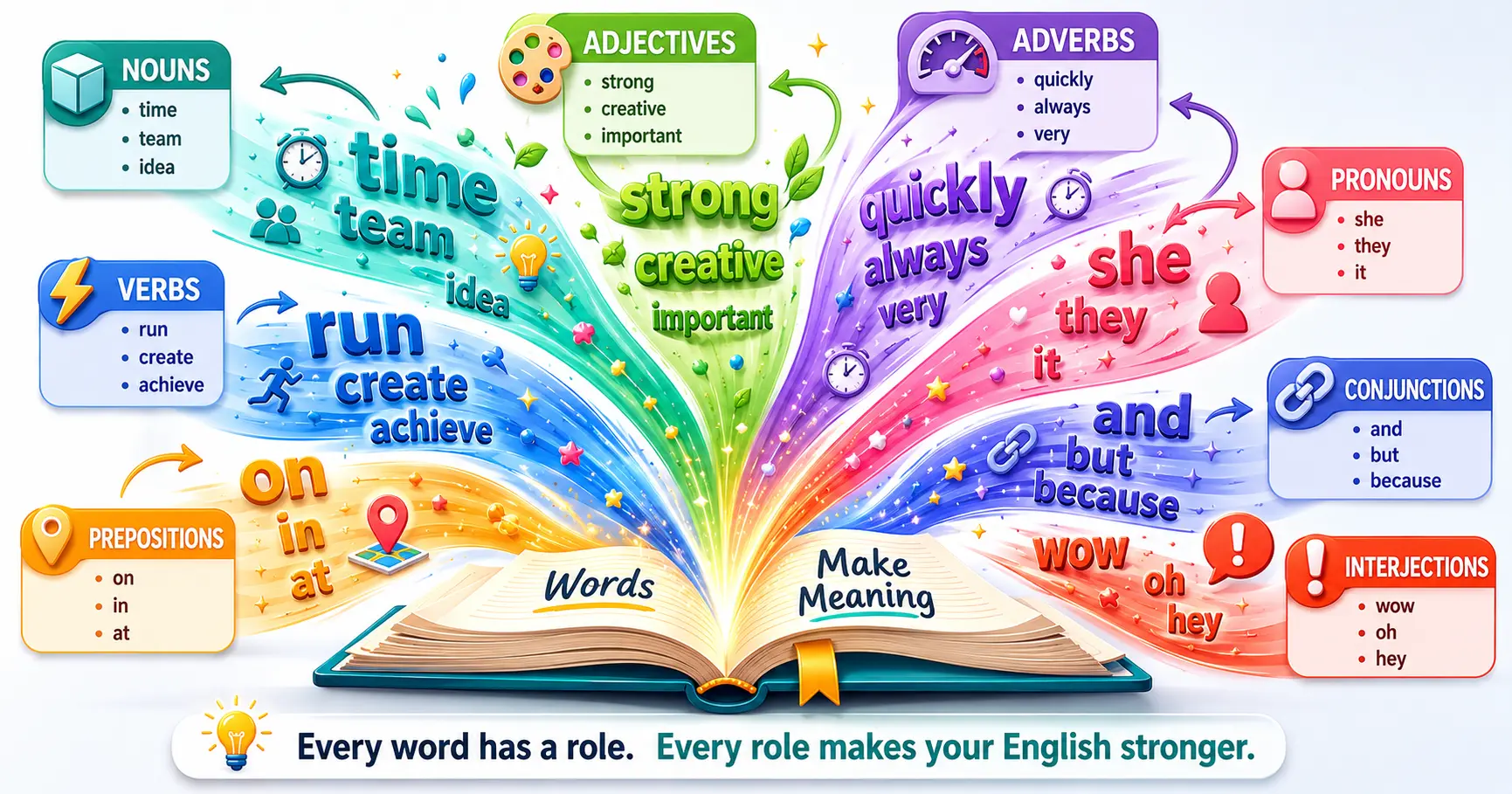
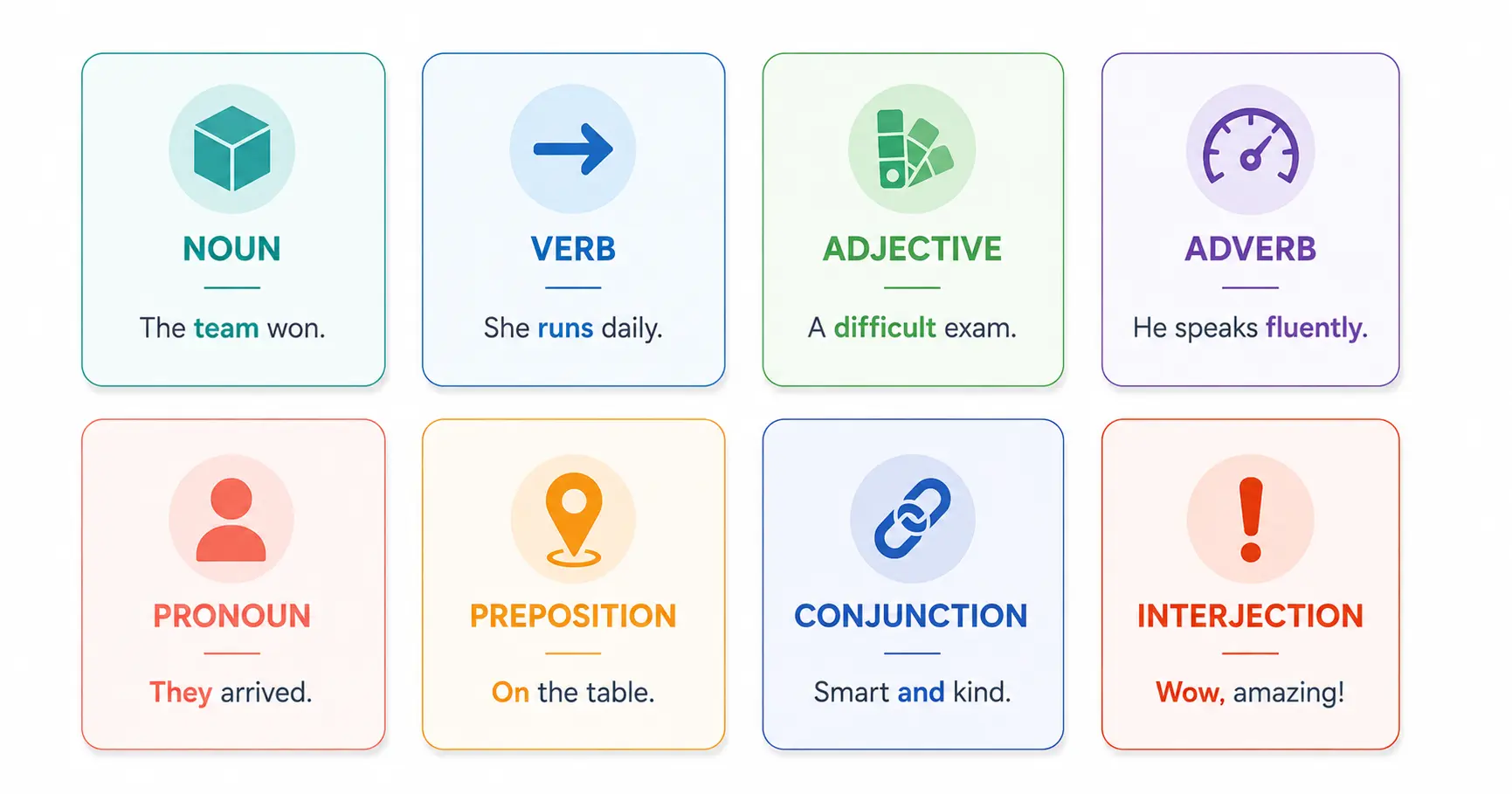
品詞とは、単語を文中での役割によって分類したものです。英語には8つの品詞があります:
| 品詞 | 機能 | 例文 |
|---|---|---|
| 名詞 | 人・場所・物・概念を表す | The team won the game. |
| 動詞 | 動作や状態を表す | She runs every morning. |
| 形容詞 | 名詞を修飾する | That was a difficult exam. |
| 副詞 | 動詞・形容詞・他の副詞を修飾する | He speaks fluently. |
| 代名詞 | 名詞の代わりをする | They arrived early. |
| 前置詞 | 単語間の関係を示す | The book is on the table. |
| 接続詞 | 語・句・節をつなぐ | I studied and passed. |
| 間投詞 | 感情を表す | Wow, that was fast! |
この8つのカテゴリーは、英語のすべての単語に適用されます。文脈によって複数の品詞に属する単語もあります。例えば「run」は動詞(”I run daily”)にも名詞(”a morning run”)にもなります。この柔軟性を理解することが、英語の語彙力を高める上で重要です。
名詞:文の土台となる単語
名詞は最も数の多い品詞です。人、場所、物、概念を表します。典型的な英文では、少なくとも1〜2語は名詞です。
名詞の種類
| 種類 | 何を表すか | 例 |
|---|---|---|
| 普通名詞 | 一般的なもの | city, teacher, idea, computer |
| 固有名詞 | 特定の名前(大文字で始まる) | London, Dr. Smith, Monday, Toyota |
| 抽象名詞 | 目に見えないもの | freedom, happiness, knowledge, courage |
| 具体名詞 | 五感で知覚できるもの | table, music, rain, chocolate |
| 可算名詞 | 数えられる | book/books, apple/apples, idea/ideas |
| 不可算名詞 | 数えられない | water, information, furniture, advice |
| 集合名詞 | グループ | team, family, audience, committee |
名詞の見分け方
名詞には次のような特徴があります:
- 冠詞の後に来る:a report, the meeting, an idea
- 形容詞の後に来る:a new report, the important meeting
- 複数形にできる:report → reports, idea → ideas
- 所有格の後に来る:my suggestion, their decision
レベル別・高頻度名詞
A1〜A2(初級): name, time, day, year, people, way, man, woman, child, world, life, hand, part, place, case, week, company, system, program, question
B1〜B2(中級): environment, government, development, experience, opportunity, community, relationship, responsibility, technology, education, situation, organization, performance, population, communication
C1〜C2(上級): infrastructure, paradigm, phenomenon, implication, bureaucracy, jurisdiction, pragmatism, sustainability, accountability, methodology, stakeholder, discourse, trajectory, scrutiny, resilience
日常的に使う名詞や必須単語については、英語の最頻出1000語をご覧ください。リストの約30%が名詞です。
動詞:動作を表す単語
動詞はすべての文の原動力です。動詞なしに英語の文は成立しません。動作(run, write, build)、状態(be, seem, exist)、変化(happen, become, change)を表します。
動詞の種類
| 種類 | 機能 | 例 |
|---|---|---|
| 動作動詞 | 身体的・精神的な動作 | write, think, run, calculate |
| 状態動詞 | 動作ではなく状態 | know, believe, own, prefer |
| 連結動詞 | 主語と説明をつなぐ | be, seem, appear, become, feel |
| 助動詞 | 本動詞を補助する | have (eaten), is (running), do (not go) |
| 法助動詞 | 可能性・能力・許可を表す | can, could, may, might, should, must |
| 句動詞 | 動詞+不変化詞で新しい意味 | give up, look after, carry out |
学習者に必須の動詞の活用形
英語の動詞には最大5つの活用形があります。時制と文法の正確さに不可欠です:
| 原形 | 三人称単数 | 過去形 | 過去分詞 | 現在分詞 |
|---|---|---|---|---|
| work | works | worked | worked | working |
| write | writes | wrote | written | writing |
| go | goes | went | gone | going |
| begin | begins | began | begun | beginning |
規則動詞は過去形に -ed を付けます(worked, played, decided)。不規則動詞はこのパターンに従わず、200以上存在します。
レベル別・高頻度動詞
A1〜A2(初級): be, have, do, say, go, get, make, know, think, take, see, come, want, look, use, find, give, tell, work, call
B1〜B2(中級): achieve, consider, develop, establish, indicate, maintain, obtain, produce, require, suggest, involve, assume, contribute, demonstrate, generate
C1〜C2(上級): undermine, scrutinize, encompass, exacerbate, facilitate, substantiate, alleviate, circumvent, perpetuate, consolidate, elicit, stipulate, supersede, transcend, corroborate
→ 英語の動詞一覧:最重要300語の完全リスト → Linglifyで動詞を練習する
句動詞は学習者が最も苦労するカテゴリーです。動詞と1〜2つの不変化詞を組み合わせて全く新しい意味を作ります。「look up」(情報を調べる)は上を見ることとは無関係です。句動詞ガイドでは、基本動詞別に300以上の句動詞を収録しています。
形容詞:描写する単語
形容詞は名詞を修飾します。「どんな種類?」「いくつ?」「どれ?」といった疑問に答えます。形容詞がなくても基本的な意思疎通はできますが、形容詞があれば正確で、生き生きとした、説得力のある表現が可能になります。
形容詞の種類
| 種類 | 機能 | 例 |
|---|---|---|
| 性質形容詞 | 性質を描写する | tall, beautiful, expensive, interesting |
| 数量形容詞 | 数量を示す | many, few, several, enough, some |
| 指示形容詞 | 特定の名詞を指す | this, that, these, those |
| 所有形容詞 | 所有を示す | my, your, his, her, their, our |
| 疑問形容詞 | 質問する | which, what, whose |
| 比較級 | 2つを比較する | taller, more expensive, better |
| 最上級 | 最も〜を示す | tallest, most expensive, best |
形容詞の語順
複数の形容詞が同じ名詞を修飾する場合、英語には決まった語順があります。ネイティブスピーカーは直感的に守りますが、学習者は覚える必要があります:
主観 → 大きさ → 新しさ → 形 → 色 → 出身 → 素材 → 用途
| 順位 | カテゴリー | 例 |
|---|---|---|
| 1 | 主観 | beautiful, ugly, amazing |
| 2 | 大きさ | big, small, tiny, enormous |
| 3 | 新しさ | old, new, young, ancient |
| 4 | 形 | round, flat, rectangular |
| 5 | 色 | red, blue, dark, bright |
| 6 | 出身 | British, Japanese, European |
| 7 | 素材 | wooden, metal, cotton, glass |
| 8 | 用途 | cooking (pot), sleeping (bag) |
つまり「a beautiful large old round brown Italian wooden dining table」のように言い、決して別の順番にはなりません。実際には形容詞を3つ以上重ねることは稀ですが、語順を知っていれば不自然な表現を避けられます。
レベル別・高頻度形容詞
A1〜A2(初級): good, new, big, small, long, old, young, different, important, possible, last, first, next, early, great, little, high, free, right, sure
B1〜B2(中級): available, significant, appropriate, effective, relevant, essential, substantial, consistent, comprehensive, fundamental, competitive, sufficient, legitimate, subsequent, compatible
C1〜C2(上級): ubiquitous, ostensible, unprecedented, innocuous, pejorative, idiosyncratic, perfunctory, unequivocal, recalcitrant, commensurate, ephemeral, indefatigable, quintessential, perspicacious, superfluous
→ 英語の形容詞一覧:初級から上級まで500語 → Linglifyで形容詞を練習する
副詞:修飾する単語
副詞は動詞、形容詞、他の副詞、または文全体を修飾します。「どのように?」「いつ?」「どこで?」「どのくらいの頻度で?」「どの程度?」という疑問に答えます。
副詞の種類
| 種類 | 答える疑問 | 例 |
|---|---|---|
| 様態 | どのように? | quickly, carefully, fluently, well |
| 時 | いつ? | now, yesterday, soon, already, recently |
| 場所 | どこで? | here, there, everywhere, outside, nearby |
| 頻度 | どのくらい? | always, usually, sometimes, rarely, never |
| 程度 | どの程度? | very, extremely, quite, fairly, barely |
| 文修飾 | 話者の態度は? | fortunately, obviously, apparently, frankly |
副詞の作り方
ほとんどの副詞は、形容詞に -ly を付けて作ります:
| 形容詞 | 副詞 |
|---|---|
| quick | quickly |
| careful | carefully |
| comfortable | comfortably |
| easy | easily |
| dramatic | dramatically |
しかし、最も頻繁に使われる副詞の中には不規則なもの——つまり -ly のパターンに従わないものがあります:
| 形容詞 | 副詞 | よくある間違い |
|---|---|---|
| good | well |
|
| fast | fast |
|
| hard | hard |
|
| late | late |
|
副詞の位置
英語における副詞の位置にはパターンがあります:
| 副詞の種類 | 典型的な位置 | 例 |
|---|---|---|
| 様態 | 動詞/目的語の後 | She speaks English fluently. |
| 頻度 | 本動詞の前 | I always check my email first. |
| 時 | 文頭または文末 | Yesterday we had a meeting. |
| 程度 | 修飾する語の前 | This is extremely important. |
| 文修飾 | 文頭 | Unfortunately, the flight was cancelled. |
レベル別・高頻度副詞
A1〜A2(初級): very, also, often, always, sometimes, never, here, there, now, today, already, still, just, really, well, too, only, then, again, enough
B1〜B2(中級): significantly, approximately, essentially, increasingly, primarily, consequently, furthermore, specifically, relatively, inevitably, typically, ultimately, presumably, simultaneously, predominantly
C1〜C2(上級): ostensibly, inadvertently, unequivocally, paradoxically, categorically, indiscriminately, exponentially, disproportionately, unconditionally, retrospectively
→ 英語の副詞一覧:カテゴリー別200語以上 → Linglifyで副詞を練習する
代名詞:名詞の代わりをする単語
代名詞は繰り返しを避けるために名詞の代わりをします。「Sarah said Sarah would bring Sarah’s laptop to Sarah’s office」の代わりに、「Sarah said she would bring her laptop to her office」と言います。
代名詞の種類
| 種類 | 機能 | 例 |
|---|---|---|
| 人称代名詞(主格) | 特定の人・物を置き換える | I, you, he, she, it, we, they |
| 人称代名詞(目的格) | 動作の対象を表す | me, you, him, her, it, us, them |
| 所有代名詞 | 所有を示す | mine, yours, his, hers, ours, theirs |
| 再帰代名詞 | 主語に戻る | myself, yourself, himself, herself, ourselves |
| 指示代名詞 | 特定のものを指す | this, that, these, those |
| 関係代名詞 | 節をつなぐ | who, whom, which, that, whose |
| 疑問代名詞 | 質問する | who, what, which, whom, whose |
| 不定代名詞 | 不特定のものを指す | someone, anyone, everyone, nobody, each, both |
代名詞の一覧表
| 主格 | 目的格 | 所有形容詞 | 所有代名詞 | 再帰代名詞 |
|---|---|---|---|---|
| I | me | my | mine | myself |
| you | you | your | yours | yourself |
| he | him | his | his | himself |
| she | her | her | hers | herself |
| it | it | its | — | itself |
| we | us | our | ours | ourselves |
| they | them | their | theirs | themselves |
代名詞のよくある間違い
- it’s と its の混同:「it’s」は「it is」または「it has」の短縮形。「its」は「それの」という所有を表す。”The company changed its name.”
- who と whom の混同:「who」は主格、「whom」は目的格。”Who called?” と “To whom did you speak?”
- 単数の they:現代英語では、性別が不明な人を指す単数代名詞として「they」が広く使われています。”If a student has a question, they should ask.”
前置詞:関係を示す単語
前置詞は単語間の関係——主に時間、場所、方向、方法——を示します。小さな単語ですが影響力は絶大で、「on」を「in」や「at」に変えるだけで意味が完全に変わります。
カテゴリー別の前置詞
時間:
| 前置詞 | 使い方 | 例 |
|---|---|---|
| at | 特定の時刻 | at 3 PM, at midnight, at noon |
| on | 曜日・日付 | on Monday, on July 4th, on my birthday |
| in | 月・年・季節・時間帯 | in March, in 2026, in summer, in the morning |
| by | 期限 | by Friday, by next week |
| during | 期間中ずっと | during the meeting, during summer |
| since | 過去のある時点から | since 2020, since Monday |
| for | 継続時間 | for three hours, for a long time |
場所:
| 前置詞 | 使い方 | 例 |
|---|---|---|
| at | 特定の地点 | at the airport, at home, at the corner |
| on | 表面・線上 | on the table, on the wall, on Main Street |
| in | 囲まれた空間の中 | in the room, in Tokyo, in a box |
| between | 2つの間 | between the bank and the post office |
| among | グループの中 | among the students, among friends |
方向:
| 前置詞 | 使い方 | 例 |
|---|---|---|
| to | 目的地に向かって | go to school, fly to Paris |
| into | 中に入る | walk into the room, dive into the water |
| out of | 外に出る | get out of the car, move out of the city |
| through | 中を通り抜ける | walk through the park, drive through the tunnel |
| across | 片側からもう片側へ | swim across the river, walk across the street |
学習者にとって最も難しい前置詞
at / on / in の3つは、他のどの前置詞よりも多くの間違いを生みます。すべてのケースを網羅する1つのルールはありません。よく使われるコロケーションを覚える必要があります:
- at work, at school, at a party, at the beginning
- on the phone, on a team, on vacation, on time
- in trouble, in charge, in a hurry, in advance
多くの前置詞句は固定表現として丸ごと覚える必要があります。動詞と前置詞の組み合わせについては英語コロケーションガイドをご覧ください。
接続詞:文を組み立てる単語
接続詞は語、句、節をつなぎます。複雑な文を書き、因果関係・対比・追加・時間関係を表現するために不可欠です。
接続詞の3つのタイプ
等位接続詞(FANBOYS)は対等な要素をつなぎます:
| 接続詞 | 機能 | 例 |
|---|---|---|
| for | 理由 | She stayed home, for she was ill. |
| and | 追加 | I study English and Japanese. |
| nor | 否定の追加 | He does not sing, nor does he dance. |
| but | 対比 | It is old but reliable. |
| or | 選択 | Tea or coffee? |
| yet | 対比・意外 | Simple yet effective. |
| so | 結果 | It rained, so we stayed inside. |
従属接続詞は従属節を主節につなぎます:
| 機能 | 接続詞 | 例 |
|---|---|---|
| 時間 | when, while, before, after, until, since, as soon as | Call me when you arrive. |
| 原因 | because, since, as | I left early because traffic was bad. |
| 条件 | if, unless, provided that, as long as | I will go if you come with me. |
| 対比 | although, even though, while, whereas | Although it rained, we went outside. |
| 目的 | so that, in order that | She studies hard so that she can pass. |
相関接続詞はペアで使います:
| ペア | 例 |
|---|---|
| both…and | Both Japan and Korea use TOEIC. |
| either…or | You can study either online or in class. |
| neither…nor | Neither the teacher nor the students were late. |
| not only…but also | She is not only smart but also hardworking. |
| whether…or | I cannot decide whether to stay or to go. |
ライティングで使う接続表現の詳しいリファレンスについては、英語のつなぎ言葉:ライティングに使える100以上の接続表現をご覧ください。
間投詞:感情を表す表現
間投詞は感情を表す単語や短いフレーズです。文法的に独立しており、文の他の部分とつながりません。主に会話やカジュアルな文章で使われます。
| 感情 | 間投詞 | 例 |
|---|---|---|
| 驚き | oh, wow, whoa | Wow, that is amazing! |
| 痛み | ouch, ow | Ouch, that hurt! |
| 喜び | yay, hooray, yes | Hooray, we won! |
| 苛立ち | ugh, argh, damn | Ugh, not again. |
| ためらい | um, uh, er, hmm | Hmm, let me think about that. |
| 同意 | yeah, sure, absolutely | Sure, I can help. |
| 挨拶 | hi, hey, hello | Hey, how are you? |
| 理解 | oh, aha, I see | Aha, now I understand! |
間投詞は試験やフォーマルな文章にとっては最も重要度の低い品詞です。しかし、自然な英会話を理解し、映画やポッドキャストを楽しむためには欠かせません。
品詞の知識で語彙力を伸ばす方法
品詞を理解することは文法の知識にとどまらず、語彙を何倍にも増やす力になります。具体的に見ていきましょう。
1. 語族で語彙力を4倍に
1つの単語を覚えるとき、その語族から3〜4語を追加で得られます:
| 名詞 | 動詞 | 形容詞 | 副詞 |
|---|---|---|---|
| success | succeed | successful | successfully |
| creation | create | creative | creatively |
| decision | decide | decisive | decisively |
| importance | — | important | importantly |
| analysis | analyze | analytical | analytically |
| strength | strengthen | strong | strongly |
| difference | differ | different | differently |
| achievement | achieve | achievable | — |
基本語1,000語を知り、その語族を学べば、実用的な語彙は3,000〜4,000語に跳ね上がります。これは語彙力を向上させる最も効率的な方法の1つです。
2. 接尾辞で品詞を見分ける
語尾だけで品詞を判別できることが多くあります:
| 語尾 | 品詞 | 例 |
|---|---|---|
| -tion, -sion, -ment, -ness, -ity | 名詞 | education, decision, improvement, kindness, creativity |
| -ate, -ize, -ify, -en | 動詞 | educate, realize, simplify, strengthen |
| -ous, -ive, -ful, -less, -able | 形容詞 | dangerous, creative, helpful, careless, comfortable |
| -ly | 副詞(通常) | quickly, carefully, unfortunately |
読書中に見慣れない単語に出会ったら、接尾辞を確認してください。-tion で終わっていれば名詞の可能性が高く、-ize で終わっていれば動詞の可能性が高いです。これだけで意味を推測する手がかりになります。
3. 正しい品詞=正しい文
学習者の多くの間違いは、品詞の取り違えから生じます:
| 誤り | 正しい文 | 問題点 |
|---|---|---|
| The important of education is clear. | The importance of education is clear. | 名詞が必要な場所で形容詞を使用 |
| She success in her career. | She succeeded in her career. | 動詞が必要な場所で名詞を使用 |
| He runs quick. | He runs quickly. | 副詞が必要な場所で形容詞を使用 |
| This is a beauty day. | This is a beautiful day. | 形容詞が必要な場所で名詞を使用 |
IELTS、TOEFL、TOEICなどの試験では、文脈に応じて正しい語形を選ぶ能力が問われます。品詞を理解していれば、このカテゴリーの間違いをすべて防げます。
品詞を効果的に学習する方法
ステップ1:8つのカテゴリーを覚える
この記事の冒頭にある一覧表を使いましょう。各品詞について機能を理解し、文中で例を見つけられるようにしてください。
ステップ2:語族で学ぶ
新しい単語を覚えるときは、常に以下を確認しましょう:
- その単語の品詞は何か?
- 他の品詞の形は?(名詞 → 動詞 → 形容詞 → 副詞)
- 最もよく使う形はどれか?
役に立つ形をすべてLinglifyの辞書に追加してください。
ステップ3:品詞の識別を練習する
英語の文章を取り、各単語の品詞を判別する練習をしましょう。簡単な文から始め、徐々に複雑な文に挑戦してください。この練習で身につく意識は、リーディング、ライティング、試験のパフォーマンスに直結します。
ステップ4:一度に1つの品詞に集中する
学習セッションを特定の品詞に絞りましょう。1週間は動詞、次の週は形容詞、さらに次は副詞に取り組みましょう。この集中アプローチは、雑多な単語を学ぶよりも深い知識を構築します。
ステップ5:間隔反復法を活用する
品詞タグ付きでLinglifyの辞書に単語を追加し、間隔を広げながら復習しましょう。英単語の効果的な暗記法で、この方法が従来の学習法の3〜4倍効果的である理由を解説しています。
練習用の単語
以下の25語は、主要な品詞と複数のレベルにまたがっています。Linglifyの辞書に追加して、間隔反復で練習しましょう。
boom
名詞
急増, ブーム, 爆発
例
- The boom of thunder echoed across the valley.
- The technology boom created many new millionaires.
cooperate
動詞
協力する, 協働する
candidate
名詞
候補者, 志願者
例
- Each presidential candidate presented their policy plans to voters.
- The job candidate impressed the interview panel with her experience.
evaluate
動詞
評価する, 査定する
例
- Companies evaluate job candidates based on experience, skills, and personality.
- Teachers evaluate student progress through tests, projects, and classroom participation.
indispensable
形容詞
不可欠な
例
- Clean water is indispensable for human survival and good health.
- Her experience and skills make her indispensable to the research team.
normally
副詞
通常は, 普通は, ふつうは
例
- Heart normally beats between sixty and hundred times per minute.
- Students normally arrive at school before morning bell rings.
discourage
動詞
落胆させる, 思いとどまらせる, 意欲をなくさせる
例
- Don't let one failure discourage you from pursuing your dreams.
- High prices discourage many people from buying organic food products.
jury
名詞
陪審団, 陪審
例
- The jury deliberated for several hours before reaching a verdict.
- The talent show jury consisted of professional musicians and entertainers.
resolve
動詞
解決する, 決意する
例
- Mediator helps parties resolve dispute through negotiation.
- Technical team will resolve software problems quickly.
graduate
動詞
卒業する
例
- She will graduate from university next year with a degree in engineering.
- Students must complete all requirements before they can graduate from high school.
total
形容詞
全体の, 総合的な, 完全な
例
- Total cost includes all fees and expenses.
- Total silence fills room during meditation session.
donate
動詞
寄付する
例
- Many people donate money to charities that help homeless individuals.
- She decided to donate blood to help patients in emergency situations.
firmly
副詞
しっかりと, 堅く
例
- Hold the rope firmly while climbing down the steep mountain slope.
- The manager firmly believed in treating all employees with respect.
lifelong
形容詞
一生の, 生涯の
例
- Learning is a lifelong process that never truly ends.
- Their lifelong friendship began during elementary school years.
guide
動詞
案内する
例
- Parents should guide their children to make responsible decisions.
- The experienced hiker will guide the group through the mountain trail safely.
tragedy
名詞
悲劇
例
- Natural tragedy affects thousands of innocent people.
- Personal tragedy changes person's life perspective completely.
motivated
形容詞
やる気のある
例
- Motivated employee seeks additional responsibilities and challenges at work.
- Success requires being motivated even when facing difficult obstacles.
prejudice
名詞
偏見, 先入観, 差別
例
- Education helps overcome prejudice and promotes understanding.
- Racial prejudice damages communities and individuals alike.
voyage
名詞
航海, 旅行
例
- Space exploration represents humanity's greatest voyage into the unknown.
- The ocean voyage from Europe to America took several weeks in the past.
horizon
名詞
地平線
例
- The sun disappeared behind the horizon as evening approached.
- Traveling broadens your horizon and exposes you to new cultures.
off
副詞
離れて, 切れて, 休みの
例
- Please turn off the lights before leaving the room.
- The dog ran off into the forest chasing wild rabbits.
stress
動詞
強調する, 緊張させる
例
- Heavy workload may stress employees beyond limits.
- Teacher will stress importance of homework completion.
union
名詞
連合, 結合, 協会
例
- Labor union protects worker rights and interests.
- Marriage union joins two people in partnership.
humorous
形容詞
ユーモラスな, 面白い, 滑稽な
例
- She writes humorous articles about everyday life and family experiences.
- The humorous speech made everyone laugh and lightened the serious mood.
admission
名詞
入場, 入学, 認めること
例
- Her admission to the prestigious medical school was the result of hard work.
- The museum offers free admission on the first Sunday of every month.
よくある間違いを避けよう
-
形容詞と副詞の混同。 「She sings beautiful」は誤りで、「She sings beautifully」が正しいです。動詞を修飾するのは副詞です。動作の仕方を表すなら -ly 形を使いましょう。
-
間違った語形を使う。 「The develop of technology」は「The development of technology」が正しいです。文中の位置がどの品詞を要求するか確認しましょう(「the」の後 → 名詞)。
-
不可算名詞を可算名詞扱いする。 「many informations」や「an advice」は誤りです。information, advice, furniture, equipment, research は不可算名詞で、複数形にも「a/an」の付加もできません。
-
不規則変化を忘れる。 すべての過去形が -ed で終わるわけではなく、すべての副詞が -ly で終わるわけでもなく、すべての複数形が -s で終わるわけでもありません。不規則変化は暗記が必要です。最重要なものは不規則動詞一覧をご覧ください。
-
前置詞コロケーションを無視する。 「depend on」(「depend of」ではない)、「consist of」(「consist from」ではない)、「interested in」(「interested for」ではない)。これらは固定表現として覚えましょう。
-
簡単な単語ばかり使う。 すべての名詞が「thing」で、すべての形容詞が「good」や「bad」なら、英語の表現力を活かしきれていません。上級英単語を学んで、語彙に精度を加えましょう。
次のステップ
-
苦手な品詞から始めましょう。 動詞が最大の課題なら、英語の動詞一覧:最重要300語と不規則動詞一覧に取り組みましょう。形容詞を強化したいなら、英語の形容詞一覧500語を読みましょう。
-
上の練習セクションから10語をLinglifyの辞書に追加しましょう。 各単語に品詞のタグを付けて、カテゴリー別に復習できるようにしてください。
-
既知の単語の語族を学びましょう。 現在の語彙から20語を選び、名詞・動詞・形容詞・副詞の形を調べてください。これだけで使える語彙が一気に広がります。
-
今日、英語で何かを読み、最初の段落の品詞を特定してみてください。5分で文法的な意識が養われ、すべてのスキルが向上します。
-
品詞別の語彙ガイドを活用しましょう:
よくある質問
英語の8つの品詞とは何ですか?
英語の8つの品詞は、名詞、動詞、形容詞、副詞、代名詞、前置詞、接続詞、間投詞です。すべての英単語は、少なくとも1つのカテゴリーに属します。文脈によって複数の品詞として機能する単語もあります。例えば「light」は名詞(the light)、動詞(light a candle)、形容詞(a light color)として使えます。
最初に学ぶべき品詞はどれですか?
動詞と名詞を最優先にしましょう。あらゆる文の核であり、これなしにコミュニケーションは成立しません。必須の動詞と名詞を習得したら、形容詞(詳細を加える)と副詞(精度を加える)に進みましょう。代名詞、前置詞、接続詞はその次です。間投詞はフォーマルな学習では最も優先度が低いです。
単語の品詞をどうやって見分けますか?
文中での機能と形を見ましょう。「何かに名前を付けているか(名詞)?」「動作を表しているか(動詞)?」「名詞を修飾しているか(形容詞)?」「動詞を修飾しているか(副詞)?」と自問してください。接尾辞も手がかりになります。-tion は通常、名詞のサイン。-ous は形容詞、-ly は副詞、-ize は動詞のサインです。
1つの単語が複数の品詞になることはありますか?
はい、多くの英単語が複数の品詞として機能します。「run」は動詞(”I run”)にも名詞(”a morning run”)にもなります。「fast」は形容詞(”a fast car”)にも副詞(”drive fast”)にもなります。「light」は名詞、動詞、形容詞のいずれにもなれます。その文での文脈が品詞を決定します。
英語には名詞・動詞・形容詞がそれぞれ何語ありますか?
言語は常に成長しているため正確な数は不明ですが、推定では英語にはおよそ10万以上の名詞、25,000以上の動詞、20,000以上の形容詞があるとされています。ただし学習者に必要な数はずっと少なく、最重要英単語4000語で日常英語の約95%をカバーでき、その中にはおよそ名詞1,200語、動詞600語、形容詞500語が含まれます。
IELTSやTOEFLではなぜ品詞が問われるのですか?
これらの試験は、文脈に応じて正しい語形を使えるかをテストしています。「the important of education」と書けば(正しくは「the importance of education」)、文法力の弱さを示すことになります。IELTSとTOEFLの両方で、穴埋め、言い換え、エッセイの課題があり、正しい品詞の選択がスコアに直接影響します。
形容詞と副詞の違いは何ですか?
形容詞は名詞を修飾し(a quick decision)、副詞は動詞、形容詞、または他の副詞を修飾します(she decided quickly)。最も多い混同は、副詞が必要な場所で形容詞を使うことです。「He drives careful」は誤りで、「He drives carefully」が正しいです。「carefully」が動詞「drives」を修飾しているためです。
品詞の知識はどのように語彙力構築に役立ちますか?
1つの単語とその語族(すべての品詞の形)を学ぶと、語彙が何倍にもなります。「create」(動詞)を学ぶと、「creation」(名詞)、「creative」(形容詞)、「creatively」(副詞)も得られます。1つの語根から4語です。接尾辞を理解すれば未知の単語も解読できます。「sustain」を知っていれば、「sustainability」が名詞で「sustainable」が形容詞だと推測できます。この体系については語彙力構築ガイドで詳しく解説しています。