英語詞性:完整清單與例句
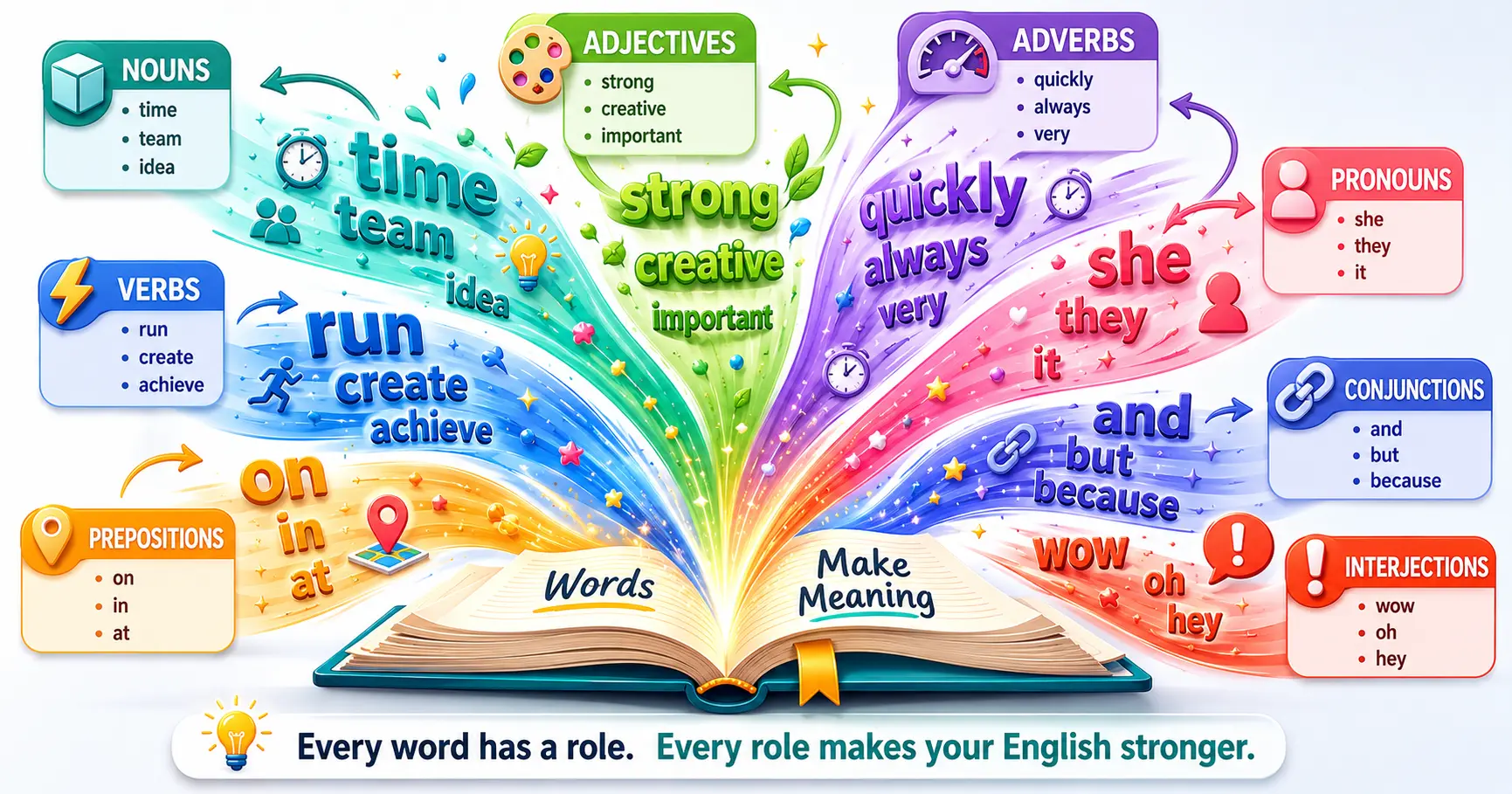
每個英語單字至少屬於一種詞性。無論你是閱讀新聞文章、撰寫電子郵件還是參加考試,你遇到的每個句子都由相同的八個類別構成:名詞、動詞、形容詞、副詞、代詞、介詞、連接詞和感嘆詞。理解詞性不只是語法練習——它是系統性建立詞彙並正確使用單字的關鍵。
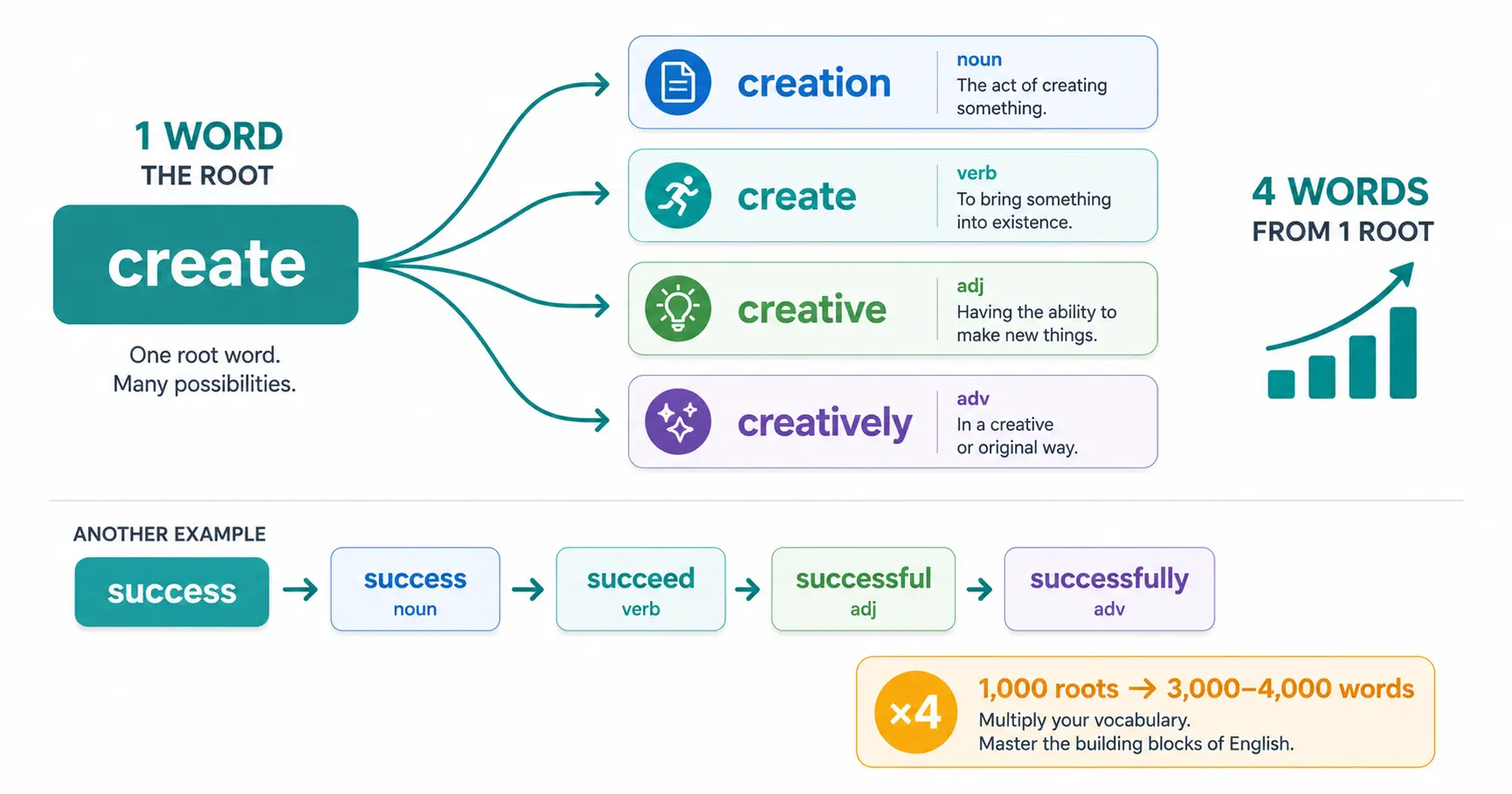
大多數學習者把詞彙作為孤立的項目學習:一個單字、一個定義、也許一個例句。但知道一個單字屬於哪種詞性可以告訴你它的行為方式——它在句子中的位置、它與哪些單字組合,以及如何改變它的形式。「Success」是名詞;「succeed」是動詞;「successful」是形容詞;「successfully」是副詞。相同的詞根,句子中四種不同的功能。
本指南涵蓋:
- 英語所有8種詞性,附清晰定義和例子
- 每個類別按程度和頻率分類的單字清單
- 如何在任何句子中識別詞性
- 詞性如何幫助你更快建立詞彙
- 動詞、形容詞、副詞等詳細單字清單的鏈接
什麼是詞性?
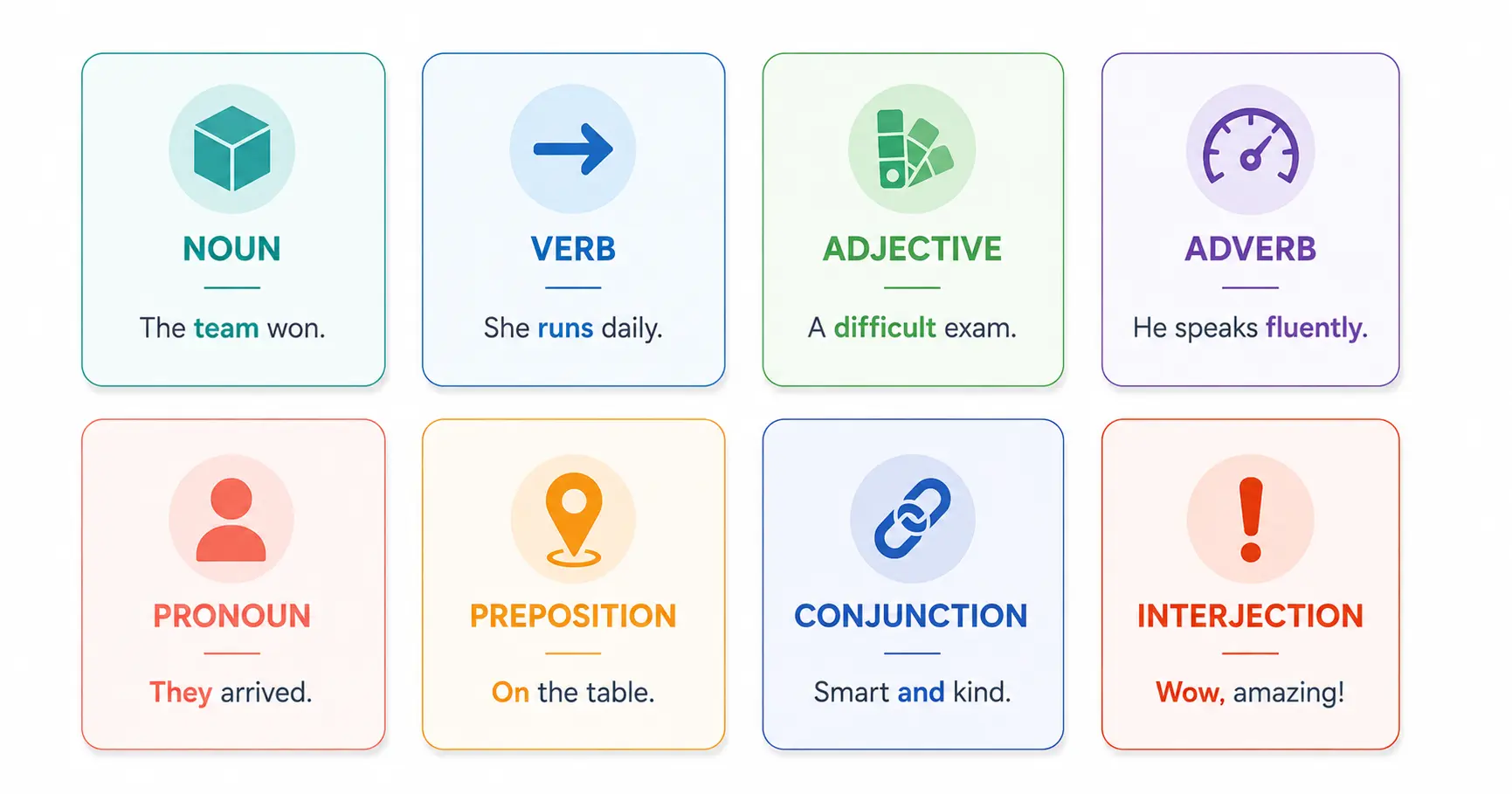
詞性是按單字在句子中的功能對其進行分類的類別。英語有八種:
| 詞性 | 功能 | 例子 |
|---|---|---|
| 名詞 | 命名人、地、物或想法 | The team won the game. |
| 動詞 | 表達動作或狀態 | She runs every morning. |
| 形容詞 | 描述名詞 | That was a difficult exam. |
| 副詞 | 修飾動詞、形容詞或另一個副詞 | He speaks fluently. |
| 代詞 | 代替名詞 | They arrived early. |
| 介詞 | 顯示單字之間的關係 | The book is on the table. |
| 連接詞 | 連接單字、短語或子句 | I studied and passed. |
| 感嘆詞 | 表達情感 | Wow, that was fast! |
這八個類別適用於英語中的每個單字。某些單字根據語境屬於多個類別——「run」可以是動詞(「I run daily」)或名詞(「a morning run」)。
名詞:構建基石
名詞是最常見的詞性。它們命名人、地、物、想法和概念。
名詞的類型
| 類型 | 命名什麼 | 例子 |
|---|---|---|
| 普通名詞 | 一般事物 | city, teacher, idea, computer |
| 專有名詞 | 特定名稱(大寫) | London, Dr. Smith, Monday, Toyota |
| 抽象名詞 | 你無法觸摸的事物 | freedom, happiness, knowledge, courage |
| 具體名詞 | 你可以用感官感知的事物 | table, music, rain, chocolate |
| 可數名詞 | 可以計數的 | book/books, apple/apples, idea/ideas |
| 不可數名詞 | 無法計數的 | water, information, furniture, advice |
| 集合名詞 | 群體 | team, family, audience, committee |
如何識別名詞
名詞通常:
- 出現在冠詞後:a report, the meeting, an idea
- 出現在形容詞後:a new report, the important meeting
- 可以變成複數:report → reports, idea → ideas
- 可以在前面加所有格:my suggestion, their decision
按程度分類的高頻名詞
A1-A2(初學者): name, time, day, year, people, way, man, woman, child, world, life, hand, part, place, week
B1-B2(中級): environment, government, development, experience, opportunity, community, relationship, responsibility, technology, education, situation
C1-C2(進階): infrastructure, paradigm, phenomenon, implication, bureaucracy, jurisdiction, pragmatism, sustainability, accountability, methodology, discourse
動詞:動作詞
動詞是每個句子的引擎。沒有動詞,任何英語句子都不完整。它們表達動作(run, write, build)、狀態(be, seem, exist)和發生(happen, become, change)。
動詞的類型
| 類型 | 功能 | 例子 |
|---|---|---|
| 動作動詞 | 身體或心理動作 | write, think, run, calculate |
| 狀態動詞 | 狀態,非動作 | know, believe, own, prefer |
| 連繫動詞 | 連接主語和描述 | be, seem, appear, become, feel |
| 助動詞 | 幫助主動詞 | have (eaten), is (running), do (not go) |
| 情態動詞 | 表達可能性、能力、許可 | can, could, may, might, should, must |
| 片語動詞 | 動詞+助詞,具有新含義 | give up, look after, carry out |
每個學習者需要的動詞形式
| 原形 | 第三人稱 | 過去式 | 過去分詞 | 現在分詞 |
|---|---|---|---|---|
| work | works | worked | worked | working |
| write | writes | wrote | written | writing |
| go | goes | went | gone | going |
| begin | begins | began | begun | beginning |
按程度分類的高頻動詞
A1-A2(初學者): be, have, do, say, go, get, make, know, think, take, see, come, want, look, use, find, give, tell, work, call
B1-B2(中級): achieve, consider, develop, establish, indicate, maintain, obtain, produce, require, suggest, involve, assume, contribute, demonstrate, generate
C1-C2(進階): undermine, scrutinize, encompass, exacerbate, facilitate, substantiate, alleviate, perpetuate, consolidate, elicit, stipulate, supersede, transcend, corroborate
片語動詞是給學習者帶來最多麻煩的特殊類別。它們將動詞與一個或兩個助詞組合,創造出全新的含義:「look up」(查詢信息)與向上看無關。我們的片語動詞指南涵蓋300+按基本動詞分類的片語動詞。
形容詞:描述詞
形容詞修飾名詞。它們回答「什麼類型?」「多少?」和「哪一個?」這樣的問題。
形容詞的類型
| 類型 | 功能 | 例子 |
|---|---|---|
| 描述性 | 描述品質 | tall, beautiful, expensive, interesting |
| 數量性 | 表示數量 | many, few, several, enough, some |
| 指示性 | 指向特定名詞 | this, that, these, those |
| 所有格 | 顯示所有權 | my, your, his, her, their, our |
| 疑問性 | 提問 | which, what, whose |
| 比較級 | 比較兩件事 | taller, more expensive, better |
| 最高級 | 表示極端 | tallest, most expensive, best |
形容詞順序
當多個形容詞描述同一個名詞時,英語有固定的順序:
觀點 → 大小 → 年齡 → 形狀 → 顏色 → 起源 → 材料 → 用途
| 位置 | 類別 | 例子 |
|---|---|---|
| 1 | 觀點 | beautiful, ugly, amazing |
| 2 | 大小 | big, small, tiny, enormous |
| 3 | 年齡 | old, new, young, ancient |
| 4 | 形狀 | round, flat, rectangular |
| 5 | 顏色 | red, blue, dark, bright |
| 6 | 起源 | British, Japanese, European |
| 7 | 材料 | wooden, metal, cotton, glass |
| 8 | 用途 | cooking(pot), sleeping(bag) |
所以你說「a beautiful large old round brown Italian wooden dining table」——永遠不會以任何其他順序。
按程度分類的高頻形容詞
A1-A2(初學者): good, new, big, small, long, old, young, different, important, possible, last, first, next, early, great, little, high, free, right, sure
B1-B2(中級): available, significant, appropriate, effective, relevant, essential, substantial, consistent, comprehensive, fundamental, competitive, sufficient, legitimate
C1-C2(進階): ubiquitous, ostensible, unprecedented, innocuous, pejorative, idiosyncratic, perfunctory, unequivocal, recalcitrant, ephemeral, quintessential
副詞:修飾語
副詞修飾動詞、形容詞、其他副詞或整個句子。它們回答「如何?」「何時?」「在哪裡?」「多頻繁?」和「程度如何?」
副詞的類型
| 類型 | 問題 | 例子 |
|---|---|---|
| 方式 | 如何? | quickly, carefully, fluently, well |
| 時間 | 何時? | now, yesterday, soon, already, recently |
| 地點 | 在哪裡? | here, there, everywhere, outside, nearby |
| 頻率 | 多頻繁? | always, usually, sometimes, rarely, never |
| 程度 | 多少? | very, extremely, quite, fairly, barely |
| 句子 | 說話者的態度是什麼? | fortunately, obviously, apparently, frankly |
副詞構成
大多數副詞通過在形容詞上添加-ly形成:
| 形容詞 | 副詞 |
|---|---|
| quick | quickly |
| careful | carefully |
| comfortable | comfortably |
| easy | easily |
但一些最常見的副詞是不規則的:
| 形容詞 | 副詞 | 常見錯誤 |
|---|---|---|
| good | well |
|
| fast | fast |
|
| hard | hard |
|
| late | late |
|
按程度分類的高頻副詞
A1-A2(初學者): very, also, often, always, sometimes, never, here, there, now, today, already, still, just, really, well, too, only, then, again, enough
B1-B2(中級): significantly, approximately, essentially, increasingly, primarily, consequently, furthermore, specifically, relatively, inevitably, typically, ultimately
C1-C2(進階): ostensibly, inadvertently, unequivocally, paradoxically, categorically, indiscriminately, exponentially, disproportionately
代詞:替代詞
代詞代替名詞以避免重複。代替說「Sarah said Sarah would bring Sarah’s laptop to Sarah’s office」,我們說「Sarah said she would bring her laptop to her office。」
代詞的類型
| 類型 | 功能 | 例子 |
|---|---|---|
| 人稱 | 代替特定人/物 | I, you, he, she, it, we, they |
| 賓語 | 接受動作 | me, you, him, her, it, us, them |
| 所有格 | 顯示所有權 | mine, yours, his, hers, ours, theirs |
| 反身 | 指回主語 | myself, yourself, himself, herself, ourselves |
| 指示 | 指向特定事物 | this, that, these, those |
| 關係 | 連接子句 | who, whom, which, that, whose |
| 疑問 | 提問 | who, what, which, whom, whose |
| 不定 | 指非特定事物 | someone, anyone, everyone, nobody, each, both |
代詞參考表
| 主語 | 賓語 | 所有格形容詞 | 所有格代詞 | 反身 |
|---|---|---|---|---|
| I | me | my | mine | myself |
| you | you | your | yours | yourself |
| he | him | his | his | himself |
| she | her | her | hers | herself |
| it | it | its | — | itself |
| we | us | our | ours | ourselves |
| they | them | their | theirs | themselves |
常見代詞錯誤
- it’s vs its:「it’s」= 「it is」或「it has」。「Its」= 屬於它的。「The company changed its name.」
- who vs whom:「who」= 主語。「Whom」= 賓語。「Who called?」vs「To whom did you speak?」
- they(單數):在現代英語中,「they」被廣泛接受為性別未知的人的單數代詞。
介詞:連接詞
介詞顯示單字之間的關係——通常是時間、地點、方向或方式方面的。它們是具有巨大影響的小單字:將「on」改為「in」或「at」會完全改變含義。
按類別分類的介詞
時間:
| 介詞 | 用法 | 例子 |
|---|---|---|
| at | 特定時間 | at 3 PM, at midnight, at noon |
| on | 日期和日子 | on Monday, on July 4th, on my birthday |
| in | 月份、年份、季節、一天的部分 | in March, in 2026, in summer, in the morning |
| by | 截止日期 | by Friday, by next week |
| since | 從過去某點開始 | since 2020, since Monday |
| for | 持續時間 | for three hours, for a long time |
地點:
| 介詞 | 用法 | 例子 |
|---|---|---|
| at | 特定地點 | at the airport, at home, at the corner |
| on | 表面或線條 | on the table, on the wall, on Main Street |
| in | 封閉空間 | in the room, in Tokyo, in a box |
| between | 兩個參考點之間 | between the bank and the post office |
| among | 群體內 | among the students, among friends |
學習者最難掌握的介詞
at / on / in三元組引起的錯誤比任何其他介詞都多。沒有一個規則涵蓋所有情況——你需要學習常見搭配:
- at work, at school, at a party, at the beginning
- on the phone, on a team, on vacation, on time
- in trouble, in charge, in a hurry, in advance
許多介詞短語必須作為固定單位記憶。查看我們的英語搭配詞指南了解數百個動詞+介詞組合。
連接詞:句子構建者
連接詞連接單字、短語和子句。它們對於撰寫複雜句子和表達想法之間的關係至關重要——原因、對比、補充和時間。
三種連接詞
並列連接詞(FANBOYS)連接相等元素:
| 連接詞 | 功能 | 例子 |
|---|---|---|
| for | 原因 | She stayed home, for she was ill. |
| and | 補充 | I study English and Japanese. |
| nor | 否定補充 | He does not sing, nor does he dance. |
| but | 對比 | It is old but reliable. |
| or | 替代 | Tea or coffee? |
| yet | 對比/驚訝 | Simple yet effective. |
| so | 結果 | It rained, so we stayed inside. |
從屬連接詞將從句連接到主句:
| 功能 | 連接詞 | 例子 |
|---|---|---|
| 時間 | when, while, before, after, until, since | Call me when you arrive. |
| 原因 | because, since, as | I left early because traffic was bad. |
| 條件 | if, unless, provided that, as long as | I will go if you come with me. |
| 對比 | although, even though, while, whereas | Although it rained, we went outside. |
| 目的 | so that, in order that | She studies hard so that she can pass. |
相關連接詞成對工作:
| 對組 | 例子 |
|---|---|
| both…and | Both Japan and Korea use TOEIC. |
| either…or | You can study either online or in class. |
| neither…nor | Neither the teacher nor the students were late. |
| not only…but also | She is not only smart but also hardworking. |
| whether…or | I cannot decide whether to stay or to go. |
感嘆詞:情感表達
感嘆詞是表達情感的單字或短語。它們在語法上是獨立的——它們不連接到句子的其他部分。它們主要出現在口語英語和非正式寫作中。
| 情感 | 感嘆詞 | 例子 |
|---|---|---|
| 驚訝 | oh, wow, whoa | Wow, that is amazing! |
| 痛苦 | ouch, ow | Ouch, that hurt! |
| 快樂 | yay, hooray, yes | Hooray, we won! |
| 沮喪 | ugh, argh | Ugh, not again. |
| 猶豫 | um, uh, er, hmm | Hmm, let me think about that. |
| 同意 | yeah, sure, absolutely | Sure, I can help. |
| 問候 | hi, hey, hello | Hey, how are you? |
| 理解 | oh, aha, I see | Aha, now I understand! |
感嘆詞對於考試和正式寫作來說是最不重要的詞性。但它們對於自然的口語英語和理解日常對話至關重要。
詞性如何幫助你建立詞彙
1. 詞族將你的詞彙量擴大4倍
當你學習一個單字時,它的詞族又給你三四個更多:
| 名詞 | 動詞 | 形容詞 | 副詞 |
|---|---|---|---|
| success | succeed | successful | successfully |
| creation | create | creative | creatively |
| decision | decide | decisive | decisively |
| importance | — | important | importantly |
| analysis | analyze | analytical | analytically |
| strength | strengthen | strong | strongly |
| difference | differ | different | differently |
如果你知道1,000個基本單字並學習它們的詞族,你的功能詞彙量就會跳到3,000-4,000個單字。
2. 後綴標誌詞性
你通常可以從一個單字的結尾識別它的詞性:
| 結尾 | 詞性 | 例子 |
|---|---|---|
| -tion, -sion, -ment, -ness, -ity | 名詞 | education, decision, improvement, kindness, creativity |
| -ate, -ize, -ify, -en | 動詞 | educate, realize, simplify, strengthen |
| -ous, -ive, -ful, -less, -able | 形容詞 | dangerous, creative, helpful, careless, comfortable |
| -ly | 副詞(通常) | quickly, carefully, unfortunately |
當你在閱讀中遇到不熟悉的單字時,檢查它的後綴。如果它以-tion結尾,它可能是名詞。如果它以-ize結尾,它可能是動詞。
3. 正確的詞性 = 正確的句子
許多學習者的錯誤來自使用錯誤的詞性:
| 錯誤 | 正確 | 問題 |
|---|---|---|
| The important of education is clear. | The importance of education is clear. | 形容詞用在需要名詞的地方 |
| She success in her career. | She succeeded in her career. | 名詞用在需要動詞的地方 |
| He runs quick. | He runs quickly. | 形容詞用在需要副詞的地方 |
| This is a beauty day. | This is a beautiful day. | 名詞用在需要形容詞的地方 |
IELTS、TOEFL和TOEIC等考試特別測試你在語境中選擇正確單字形式的能力。
練習詞彙
這25個單字涵蓋所有主要詞性和多個程度。將它們添加到你的 Linglify 字典進行間隔重複練習。
boom
名詞
繁榮
範例
- The boom of thunder echoed across the valley.
- The technology boom created many new millionaires.
cooperate
動詞
合作
candidate
名詞
候選人
範例
- Each presidential candidate presented their policy plans to voters.
- The job candidate impressed the interview panel with her experience.
evaluate
動詞
評估, 估價
範例
- Companies evaluate job candidates based on experience, skills, and personality.
- Teachers evaluate student progress through tests, projects, and classroom participation.
indispensable
形容詞
不可或缺的
範例
- Clean water is indispensable for human survival and good health.
- Her experience and skills make her indispensable to the research team.
normally
副詞
通常, 平常
範例
- Heart normally beats between sixty and hundred times per minute.
- Students normally arrive at school before morning bell rings.
discourage
動詞
使灰心, 洩氣
範例
- Don't let one failure discourage you from pursuing your dreams.
- High prices discourage many people from buying organic food products.
jury
名詞
陪審團
範例
- The jury deliberated for several hours before reaching a verdict.
- The talent show jury consisted of professional musicians and entertainers.
resolve
動詞
解決
範例
- Mediator helps parties resolve dispute through negotiation.
- Technical team will resolve software problems quickly.
graduate
動詞
畢業
範例
- She will graduate from university next year with a degree in engineering.
- Students must complete all requirements before they can graduate from high school.
total
形容詞
全部的
範例
- Total cost includes all fees and expenses.
- Total silence fills room during meditation session.
donate
動詞
捐贈
範例
- Many people donate money to charities that help homeless individuals.
- She decided to donate blood to help patients in emergency situations.
firmly
副詞
堅定地
範例
- Hold the rope firmly while climbing down the steep mountain slope.
- The manager firmly believed in treating all employees with respect.
lifelong
形容詞
終身的
範例
- Learning is a lifelong process that never truly ends.
- Their lifelong friendship began during elementary school years.
guide
動詞
指導, 引導
範例
- Parents should guide their children to make responsible decisions.
- The experienced hiker will guide the group through the mountain trail safely.
tragedy
名詞
悲劇
範例
- Natural tragedy affects thousands of innocent people.
- Personal tragedy changes person's life perspective completely.
motivated
形容詞
有動力的
範例
- Motivated employee seeks additional responsibilities and challenges at work.
- Success requires being motivated even when facing difficult obstacles.
prejudice
名詞
偏見
範例
- Education helps overcome prejudice and promotes understanding.
- Racial prejudice damages communities and individuals alike.
voyage
名詞
航程
範例
- Space exploration represents humanity's greatest voyage into the unknown.
- The ocean voyage from Europe to America took several weeks in the past.
horizon
名詞
地平線
範例
- The sun disappeared behind the horizon as evening approached.
- Traveling broadens your horizon and exposes you to new cultures.
off
形容詞
去除
範例
- Please turn off the lights before leaving the room.
- The dog ran off into the forest chasing wild rabbits.
stress
動詞
使緊張
範例
- Heavy workload may stress employees beyond limits.
- Teacher will stress importance of homework completion.
union
名詞
聯盟
範例
- Labor union protects worker rights and interests.
- Marriage union joins two people in partnership.
humorous
形容詞
幽默的, 風趣的
範例
- She writes humorous articles about everyday life and family experiences.
- The humorous speech made everyone laugh and lightened the serious mood.
admission
名詞
入學許可
範例
- Her admission to the prestigious medical school was the result of hard work.
- The museum offers free admission on the first Sunday of every month.
常見錯誤
-
混淆形容詞和副詞。 「She sings beautiful」是錯誤的——應該是「She sings beautifully。」動詞由副詞修飾,而不是形容詞。
-
在句子中使用錯誤的單字形式。 「The develop of technology」應該是「The development of technology。」檢查句子位置需要哪種詞性(在「the」後面→名詞)。
-
將不可數名詞當成可數名詞。 「Many informations」和「an advice」是不正確的。Information、advice、furniture、equipment和research是不可數名詞——沒有複數,沒有「a/an」。
-
忽略介詞搭配。 你「depend on」某人(不是「depend of」),「consist of」各部分(不是「consist from」),對某事「interested in」(不是「interested for」)。
接下來做什麼
-
從你最薄弱的詞性開始。 如果動詞是你最大的挑戰,閱讀我們的英語動詞清單:300個最重要的動詞。如果形容詞需要工作,閱讀500個英語形容詞清單。
-
將練習部分中的10個單字添加到你的 Linglify 字典。
-
學習你已知單字的詞族。 選取20個你現有詞彙中的單字,找到它們的名詞、動詞、形容詞和副詞形式。這立即擴展了你可用的詞彙量。
-
今天閱讀一些英語,識別第一段中的詞性。
-
探索我們各主要單字類型的詞彙指南:
常見問題
英語的8種詞性是什麼?
八種詞性是:名詞、動詞、形容詞、副詞、代詞、介詞、連接詞和感嘆詞。每個英語單字至少屬於這些類別之一。
哪種詞性應該最先學?
動詞和名詞應該是你的首要任務——它們構成每個句子的核心。之後,轉向形容詞(添加細節)和副詞(添加精確度)。代詞、介詞和連接詞是下一步。
如何識別一個單字的詞性?
看單字在句子中的功能及其形式。問:它是在命名某物(名詞)嗎?描述動作(動詞)?修飾名詞(形容詞)?修飾動詞(副詞)?後綴也有幫助:-tion通常是名詞的信號,-ous是形容詞,-ly是副詞,-ize是動詞。
一個單字可以是多種詞性嗎?
是的,許多英語單字可以作為多種詞性。「Run」是動詞(「I run」)和名詞(「a morning run」)。「Fast」是形容詞(「a fast car」)和副詞(「drive fast」)。語境決定了一個單字在任何給定句子中的詞性。
詞性如何幫助建立詞彙?
當你學習一個單字及其詞族(所有詞性)時,你乘以你的詞彙量。學習「create」(動詞)還給你「creation」(名詞)、「creative」(形容詞)和「creatively」(副詞)——一個詞根四個單字。理解後綴讓你解碼不熟悉的單字。