Phrasal Verbs em Inglês: O Guia Completo com 200+ Exemplos
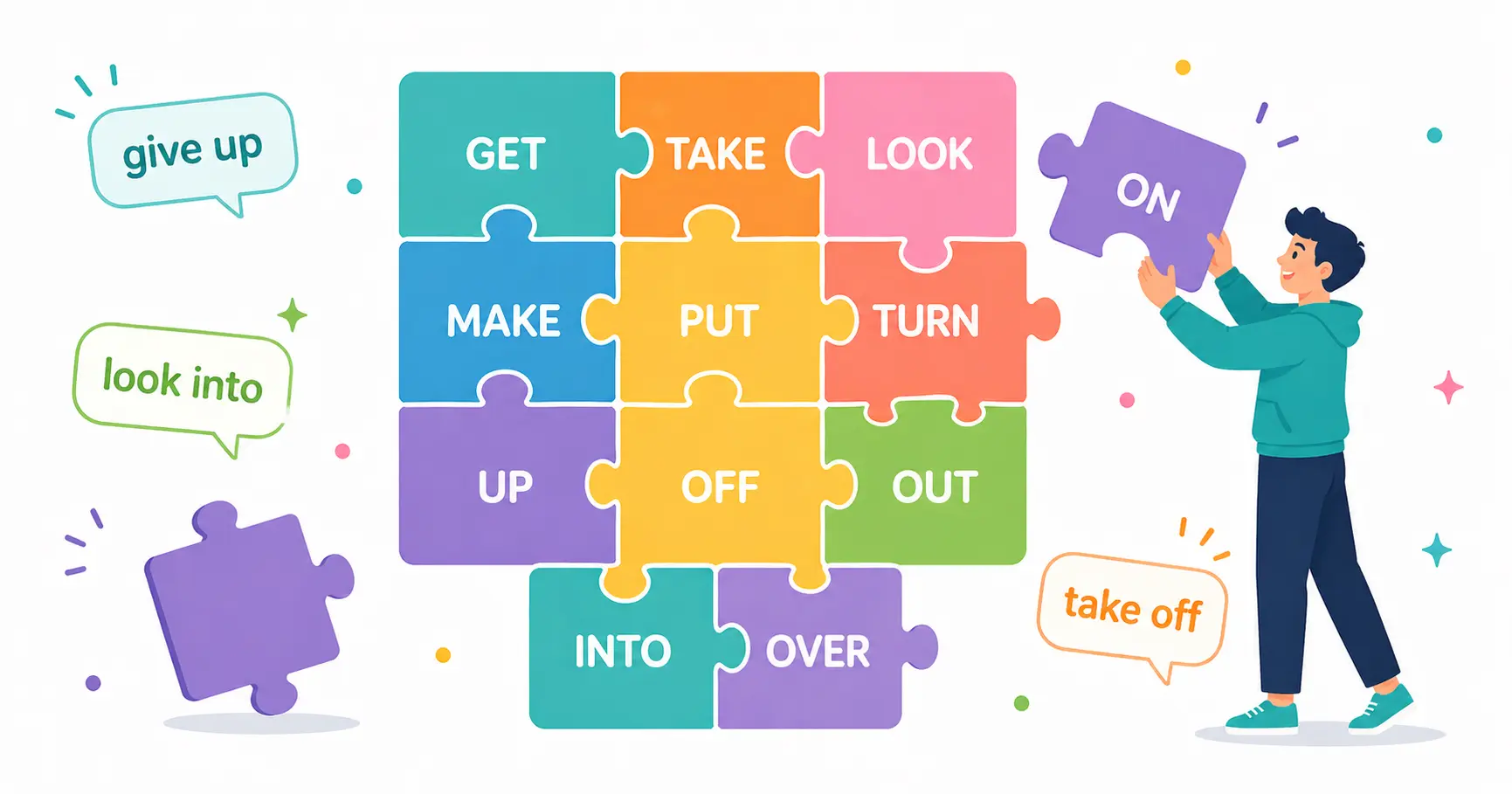
Os phrasal verbs são a parte mais frustrante do inglês para falantes não nativos. Você aprende que “give” significa dar algo a alguém — e depois descobre que “give up” significa desistir, “give in” significa se render, “give away” significa doar e “give off” significa emitir um cheiro. Um verbo base, quatro partículas, quatro significados completamente diferentes. Multiplique isso por cada verbo comum em inglês, e você terá milhares de combinações.
Mas eis o fato: os phrasal verbs não são opcionais. Falantes nativos de inglês os usam constantemente — em conversas, no trabalho, em e-mails, nas redes sociais e até em contextos acadêmicos. Se você evitar phrasal verbs, seu inglês sempre soará formal e robótico, não importa quão grande seja seu vocabulário geral. E, se não os entender, você perderá o sentido de metade das frases que ouvir.
Este guia cobre tudo que você precisa saber sobre phrasal verbs:
- o que são e como funcionam gramaticalmente,
- a diferença entre phrasal verbs separáveis, inseparáveis e de três palavras,
- 200+ phrasal verbs essenciais organizados por verbo base,
- exemplos em contextos reais para cada entrada,
- um sistema de estudo para realmente aprendê-los, não apenas ler sobre eles.
O Que É um Phrasal Verb?
Um phrasal verb é uma combinação de um verbo e uma ou duas partículas (uma preposição, um advérbio ou ambos) que cria um significado diferente do verbo original.
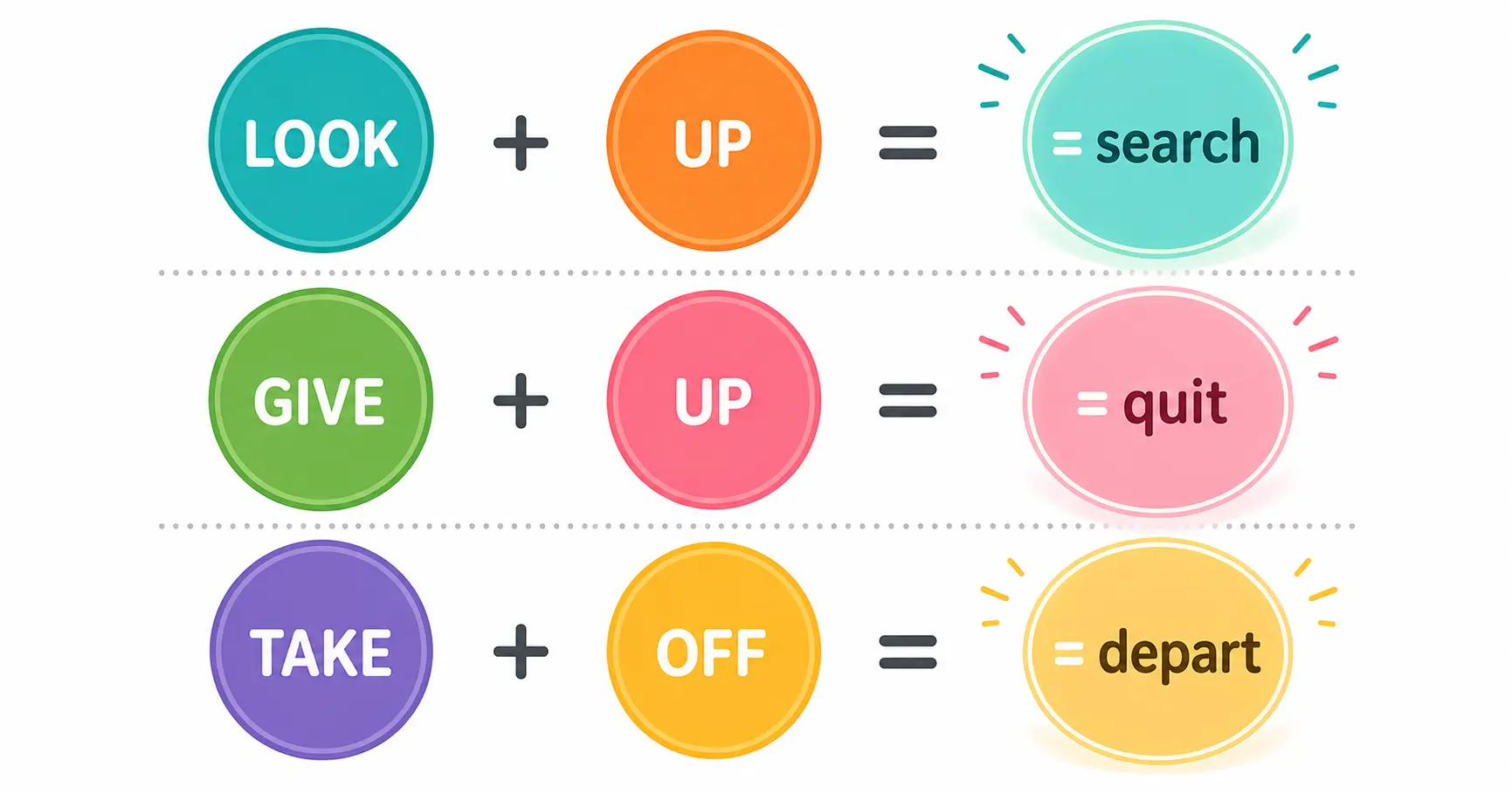
Verbo sozinho: look = usar os olhos Phrasal verb: look up = pesquisar informação Phrasal verb: look after = cuidar de Phrasal verb: look forward to = antecipar com prazer
O ponto crítico: você não pode adivinhar o significado de um phrasal verb pelas suas partes. “Look” + “up” não equivale logicamente a “pesquisar informação”. É isso que torna os phrasal verbs difíceis — e por que você precisa aprendê-los como unidades completas, em vez de tentar decifrá-los palavra por palavra.
Phrasal Verbs vs. Verbos Preposicionais
Nem toda combinação de verbo + preposição é um phrasal verb. Compare:
| Tipo | Exemplo | Teste |
|---|---|---|
| Phrasal verb | She looked up the word. | Meaning changes if you remove the particle. “She looked the word” makes no sense. |
| Verbo preposicional | She looked at the painting. | “Look” retains its core meaning; “at” just shows direction. |
A diferença prática: os phrasal verbs têm significados idiomáticos que você precisa memorizar. Já os verbos preposicionais são previsíveis.
Por Que os Phrasal Verbs Importam
| Contexto | Alternativa Formal | Phrasal Verb |
|---|---|---|
| Conversa cotidiana | I need to discover the answer. | I need to find out the answer. |
| Could you investigate this issue? | Could you look into this issue? | |
| Reunião | Let us postpone the decision. | Let’s put off the decision. |
| Notícias | The company terminated 200 employees. | The company laid off 200 employees. |
Falantes nativos recorrem a phrasal verbs na maioria das situações. As alternativas formais soam rígidas na fala e desnecessariamente complexas na escrita informal. Se o seu inglês parece “formal demais”, mesmo quando a gramática está correta, provavelmente você está evitando phrasal verbs.
Tipos de Phrasal Verbs
Entender os tipos de phrasal verbs não é apenas teoria gramatical: isso determina onde você pode colocar o objeto na frase e, portanto, se a frase está correta ou não.
Tipo 1: Transitivo Separável
O objeto pode ir entre o verbo e a partícula, ou após a partícula. Se o objeto for um pronome (it, them, her), deve ir no meio.
| Phrasal Verb | Correto | Correto | Incorreto |
|---|---|---|---|
| turn off | Turn off the TV. | Turn the TV off. |
|
| pick up | Pick up your bag. | Pick your bag up. |
|
| figure out | Figure out the answer. | Figure the answer out. |
|
Regra do pronome: Sempre separe.
- Turn it off. ✓
-
Turn off it.✗
Tipo 2: Transitivo Inseparável
O verbo e a partícula devem permanecer juntos. O objeto sempre vem depois.
| Phrasal Verb | Correto | Incorreto |
|---|---|---|
| look after | Look after the children. |
|
| run into | I ran into an old friend. |
|
| get over | She got over the flu. |
|
Tipo 3: Intransitivo (Sem Objeto)
Esses phrasal verbs não levam objeto algum.
| Phrasal Verb | Exemplo |
|---|---|
| break down | My car broke down on the highway. |
| show up | He showed up late to the meeting. |
| pass out | She passed out from the heat. |
| grow up | I grew up in a small town. |
Tipo 4: Phrasal Verbs de Três Palavras
Combinam um verbo + advérbio + preposição. São sempre inseparáveis.
| Phrasal Verb | Significado | Exemplo |
|---|---|---|
| look forward to | antecipar com prazer | I look forward to hearing from you. |
| put up with | tolerar | I can’t put up with this noise anymore. |
| come up with | pensar numa ideia | She came up with a brilliant solution. |
| get along with | ter boa relação | Do you get along with your colleagues? |
| look down on | considerar inferior | He looks down on people who didn’t go to university. |
| run out of | não ter mais | We’ve run out of milk. |
| keep up with | manter o mesmo ritmo/nível | I can’t keep up with all the new updates. |
| look up to | admirar e respeitar | I’ve always looked up to my grandmother. |
Para praticar, procure exemplos de phrasal verbs separáveis e inseparáveis e teste em que posição cada pronome deve aparecer.
200+ Phrasal Verbs Essenciais por Verbo Base
A forma mais eficaz de aprender phrasal verbs é agrupá-los pelo verbo base — porque seu cérebro já tem um “arquivo” para GET, TAKE, LOOK e outros verbos. Acrescentar combinações a arquivos que você já conhece é mais fácil do que memorizar expressões aleatórias.
GET
O GET produz mais phrasal verbs do que qualquer outro verbo em inglês. É a primeira família de verbos que você deve dominar.
| Phrasal Verb | Significado | Exemplo |
|---|---|---|
| get up | levantar-se da cama; ficar de pé | I get up at 6:30 every morning. |
| get along (with) | ter boa relação | My sister and I get along really well now that we are adults. |
| get over | se recuperar de | It took me weeks to get over that cold. |
| get through | terminar; sobreviver a um momento difícil | I don’t know how she got through that exam — it was brutal. |
| get away | escapar; partir | The thief got away before the police arrived. |
| get away with | evitar punição por | He cheated on the test and got away with it. |
| get by | se virar com recursos limitados | She gets by on a very modest salary. |
| get on | embarcar (num veículo); progredir | Get on the bus at the third stop. |
| get off | desembarcar (de veículo); terminar trabalho | What time do you get off work? |
| get back | retornar | I’ll get back to you tomorrow with an answer. |
| get into | se envolver em; entrar | She got into photography during the lockdown. |
| get out of | evitar fazer algo | He always tries to get out of washing the dishes. |
| get rid of | remover ou descartar | I need to get rid of these old magazines. |
| get across | comunicar uma ideia claramente | The teacher struggled to get the concept across to the students. |
| get around | viajar; encontrar forma de evitar uma regra | News gets around fast in a small town. |
Para ver todos os significados e exemplos do GET, consulte Phrasal Verbs com GET.
TAKE
| Phrasal Verb | Significado | Exemplo |
|---|---|---|
| take off | remover (roupas); avião decolar; ter sucesso | The plane took off 20 minutes late. / Her career really took off after the promotion. |
| take on | aceitar (trabalho, responsabilidade); contratar | The company is taking on new staff this quarter. |
| take up | começar (hobby ou atividade); ocupar (tempo/espaço) | I took up running during the pandemic. |
| take over | assumir o controle | A larger company took over the startup last year. |
| take after | parecer-se (com familiar) | She takes after her mother — they have the same eyes. |
| take back | devolver algo; retratar uma declaração | I take back what I said — you were right. |
| take down | remover; anotar ou registrar | Can you take down the decorations? / Take down this number. |
| take in | absorver (informação); enganar | There was so much to take in on the first day of training. |
| take apart | desmontar | He took the engine apart to find the problem. |
| take out | remover; comprar comida para comer em outro lugar | Let’s take out the trash. / Do you want to eat in or take out? |
Para ver a lista completa, consulte Phrasal Verbs com TAKE.
MAKE
| Phrasal Verb | Significado | Exemplo |
|---|---|---|
| make up | inventar (uma história); aplicar maquiagem; reconciliar | She made up an excuse for being late. / They argued but made up the next day. |
| make out | entender com dificuldade; se virar | I can’t make out what this handwriting says. |
| make up for | compensar | I’ll make up for the lost time by working late. |
| make for | ir em direção a; contribuir para | Good communication makes for a healthy relationship. |
| make do (with) | se virar com o que está disponível | We don’t have butter, so we’ll have to make do with margarine. |
| make off (with) | fugir, geralmente levando algo roubado | The burglar made off with all the jewelry. |
Para uma lista detalhada com exercícios, veja Phrasal Verbs com MAKE.
PUT
| Phrasal Verb | Significado | Exemplo |
|---|---|---|
| put off | adiar; desencorajar | Don’t put off your homework until tomorrow. / The bad reviews put me off going. |
| put on | vestir; ganhar (peso); apresentar (evento) | Put on your coat — it’s cold outside. |
| put up with | tolerar | I can’t put up with his constant complaints. |
| put away | guardar; economizar (dinheiro) | Put the groceries away, please. |
| put out | apagar (fogo); produzir | The firefighters put out the blaze in under an hour. |
| put forward | sugerir (ideia ou plano) | She put forward a proposal to reduce costs. |
| put down | escrever; criticar; sacrificar (animal) | He’s always putting people down with sarcastic comments. |
| put together | montar | It took three hours to put the furniture together. |
TURN
| Phrasal Verb | Significado | Exemplo |
|---|---|---|
| turn on/off | ligar/desligar um dispositivo | Turn off the lights when you leave. |
| turn up | aparecer; aumentar (volume) | She turned up an hour late. / Turn up the music. |
| turn down | rejeitar; diminuir (volume) | He turned down the job offer. |
| turn out | resultar; comparecer | The party turned out to be amazing. / Thousands turned out for the concert. |
| turn into | transformar; tornar-se | The caterpillar turns into a butterfly. |
| turn around | reverter direção; melhorar | The new CEO turned the company around in two years. |
| turn over | virar; passar o controle | Turn the page over. / He turned the business over to his daughter. |
LOOK
| Phrasal Verb | Significado | Exemplo |
|---|---|---|
| look up | pesquisar informação | Look up the word in a dictionary. |
| look after | cuidar de | Who looks after your children when you work? |
| look into | investigar | The police are looking into the incident. |
| look forward to | antecipar com prazer | I look forward to meeting you. |
| look out (for) | ter cuidado; ficar atento | Look out — there’s a car coming! |
| look down on | sentir-se superior a | She looks down on people who shop at discount stores. |
| look up to | admirar | Many young athletes look up to professional players. |
| look over | revisar ou examinar | Could you look over my essay before I submit it? |
| look through | examinar; folhear | I looked through all the applications yesterday. |
COME
| Phrasal Verb | Significado | Exemplo |
|---|---|---|
| come up | surgir; ser mencionado | Something has come up — I can’t make it tonight. |
| come up with | pensar em; produzir | We need to come up with a new marketing strategy. |
| come across | encontrar por acaso; dar uma impressão | I came across an interesting article yesterday. / He comes across as very confident. |
| come back | retornar | When are you coming back from your trip? |
| come down with | ficar doente com | I think I’m coming down with a cold. |
| come around | mudar de ideia; visitar | She was skeptical at first but eventually came around. |
| come out | ser lançado; tornar-se conhecido | The new iPhone comes out next month. |
GO
| Phrasal Verb | Significado | Exemplo |
|---|---|---|
| go on | continuar; acontecer | Go on — tell me what happened. / What’s going on? |
| go through | experimentar; examinar cuidadosamente | She went through a difficult divorce last year. |
| go over | revisar | Let me go over the main points one more time. |
| go off | explodir; tocar (alarme); estragar (comida) | The fire alarm went off at 3 AM. |
| go ahead | prosseguir | Go ahead and start without me. |
| go out | sair de casa; apagar | We go out for dinner every Friday. |
| go along with | concordar com; acompanhar | I’ll go along with whatever the team decides. |
| go back | voltar | I don’t want to go back to my old job. |
BREAK
| Phrasal Verb | Significado | Exemplo |
|---|---|---|
| break down | parar de funcionar (máquina); ficar emotivo; analisar | The car broke down on the highway. / She broke down in tears. |
| break up | terminar um relacionamento; dispersar | They broke up after five years together. |
| break out | começar de repente (guerra, fogo, doença); escapar | A fire broke out on the third floor. |
| break into | entrar à força; começar nova carreira | Someone broke into my apartment. / She broke into journalism after studying law. |
| break through | superar uma barreira | Scientists broke through with a new treatment for the disease. |
SET
| Phrasal Verb | Significado | Exemplo |
|---|---|---|
| set up | estabelecer; organizar | She set up her own company at 25. |
| set off | começar uma viagem; acionar | We set off early to avoid traffic. / The alarm was set off by a bird. |
| set out | começar com uma intenção; exibir | He set out to prove everyone wrong. |
| set back | atrasar o progresso | The supply chain issues set the project back by three months. |
| set apart | tornar diferente ou especial | Her attention to detail sets her apart from other candidates. |
GIVE
| Phrasal Verb | Significado | Exemplo |
|---|---|---|
| give up | parar de tentar; abandonar um hábito | Never give up on your dreams. / He gave up smoking last year. |
| give in | se render; ceder | After hours of negotiation, the company gave in to the workers’ demands. |
| give away | doar; revelar um segredo | She gave away all her old clothes. / Don’t give away the ending! |
| give off | emitir (cheiro, calor, luz) | The factory gives off a terrible smell. |
| give back | devolver | Can you give back the book I lent you? |
| give out | distribuir; parar de funcionar | They gave out free samples at the supermarket. / My legs gave out after the marathon. |
BRING
| Phrasal Verb | Significado | Exemplo |
|---|---|---|
| bring up | criar (uma criança); mencionar (um tópico) | She brought up three children on her own. / Don’t bring up politics at dinner. |
| bring about | causar | Technology has brought about major changes in education. |
| bring back | devolver; restaurar | This song brings back memories of my childhood. |
| bring down | fazer cair ou falhar | The scandal brought down the government. |
| bring out | lançar (um produto); destacar | They brought out a new model last month. |
CARRY
| Phrasal Verb | Significado | Exemplo |
|---|---|---|
| carry on | continuar | Carry on with your work — I’ll wait. |
| carry out | realizar; executar | The team carried out the experiment successfully. |
| carry over | transferir para o período seguinte | Unused vacation days carry over to the next year. |
WORK
| Phrasal Verb | Significado | Exemplo |
|---|---|---|
| work out | fazer exercícios; resolver; dar certo | I work out three times a week. / Don’t worry — it will all work out. |
| work on | dedicar tempo a melhorar | I’m working on my pronunciation. |
| work through | lidar com algo gradualmente | She’s working through some personal issues. |
HOLD
| Phrasal Verb | Significado | Exemplo |
|---|---|---|
| hold on | esperar; segurar com firmeza | Hold on — I’ll check for you. |
| hold up | atrasar; roubar | Sorry I’m late — I was held up in traffic. |
| hold back | conter; não compartilhar | She held back tears during the speech. |
RUN
| Phrasal Verb | Significado | Exemplo |
|---|---|---|
| run into | encontrar por acaso; encontrar (um problema) | I ran into my old teacher at the supermarket. |
| run out (of) | esgotar um suprimento | We’ve run out of paper for the printer. |
| run over | exceder (tempo); atropelar | The meeting ran over by 30 minutes. |
PICK
| Phrasal Verb | Significado | Exemplo |
|---|---|---|
| pick up | levantar; coletar; aprender informalmente | Pick up your clothes from the floor. / I picked up some Spanish during my trip. |
| pick out | escolher; identificar | Can you pick out a tie for my interview? |
| pick on | intimidar ou perseguir injustamente | The bigger kids used to pick on him at school. |
CUT
| Phrasal Verb | Significado | Exemplo |
|---|---|---|
| cut off | desconectar; interromper | The phone call was cut off. |
| cut down (on) | reduzir | I’m trying to cut down on sugar. |
| cut out | parar de fazer; remover | Cut out the junk food if you want to lose weight. |
FALL
| Phrasal Verb | Significado | Exemplo |
|---|---|---|
| fall behind | não conseguir acompanhar | If you miss classes, you’ll fall behind quickly. |
| fall apart | quebrar em pedaços; colapsar emocionalmente | The old house is falling apart. |
| fall for | se apaixonar por; ser enganado por | She fell for the scam and lost her savings. |
| fall through | não acontecer conforme planejado | Our plans for the trip fell through when the flights were cancelled. |
KEEP
| Phrasal Verb | Significado | Exemplo |
|---|---|---|
| keep up (with) | manter o mesmo ritmo | It’s hard to keep up with all the new slang. |
| keep on | continuar fazendo algo | She kept on talking even after the bell rang. |
| keep away (from) | manter distância | Keep away from the edge of the cliff. |
DO
| Phrasal Verb | Significado | Exemplo |
|---|---|---|
| do away with | abolir ou se livrar de | The company did away with the dress code. |
| do up | prender; renovar | Do up your seatbelt. / They did up the old cottage beautifully. |
| do without | se virar sem | I can’t do without my morning coffee. |
| do over | refazer | The report was full of errors, so I had to do it over. |
Para consultar todos os usos e exemplos de DO, veja Phrasal Verbs com DO.
Phrasal Verbs por Tema
Se você está se preparando para um contexto específico — IELTS, trabalho ou viagem — estes grupos temáticos ajudam a priorizar o que estudar.
Para Trabalho e Negócios
| Phrasal Verb | Significado | Exemplo |
|---|---|---|
| carry out | realizar uma tarefa | We carried out a thorough risk assessment. |
| set up | estabelecer | She set up a meeting for Friday afternoon. |
| take on | aceitar responsabilidade | He took on the project manager role. |
| draw up | preparar um documento | The lawyers drew up a new contract. |
| lay off | dispensar do emprego | The factory laid off 300 workers. |
| follow up (on) | verificar progresso | I’ll follow up on your application next week. |
| step down | renunciar de um cargo | The CEO stepped down after the scandal. |
| bring in | introduzir; gerar receita | The new policy brought in more revenue. |
Para se aprofundar, veja Phrasal Verbs de Negócios.
Para Viagem
| Phrasal Verb | Significado | Exemplo |
|---|---|---|
| check in / check out | registrar-se/sair de hotel ou aeroporto | We checked in at the hotel around 3 PM. |
| set off | começar uma viagem | We set off at dawn to reach the summit by noon. |
| get around | viajar dentro de uma área | The easiest way to get around Bangkok is by BTS train. |
| pick up | buscar alguém com veículo | I’ll pick you up at the airport. |
| drop off | levar alguém a uma localização | The taxi dropped us off at the wrong hotel. |
| stop over | ficar brevemente durante uma viagem | We stopped over in Dubai on the way to Bali. |
Para Exames (IELTS, TOEFL)
| Phrasal Verb | Significado | Uso em Exames |
|---|---|---|
| point out | chamar atenção para | The graph points out a clear trend in urban migration. |
| account for | explicar; representar | Rising temperatures account for the decline in glacial mass. |
| bring about | causar | Industrialization brought about major social changes. |
| break down | dividir em partes | The data can be broken down into three categories. |
| make up | constituir | Women make up 52% of the total workforce. |
| stand for | representar | GDP stands for Gross Domestic Product. |
Para expressões idiomáticas que complementam estes phrasal verbs no IELTS Speaking, veja Expressões Idiomáticas para o IELTS Speaking: 50 Expressões Naturais.
Vocabulário para Praticar
Estas 25 palavras-base de phrasal verbs e o vocabulário relacionado são úteis para incorporar ao seu vocabulário ativo. Salve-as no seu dicionário Linglify para revisá-las com repetição espaçada.
affordable
adjetivo
acessível, barato
Exemplos
- The government is working to provide affordable housing for low-income families.
- This restaurant offers delicious and affordable meals for college students.
commute
verbo
deslocar-se, morar
Exemplos
- Public transportation helps people commute efficiently reducing traffic congestion.
- Workers commute daily between suburban homes and downtown offices.
demanding
adjetivo
exigente, difícil
Exemplos
- Medical school is very demanding and requires years of intensive study.
- She has a demanding boss who expects perfection in all tasks.
DJ
substantivo
DJ
Exemplos
- The DJ played my favorite song.
- The DJ took song requests all night.
heritage
substantivo
patrimônio
Exemplos
- She inherited a rich heritage of family traditions from her grandparents.
- The ancient castle is an important part of our cultural heritage.
leisure
substantivo
lazer
Exemplos
- People enjoy various leisure activities during weekends and holidays.
- Reading books is popular leisure pursuit for many educated people.
luxurious
adjetivo
luxuoso, requintado
Exemplos
- She dreams of owning luxurious car with leather seats and sunroof.
- The luxurious hotel suite includes marble bathroom and ocean view.
memorable
adjetivo
memorável
Exemplos
- Graduation day was memorable occasion for entire family.
- The memorable speech inspired students to pursue their dreams.
nutritious
adjetivo
nutritivo
Exemplos
- Fresh vegetables are nutritious and support overall health.
- Nutritious breakfast provides energy for productive school day.
passionate
adjetivo
apaixonado
Exemplos
- Passionate speech moves audience to take action.
- Passionate teacher inspires students to learn more.
pollution
substantivo
poluição
Exemplos
- Air pollution affects public health in cities.
- Ocean pollution threatens marine life worldwide.
privacy
substantivo
privacidade
Exemplos
- Hotel guests expect privacy during their stay.
- Internet privacy becomes increasingly important issue nowadays.
scenic
adjetivo
cênico
Exemplos
- Scenic overlook provides perfect spot for photographs.
- Scenic route takes longer but offers beautiful.
traditional
adjetivo
tradicional
Exemplos
- Traditional cooking methods preserve authentic flavors perfectly.
- Traditional music reflects cultural history and values.
uneven
adjetivo
desigual
Exemplos
- Uneven ground makes walking difficult and dangerous.
- Uneven performance shows inconsistent skill level development.
volunteer
verbo
voluntariar-se
Exemplos
- Citizens volunteer time for community improvement projects.
- Students volunteer at local charity organizations regularly.
substantially
advérbio
substancialmente, consideravelmente
Exemplos
- Her performance substantially improved after additional training and practice.
- Prices have increased substantially over the past few months.
liaison
substantivo
ligação, contato
Exemplos
- Military liaison officers coordinate operations between allied forces.
- She serves as liaison between different departments.
sustainable
adjetivo
sustentável, viável, ecológico
Exemplos
- Company implements sustainable business model for long-term success.
- Sustainable farming practices protect soil and water resources.
acclaimed
adjetivo
reconhecido
Exemplos
- His performance was acclaimed by critics.
- The acclaimed author received many awards for her novel.
cancellation
substantivo
cancelamento, anulação, interrupção
Exemplos
- Due to weather, the flight cancellation was inevitable.
- The concert's cancellation disappointed many fans.
colour
substantivo
cor
Exemplos
- She chose a bright colour for her dress.
- The colour of the sky was a deep blue.
discretion
substantivo
discrição, cautela, moderação
Exemplos
- He exercised discretion in his decisions.
- Use your discretion when sharing information.
indication
substantivo
indicação, sinal, pista
Exemplos
- The indication of his illness was clear after the tests.
- There was no indication that she was unhappy.
serenity
substantivo
serenidade, calma, tranquilidade
Exemplos
- She maintained her serenity despite the chaos.
- The serenity of the lake was calming.
Como Aprender Phrasal Verbs (Que Realmente Ficam)
A maioria dos estudantes tenta decorar phrasal verbs em listas — e esquece tudo em uma semana. Veja o que funciona melhor.
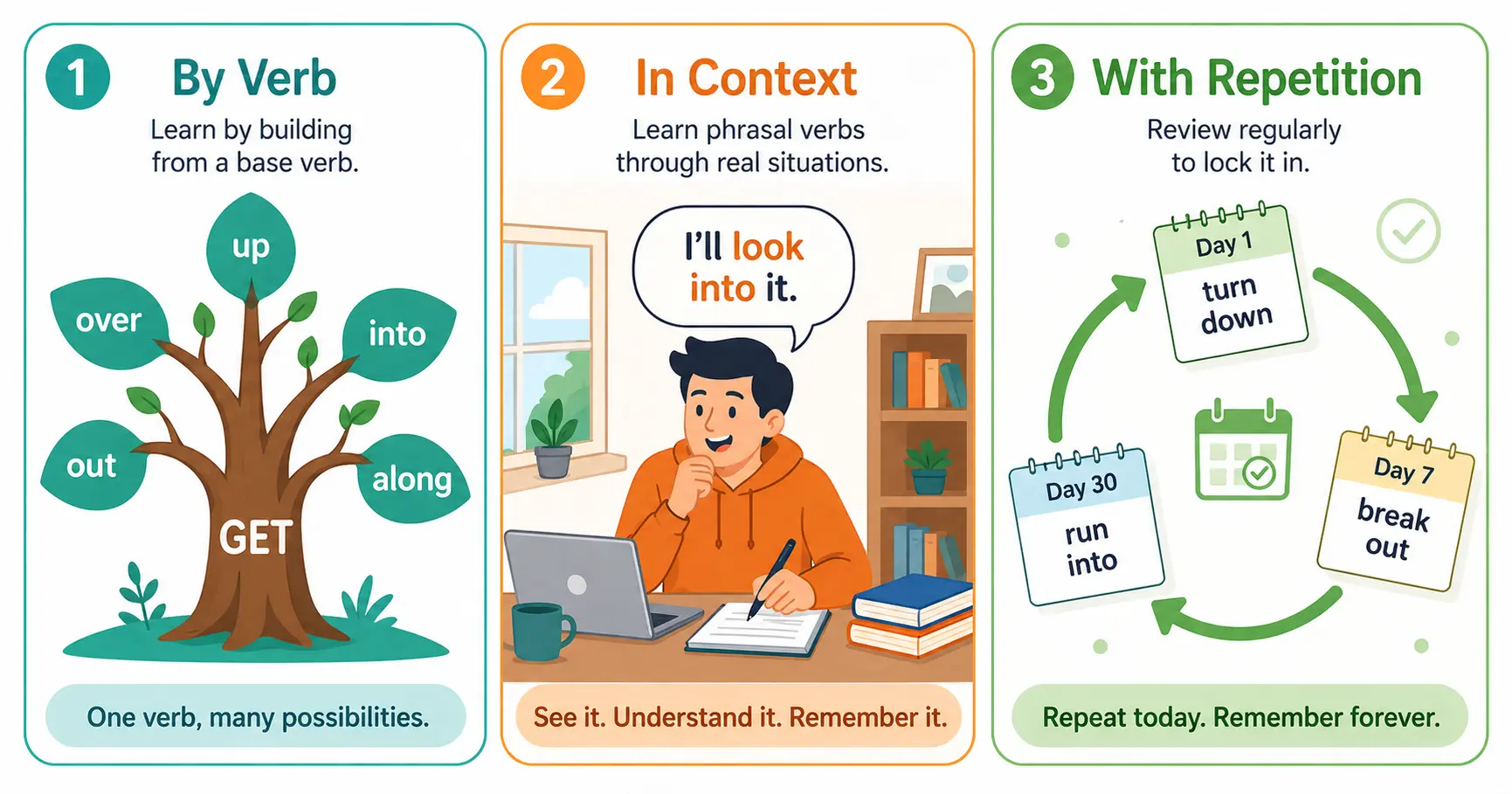
1. Aprenda por Verbo Base, Não Alfabeticamente
Seu cérebro já tem um arquivo mental para GET, TAKE, MAKE e outros verbos. Acrescentar novos phrasal verbs a uma família verbal que você já conhece é muito mais fácil do que memorizar combinações sem relação. Comece com GET, o mais comum, depois passe para TAKE e LOOK.
2. Aprenda em Contexto, Não Isoladamente
“Put off = adiar” é difícil de lembrar. “I keep putting off my dentist appointment” é uma situação real que você pode visualizar. Para cada phrasal verb, escreva uma frase sobre a sua própria vida.
3. Foque nos 50 Mais Comuns Primeiro
Você não precisa de 200 phrasal verbs. Os 50 phrasal verbs mais comuns cobrem a maior parte das conversas cotidianas. Domine esses antes de passar aos menos frequentes.
4. Observe Phrasal Verbs na Vida Real
Ao assistir a uma série, ler uma notícia ou ouvir um podcast, anote cada phrasal verb que encontrar junto com a frase em que apareceu. O contato com a língua em contextos reais é uma das ferramentas de aprendizagem mais eficazes.
5. Use Repetição Espaçada
Adicione phrasal verbs a um sistema de repetição espaçada, como o Linglify. Pesquisas indicam que você precisa encontrar uma palavra de 8 a 12 vezes para que ela se torne automática. A repetição espaçada distribui esses encontros nos intervalos certos.
Para estratégias de memorização baseadas em evidências, leia Como Memorizar Vocabulário.
6. Pratique com Conversas, Não Exercícios
Exercícios de completar lacunas testam reconhecimento, não produção. Para realmente usar phrasal verbs, pratique falando: descreva seu dia usando apenas phrasal verbs ou reconte uma história substituindo verbos formais por equivalentes com partículas.
Erros Comuns com Phrasal Verbs
Erro 1: Separar Phrasal Verbs Inseparáveis
Errado: I ran my old friend into. Certo: I ran into my old friend.
Quando o phrasal verb é inseparável, o objeto precisa vir depois da partícula.
Erro 2: Não Separar com Pronomes
Errado: Turn off it. Certo: Turn it off.
Com phrasal verbs separáveis, pronomes como it, them, her e him devem ficar entre o verbo e a partícula.
Erro 3: Usar a Partícula Errada
Errado: She got over the bus. (= ela escalou o ônibus) Certo: She got on the bus. (= ela embarcou no ônibus)
Uma partícula diferente pode mudar completamente o significado. Por isso, aprenda cada phrasal verb como uma unidade completa.
Erro 4: Evitar Phrasal Verbs Completamente
Alguns estudantes usam apenas verbos formais de uma palavra: investigate em vez de look into, tolerate em vez de put up with ou postpone em vez de put off. Embora gramaticalmente corretos, eles soam pouco naturais na conversa e podem limitar seu desempenho em provas como o IELTS, que avalia o uso natural e idiomático da língua.
Erro 5: Usar Muitos na Escrita Formal
Phrasal verbs são essenciais na fala e na escrita informal, mas em redações acadêmicas e relatórios formais muitas vezes se preferem verbos de uma só palavra. “The study investigated the effects” soa melhor em um artigo de pesquisa do que “The study looked into the effects”. É importante saber quando usar cada opção.
Phrasal Verbs vs. Alternativas Formais: Referência Rápida
Às vezes, você precisa da forma formal, como na escrita acadêmica; em outras situações, o phrasal verb é mais natural, como na conversa. Esta tabela ajuda a escolher.
| Verbo Formal | Phrasal Verb | Quando Usar o Verbo Formal |
|---|---|---|
| postpone | put off | Escrita acadêmica, e-mails formais |
| investigate | look into | Artigos de pesquisa, relatórios oficiais |
| tolerate | put up with | Reclamações formais, contextos legais |
| eliminate | get rid of | Escrita científica, documentos de política |
| discover | find out | Artigos acadêmicos |
| continue | carry on / go on | Instruções formais, escrita acadêmica |
| resemble | take after | Descrições formais |
| recover | get over | Relatórios médicos |
| submit | hand in | Orientações oficiais |
| establish | set up | Documentos de negócios, textos legais |
| raise (children) | bring up | Biografias formais |
| reject | turn down | Correspondência oficial |
| succeed | work out | Contextos acadêmicos |
| examine | look over / go through | Auditorias profissionais, análises jurídicas |
| encounter | run into / come across | Escrita acadêmica |
O Que Ler a Seguir
Este guia principal apresenta a estrutura completa para entender os phrasal verbs. Para se aprofundar em áreas específicas, continue por aqui:
Por nível:
- 50 Phrasal Verbs Mais Comuns para o Inglês Cotidiano — um bom começo para quem está no nível intermediário
- 100 Phrasal Verbs com Significados e Frases — o próximo passo depois dos 50 mais comuns
- Phrasal Verbs Avançados para Inglês C1–C2 — para estudantes do intermediário superior e avançados
Por verbo base:
- Phrasal Verbs com MAKE — mais de 20 combinações com exercícios
- Phrasal Verbs com GET — o verbo base mais comum
- Phrasal Verbs com TAKE — essenciais para o inglês cotidiano
Por contexto:
- Phrasal Verbs de Negócios — para o inglês profissional
- Expressões Idiomáticas para o IELTS Speaking — expressões que complementam os phrasal verbs na prova
Aprendizagem de vocabulário:
- Como Aprender Vocabulário em Inglês — um método passo a passo
- Como Melhorar seu Vocabulário — estratégias para todos os níveis
FAQ
Quantos phrasal verbs existem em inglês?
As estimativas variam de 5.000 a mais de 10.000 combinações. No entanto, apenas cerca de 200–300 são usadas com frequência no inglês cotidiano. Os 50 phrasal verbs mais comuns respondem pela maior parte do que falantes nativos dizem em conversas diárias. Comece por esses 50, depois avance para 100 e, por fim, 200 — priorizando a frequência em vez de tentar aprender todos de uma vez.
Qual é a diferença entre um phrasal verb e uma expressão idiomática?
Um phrasal verb é uma combinação de verbo + partícula: “give up”, “look into”, “take off”. Uma expressão idiomática é qualquer expressão fixa com significado não literal: “a piece of cake” (= algo fácil), “under the weather” (= sentir-se mal). Há sobreposição — alguns phrasal verbs são idiomáticos (“come across” = encontrar por acaso) —, mas a categoria de expressões idiomáticas é mais ampla e também inclui locuções nominais, adjetivas e até frases completas.
Preciso conhecer todos os phrasal verbs para o IELTS?
Não. Para a Banda 7 do IELTS, você precisa demonstrar “flexibilidade” no vocabulário, o que inclui alguns phrasal verbs usados naturalmente. Para as Bandas 8–9, eles devem fazer parte do seu vocabulário ativo na prova de Speaking. Na Writing, use-os com critério: eles cabem em exemplos informais da Task 2, mas devem ser equilibrados com vocabulário formal. Conhecer bem 50–80 phrasal verbs é suficiente para qualquer banda.
Por que os phrasal verbs são tão difíceis de aprender?
Há três razões: (1) o significado é imprevisível — não dá para deduzir que “look up” significa “pesquisar informação” a partir das palavras isoladas; (2) um phrasal verb pode ter vários sentidos — “take off” pode significar tirar uma peça de roupa, decolar (aviões) ou fazer sucesso; (3) as regras gramaticais (separável vs. inseparável) têm exceções. A solução é aprender em contexto e por meio de contato repetido com a língua, não apenas decorar regras gramaticais.
Os phrasal verbs são informais?
Muitos são informais ou neutros (“hang out”, “give up”, “find out”), mas alguns também aparecem no inglês acadêmico e profissional (“carry out”, “set up”, “account for”, “point out”). O grau de formalidade depende do phrasal verb específico, não da categoria inteira. Em geral, use-os à vontade na conversa e com mais critério na escrita formal.
Qual é a melhor forma de memorizar phrasal verbs?
Estude-os por verbo base (todos os phrasal verbs com GET juntos, depois os com TAKE), aprenda-os em contexto (com frases reais, não só definições) e use repetição espaçada para revisá-los em intervalos cada vez maiores. Evite longas listas alfabéticas: pesquisas indicam que aprender de forma organizada e contextualizada é de três a quatro vezes mais eficaz do que decorar mecanicamente.
Posso usar apenas verbos formais em vez de phrasal verbs?
Tecnicamente, sim, mas seu inglês soará rígido e pouco natural. Compare: “I discovered the answer” e “I found out the answer”. A primeira frase parece traduzida; a segunda soa natural para um falante nativo. Em conversas, evitar phrasal verbs é um dos sinais mais evidentes de que o inglês não é sua primeira língua. O objetivo é conhecer as duas opções e escolher a mais adequada ao contexto.